

Almond Tree & Fruit
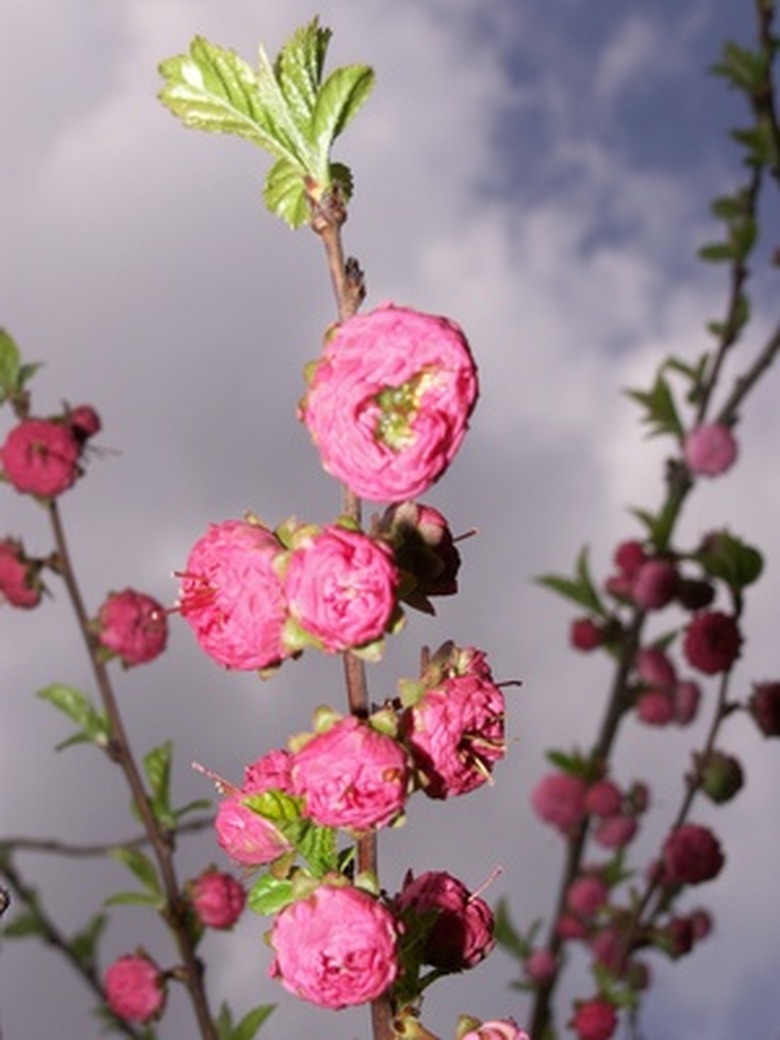
Almond trees are small- to medium-sized trees known for being the first deciduous fruit or nut tree to bloom in spring. They're also known for their tasty and nutritious fruit. Sweet almonds are edible and used mostly for making confectionery products such as cakes, candies and toppings. On the other hand, bitter almonds, which contain a poisonous compound (amygdalin), should not be consumed, although they're sometimes used in alternative medicine or in making flavorings and extracts.
Identification
Almonds trees come from the rose family, which also includes peaches, pears, apples, cherries, apricots and plums. An average almond tree spreads roughly 10 to 15 feet wide and has leaves that are longer than they are wide. Almonds are called nuts, but are actually drupes or stone fruits that have a single stone or pit.
- Almond trees are small- to medium-sized trees known for being the first deciduous fruit or nut tree to bloom in spring.
- Almonds are called nuts, but are actually drupes or stone fruits that have a single stone or pit.
History
The almond tree was domesticated in the Middle East as far back as 3000 B.C. Wild types of almond trees grew in North Africa, West Asia and Greece. In Greece, they were cultivated in the 5th century B.C. Almond trees were brought to California in the 1700's by Spanish explorers settling at the Santa Barbara mission, where they were cultivated commercially by the early 1800's.
Geography
Because they originally come from the Middle East Mediterranean region, it's understandable that almond trees need long, dry summers and mild winters to thrive. Today almond trees grow in Asia, Spain, Greece and Italy. In the United States they're mostly grown in California, which leads the world in almond production, as it produces 42 percent of the world market, according to Davis Wiki.org. They also grow in other warm states such as Arizona and Florida.
- The almond tree was domesticated in the Middle East as far back as 3000 B.C.
- Wild types of almond trees grew in North Africa, West Asia and Greece.
Benefits
Almond trees produce beautiful pink and white flowers, are drought resistant and can tolerate poor soil. Their flower buds last year-round and the tree is resistant to frost damage. Another advantage of this tree is that almond nuts can be stored throughout the year.
The tree's fruit offers many health benefits such as lowering blood cholesterol levels. They're high in fiber, protein, magnesium, calcium, Vitamin E and potassium. Almonds also help regulate blood pressure and lower the odds of getting osteoporosis.
Considerations
Almond tree branches should be pruned annually. It's best to prune in either late winter or early spring prior to new growth appearing. This also helps tree growth because pruning bushy areas allows a tree to receive more air and sunlight.
- Almond trees produce beautiful pink and white flowers, are drought resistant and can tolerate poor soil.
- This also helps tree growth because pruning bushy areas allows a tree to receive more air and sunlight.
Younger almond trees require less nitrogen than older trees. The Almond Doctor website recommends applying about 1 oz. of nitrogen for each year of age.
Warning
Almond trees are able to survive on little water, but insufficient water results in a poor crop. For maximum crop production it's important to water almond trees regularly because they possibly need more water than the average cropping tree, according to ABC.net.
Many people can become ill from tree nut allergies, which can even be life threatening in extreme cases. Although almonds cause fewer problems than other tree nuts, people who have allergies from tree nuts can suffer for a lifetime.
- Younger almond trees require less nitrogen than older trees.
- Almond trees are able to survive on little water, but insufficient water results in a poor crop.