

How To Save Okra Seeds
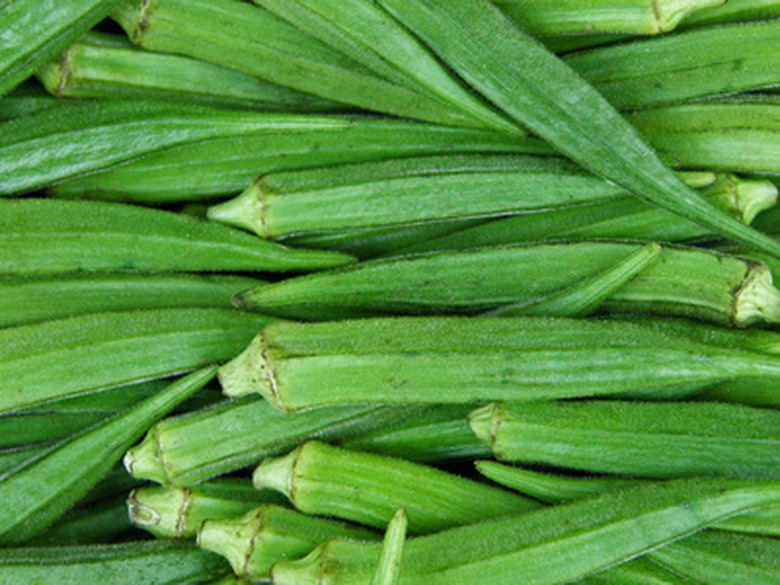
Okra is a vegetable that is used in soups and casseroles or is fried and boiled. It is a warm-weather crop, so it is primarily grown in southern climates. Okra is also sometimes grown as an ornamental plant in flower gardens, as it can reach a height of up to 6 feet and produces flowers similar to those of hollyhocks. Whether you use okra as a garden vegetable plant or as a floral, if you have a good crop you can save seeds from your prized plants for next year's garden.
Step 1
Leave one or two okra on the plant to mature. The okra is ready for seed harvesting when it is large and pale in color.
Step 2
Clip the okra off the plant with your garden shears. Set it in a dry, airy location to dry for 48 hours.
- Okra is a vegetable that is used in soups and casseroles or is fried and boiled.
- Whether you use okra as a garden vegetable plant or as a floral, if you have a good crop you can save seeds from your prized plants for next year's garden.
Step 3
Place the okra on a cutting board. Take a sharp knife and slice the okra in half from top to bottom.
Step 4
Gather the okra seeds from the inside of the okra and place them on some paper toweling. Separate any plant debris from the seeds, and leave the seeds on the paper toweling for another 24 hours.
Step 5
Place the dry okra seeds in an airtight container, such as a plastic baggie, and store them in a cool, dry location until it is time to plant them.
Planting Okra Seeds
Soak the seeds in a jar of water for 24 hours before planting. Loosen the soil in the planting bed by digging and turning it to a depth of 1 foot using a shovel. Plant the seeds 1/2 inch deep and 4 inches apart in rows spaced 3 feet apart. Do not fertilize at planting time. Water the seed bed and keep the soil moist until the seeds germinate. Water deeply just often enough to keep the soil from drying out after the seedlings reach a height of 6 inches. Taller varieties need more room that shorter ones.
- Place the okra on a cutting board.
- Place the dry okra seeds in an airtight container, such as a plastic baggie, and store them in a cool, dry location until it is time to plant them.
Things Needed
- Garden shears
- Cutting board
- Sharp knife
- Paper toweling
- Plastic baggie
Warning
Do not wash the okra seeds before storing them, as any excess moisture can lead to decay.
Tip
Okra seeds can also be saved in a sealed glass jar.
References
- Vegetable Matter: Harvesting Okra Seeds
- Veggie Gardening Tips: Growing Okra
- Rodale's Vegetable Garden Problem Solver; Fern Marshall Bradley
- Burpee Complete Gardener; Allan Armitage, et al.
- Vegetable Gardening; Jane Courtier, et al.
- Floridata: Abelmoschus Esculentus