

When To Harvest Golden Currant
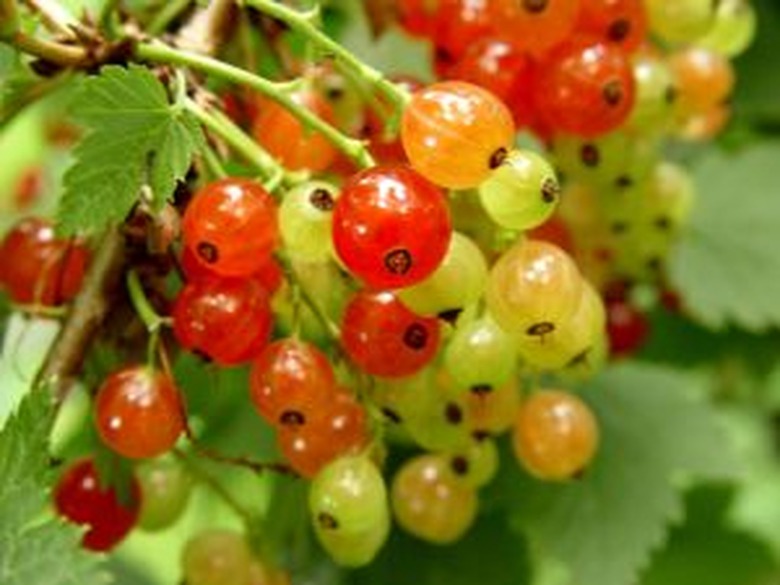
Common in the western and northern portions of the United States, as well as other parts of the world, the golden currant is a small, heavily seeded fruit similar to gooseberries. The 4-to-5-foot bushes produce sweet fruit, as well as give a beautiful decorative look to any landscaping. The yellow, or golden, flowers on the plant are what give the golden currant its name, not the dark berries. Picked fruits are great in jellies and jams, and the sometimes tart taste pairs well with sweeter fruits like peaches or strawberries.
Step 1
Watch for the appearance of the first leaves after winter, followed by flowering in late spring, typically April through June.
Step 2
Follow the progression of the fruits as they grow to about 1/2 inch in diameter. The fruits will start as green and shift to yellow, and then red as they begin to mature.
- Common in the western and northern portions of the United States, as well as other parts of the world, the golden currant is a small, heavily seeded fruit similar to gooseberries.
- The yellow, or golden, flowers on the plant are what give the golden currant its name, not the dark berries.
Step 3
Track the changes of colors as the fruits change to black and then dark purple, signaling the fruits are ripe. This sequence of color transformations will take place as seasons shift into the summer months of June through August.
Step 4
Pick the plump, full-colored fruits from the cluster. They should be easy to pull from the bush with resistance meaning the fruit is not quite ready.
Care For Golden Currant
Water a newly planted golden currant regularly, keeping the soil evenly moist. Apply 2 to 3 inches of mulch around the shrub to conserve moisture and moderate soil temperature. Older stems are darker in color with peeling outer bark. If necessary, shape the plant by trimming shoots, making the cuts just above strong buds.
- Track the changes of colors as the fruits change to black and then dark purple, signaling the fruits are ripe.
- If necessary, shape the plant by trimming shoots, making the cuts just above strong buds.
Warning
Golden currants can take 2-3 years to mature, so don't be discouraged if you don't see fruit the first couple of years after planting.
Tip
Reduce watering on your plant after you harvest the currants so leaf growth will slow and the plant will begin working on increasing the yield for next year.
References
- Vegetable Gardening: Your ultimate guide; Robert J. Dolezal; 2000
- Edible Wild Plants; Thomas S Elias and Peter A. Dykeman; 1990
- Oregon State University Extension: Golden Currant
- Fine Gardening: Ribes odoratum (Buffalo Currant, Clove Currant, Golden Currant)
- The New Sunset Western Garden Book; Kathleen Norris Brenzel, ed.
- Yerba Buena Nursery: Botanic Name: Ribes Aureum