

How To Thin Iris Bulbs
Things Needed
- Shears
- Spading fork
- Trowel
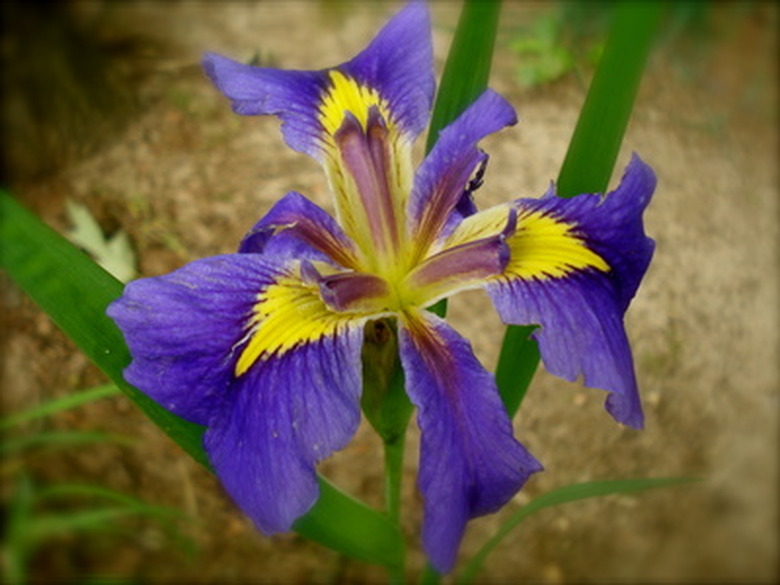
Irises provide striking color to the garden in late spring and early summer. The plant produce mounds of sword-shaped leaves with tall flower stalks that produce large, colorful flowers. They grow either from bulbs or rhizomes, though both are commonly referred to as bulbs. Varieties such as Dutch iris grow from the true bulbs while bearded and Siberian iris grow from rhizomes. The iris bed tends to become overcrowded, requiring thinning every three to five years.
Step 1
Trim the iris leaves before digging. Cut off up to two-thirds their length with sharp shears.
- Irises provide striking color to the garden in late spring and early summer.
- The iris bed tends to become overcrowded, requiring thinning every three to five years.
Step 2
Loosen the soil around the iris bulbs with a spading fork, taking care not to spear the roots with the tines. Break the soil up to a 6-inch depth then slide a trowel under the bulbs and lift them from the bed.
Step 3
Brush the dirt off the iris bulbs. Discard any that are shriveled or have soft spots, as this indicates rot or disease.
Step 4
Twist true bulbs apart to separate them. Cut rhizome roots into 2-inch long sections with the blade of your trowel. Leave the roots and a fan of at least two leaves on each root section.
- Loosen the soil around the iris bulbs with a spading fork, taking care not to spear the roots with the tines.
Step 5
Replant the iris bulbs into the bed. Plant true bulbs 4 inches deep and space the bulbs 3 to 6 inches apart. Plant rhizomes so that the top of the rhizome is level with the soil surface and plant these in groups of three roots that are spaced 18 inches apart.
Step 6
Replant the extra bulbs after thinning into a new bed. Alternately, dispose of them or give them away.
Tip
Thin true bulb irises in fall and thin rhizome plants in mid- to late-summer after they finish flowering for the year.
Warning
The iris borer insect can quickly decimate an iris bed. Affected rhizomes look fine but are mushy on the inside.