

How To Grow Camelias In Florida
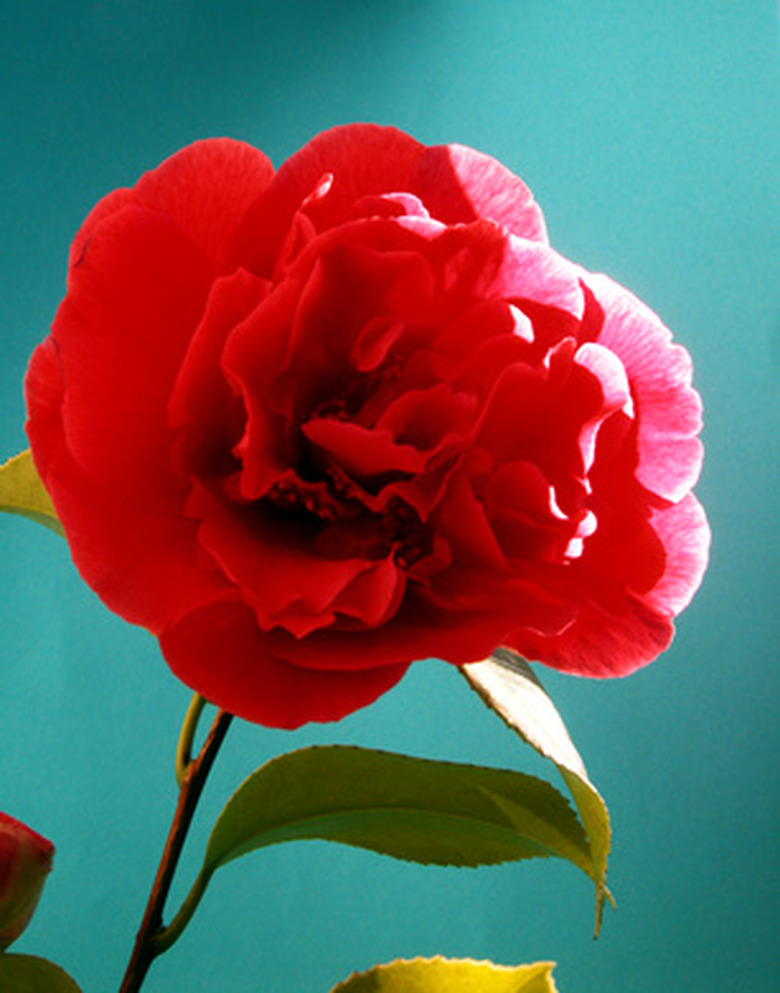
Things Needed
- pH test kit
- Sulfur (optional)
- Lime (optional)
- Tiller
- Organic material
- Trowel
- Shovel
- Camellia transplant
- Mulch
- 15-15-15 fertilizer
A common flowering shrub throughout the southern states, camellias are grown largely in northern Florida but are less popular in the rest of the state. Gardeners in central and southern Florida can grow camellias, but must choose a heat-tolerant variety. The University of Florida recommends a mid-season blooming camellia, since Florida's warm fall weather causes poor flowering in early blooming camellias.
Step 1
Choose a site for planting your camellia from November to February, the recommended window for planting camellias in Florida. These shrubs prefer part shade and an area with good air circulation.
Step 2
Test the soil pH, using a pH test kit. Camellias prefer a pH of 5.0 to 5.5, but a pH as high as 6.5 is acceptable. If you soil need to be adapted, add sulfur to lower the pH or lime to raise it.
- A common flowering shrub throughout the southern states, camellias are grown largely in northern Florida but are less popular in the rest of the state.
- Gardeners in central and southern Florida can grow camellias, but must choose a heat-tolerant variety.
Step 3
Till over the entire area with a tiller. Add 3 to 6 inches of organic matter, such as peat or compost. Work the organic material into the soil using a shovel or a trowel.
Step 4
Dig a hole twice the width and as deep as the root ball of your camellia transplant. Remove the camellia from its plastic container and break apart the root ball by massaging it with your fingers. Place the camellia in the hole, spreading the roots out with your fingers. Fill in the hole with soil.
- Till over the entire area with a tiller.
- Place the camellia in the hole, spreading the roots out with your fingers.
Step 5
Water the newly planted camellia until the soil becomes saturated.
Step 6
Apply a 2- to 3-inch layer of mulch around the roots of the plant. This helps conserve water and reduce Florida's common temperature fluctuations.
Step 7
Water your camellia during Florida's dry season every 10 to 14 days. Provide enough water to wet the soil to a depth of 14 to 18 inches, recommends the University of Florida.
Step 8
Fertilize the camellia four times a year. The University of Florida recommends 1/2 lb. of 15-15-15 fertilizer applied before spring growth, after initial spring growth, in midsummer and in early winter. The provides the nutrient boost recommended for Florida's sandy soils.
- Water the newly planted camellia until the soil becomes saturated.
- Apply a 2- to 3-inch layer of mulch around the roots of the plant.
Tip
The University of Florida recommends Alba Plen, Red Giant or Debutante for central and south Florida gardeners.