

A Beginner's Guide To Starting Seeds Indoors
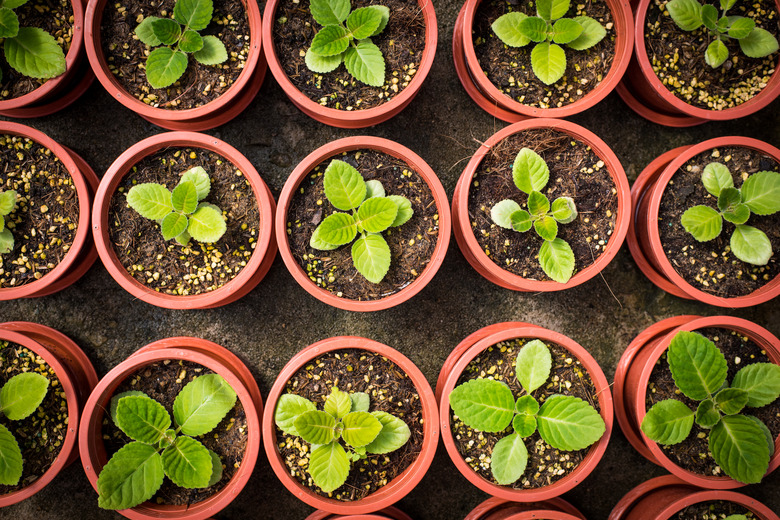
Enthusiastic gardeners can hardly wait to get those seeds into the ground, but you have to keep one eye on the calendar. Planting too early can mean the seeds get killed off by a hard frost. That's what starting seeds indoors is all about: a way to jump-start your spring garden without risk that a later frost will wipe out your seedlings.
Before you dive in, you need to learn how and when to start seeds indoors. Here's all the indoor-seed-starting information you need to get you on your way.
 Yana Tatevosian/iStock/GettyImages
Starting Seeds Indoors
In nature, flowering plants produce seeds outdoors, those seeds fall to the ground, and come spring, turn into seedlings outdoors. So why consider starting seeds indoors?
- Enthusiastic gardeners can hardly wait to get those seeds into the ground, but you have to keep one eye on the calendar.
- That's what starting seeds indoors is all about: a way to jump-start your spring garden without risk that a later frost will wipe out your seedlings.
Seeds need warm weather to germinate, and seedlings die in a hard frost. That's the reason gardeners don't plant outside until after the projected date of the last spring frost.
But, depending on where you live, waiting till after any possible frost might push your planting date well into April or even May. That shortens the growing season and may prevent you from growing vegetables that require longer growing periods.
Starting seeds indoors is a way to get your spring garden growing faster and extend your growing season. You plant seeds in containers indoors when it's still too cold or wet to plant outside. When the warm weather arrives, you have well-established seedlings to transplant without having to pay expensive garden store prices.
 Angelica Corneliussen/iStock/GettyImages
When to Start Seeds Indoors
Since the idea of starting seeds indoors is to beat the estimated last frost date, it makes sense that you need to gauge the timing of planting by that date. Generally, you should start annual veggie seeds indoors about six weeks before the projected final frost date. For some flower seeds, like geraniums and begonias, you may need to start at least 12 weeks or so before the frost date.
You can get expert advice online on exact dates for different crops and flowers in your area. Consult a planting calendar online, enter your ZIP code, then look at the veggies you intend to plant.
Otherwise, you can figure it out yourself. Consult the seed packet to see how old seedlings should be before they are transplanted outside. Count back that number of days from the last-anticipated frost date.
 nd3000/iStock/GettyImages
How to Start Seeds Indoors
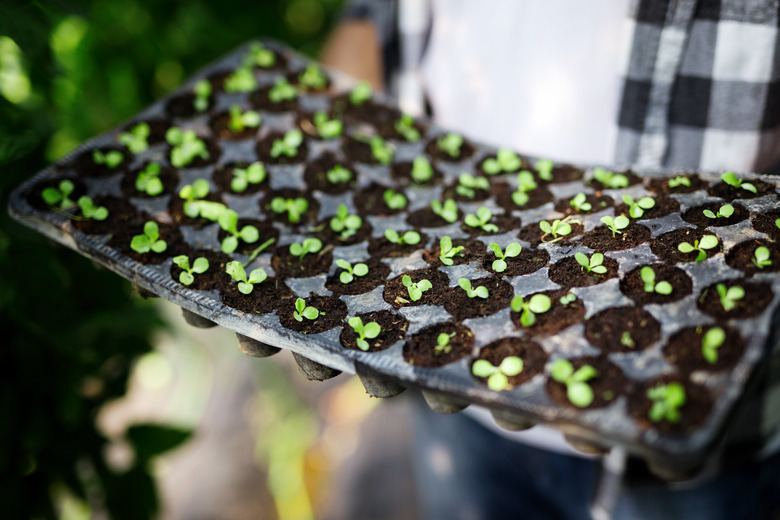
To start seedlings indoors, you'll need containers and growing medium. Make it easier on yourself by choosing biodegradable planting pots that break down in soil. When it comes time to plant outside, you can plant the entire pot, rather than risk damaging the roots. To cut down on planting costs, you can use empty toilet paper rolls, instead.
Fill the pots with sterile, seed-starting mix. Don't reuse old potting soil, here. Give your seeds fresh, fluffy medium that will hold some moisture, but not too much. Most seed-starting mixes come with starter fertilizer, so you don't have to add any. Moisten the soil before planting.
Press seeds into the soil in each pot to the depth specified on the seed packet. Then, place the seeded pots in a warm location or on a special planting heat mat until they sprout. Cover them lightly with clear plastic wrap to hold in the humidity. The room where they are located should not fall below 60 degrees Fahrenheit.
- Fill the pots with sterile, seed-starting mix.
- Then, place the seeded pots in a warm location or on a special planting heat mat until they sprout.
Once you see 1/2 inch sprouts above the soil, remove any heat mats and the plastic. Place the pots on a tray in the sun or beneath grow lights. Add water to the tray to keep the soil moist. Turn the young seedlings every few days to prevent them from growing toward the light.