

Amaryllis & Dormancy
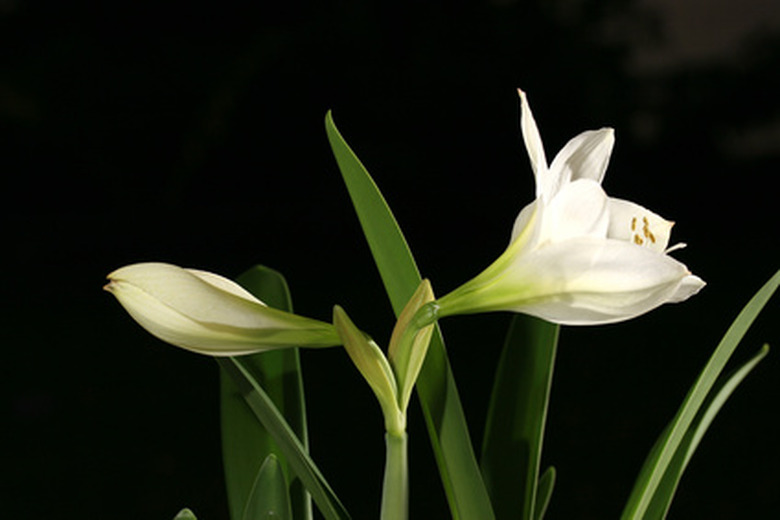
Amaryllis bulbs are a tropical/subtropical plant that can be encouraged to bloom during the winter. This makes them a popular addition to the home and garden. If you time the bulb's dormant period right, winter blooms will brighten your home in time for the holidays. When the temperatures outside warm you can move your blooming amaryllis to the garden as an added feature to your spring landscape.
Time Frame
You can purchase amaryllis bulbs in the late fall. After planting, the new bulb will take six to eight weeks to begin producing new stalks, which will then be followed by flowers. Once those flowers and stalks have completely died back in the late summer, the bulb can be prepared for eight to 10 weeks of dormancy. After this period of dormancy, bulbs can once again be brought out into warmer temperatures and prepared for the next bloom in early winter.
- Amaryllis bulbs are a tropical/subtropical plant that can be encouraged to bloom during the winter.
- Once those flowers and stalks have completely died back in the late summer, the bulb can be prepared for eight to 10 weeks of dormancy.
Dormancy
To prepare your bulbs for their dormant period, allow stalks to die back completely in late summer. Though wilting and drying stalks may not be the most attractive feature in your home or garden, leave the stalks on as long as possible. This helps the bulb to store food and energy for the next season. After you cut the stalks back, move a potted bulb into a cool, semi-dark place. Fifty to 60 degrees Fahrenheit is best for the dormant period. If you planted your amaryllis in the garden, dig the bulb and pot in a container 2 inches bigger in diameter than the bulb. Leave at least a third of the bulb above the soil line. Keep the container only slightly moist during dormancy.
- To prepare your bulbs for their dormant period, allow stalks to die back completely in late summer.
- If you planted your amaryllis in the garden, dig the bulb and pot in a container 2 inches bigger in diameter than the bulb.
Post-Dormancy
After your bulb has been dormant for eight to 10 weeks, move it to a warmer location where it can get regular sunlight. Near a window is best. Increase the amount of water you give it. As best as possible, do not water the bulb directly. Rather, water around it. New stalks will start to grow, followed by flowers.
Transplanting
Amaryllis bulbs, once they have broken dormancy and outside temperatures have warmed to 70 degrees Fahrenheit or above, can be transplanted to the garden. Choose a location for planting that receives direct sunlight. When planted outside, amaryllis may need to be watered every day. Check soil moisture levels often. When the bulb is done flowering, you can tie the remaining stalks together to keep them upright. Once the stalks have completely died back it is time to start the process of preparing the bulb for its dormant period. Amaryllis bulbs that are outside should be brought indoors well before any danger of frost in the fall.
- After your bulb has been dormant for eight to 10 weeks, move it to a warmer location where it can get regular sunlight.
- When the bulb is done flowering, you can tie the remaining stalks together to keep them upright.
Holidays
If you want to have amaryllis flowers on the table for the winter holidays, start your bulb's dormant period in August. Allow eight to 10 weeks for dormancy. Then move the bulb to a warm part of your house where it can receive the most light possible given the darker days of winter. Water regularly, and by December you should have flowers.