

How To Grow Calla Lilies In Zone 6
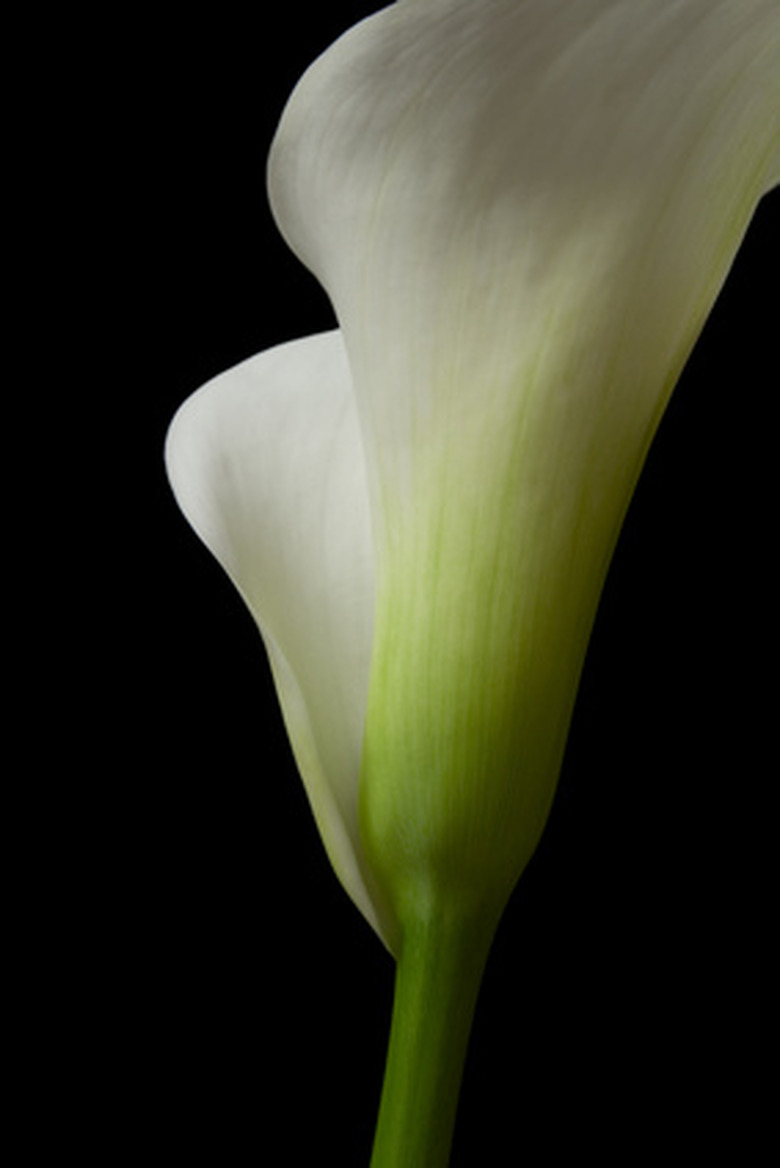
The calla lily plant is a herbaceous perennial that grows from tuber roots similar to bulbs. The plant is native to Africa and is known for its elegant funnel-shaped flowers. You can plant calla lilies year-round in USDA growing zones 8 through 10. You can grow them in colder zones–including zone 6 where low temperatures range from minus 10 to 0 Fahrenheit–if the tubers are stored indoors during the winter.
Step 1
Select a planting location for your calla lily tubers that has well-draining soil and at least 6 hours of direct sunlight each day.
Step 2
Using a shovel, work 2 to 3 inches of organic compost into the ground at your planting site. Dig a planting hole 4 to 6 inches deep. Place the tubers in the hole so the growing buds face upward. Cover the tubers with soil, making sure the top is sticking out of the ground.
- The calla lily plant is a herbaceous perennial that grows from tuber roots similar to bulbs.
- Select a planting location for your calla lily tubers that has well-draining soil and at least 6 hours of direct sunlight each day.
Step 3
Water the soil generously after planting. Continue to water the plants during the growing season when rainfall is less than an inch per week. The lilies prefer a moist soil but will not tolerate standing water.
Step 4
Fertilize the calla lily plants twice a month during the growing season with a liquid general purpose fertilizer. Do not overfeed the plants, as this will result in burnt leaves from too much nitrogen.
Step 5
Apply a 2- to 3-inch layer of mulch around the calla lily plants once they emerge from the ground. This will hold down weeds and help retain soil moisture.
- Water the soil generously after planting.
- Continue to water the plants during the growing season when rainfall is less than an inch per week.
Step 6
Cut calla lily foliage to a length of 2 to 3 inches once the foliage turns yellow in the fall. Remove the calla lily tuber roots from the ground after a strong fall frost. Remove dirt from the tubers and let them dry for two days. Place the tubers in a container filled with peat moss and store them during the winter in a dry location that is at least 60 degrees Fahrenheit.
Step 7
Replant the calla lily tubers in the spring when the danger of frost is over and the soil has warmed past 55 degrees F.
Tip
Calla lily plants are considered poisonous due to the presence of calcium oxalate in the plant.
Things Needed
- Organic compost
- Shovel
- Water
- Liquid fertilizer
- Mulch
- Garden clipper
- Storage container
- Peat moss