

How To Care For A Weigela Shrub
Things Needed
- Balanced formula water soluble fertilizer
- Secateurs
- Organic mulch material
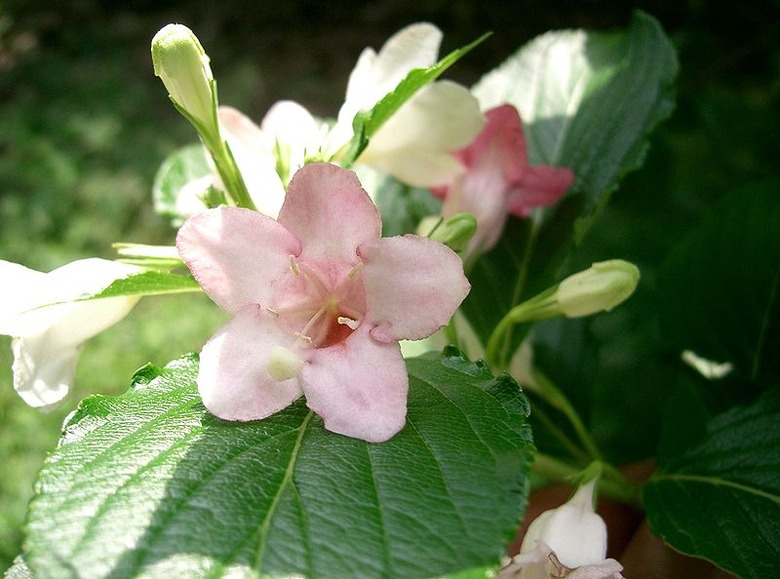
Weigela is a flowering garden perennial shrub that throws out a profusion of pink, red or white blooms throughout the spring and summer. Weigela thrives in full sun and partial shade exposures in well drained and nutrient-rich soil. Hardy in USDA zones 4 through 8, weigela is an easy care shrub that is used widely in the garden for beds, borders, edging and low hedging.
Step 1
Select a site for your weigela that receives full sun to partial daily shade.
Step 2
Maintain nutrient rich, moisture holding soil that is slightly acidic to neutral in its pH level between 6.5 to 7pH. Amend the soil with sphagnum peat moss to raise the acidity and lime to raise the alkalinity if needed. Mulching with an organic material such as leaf mold, compost, shredded bark or even cocoa hulls will help to enrich the soil as they degrade and will also prevent weeds from taking hold.
- Weigela is a flowering garden perennial shrub that throws out a profusion of pink, red or white blooms throughout the spring and summer.
Step 3
Water weigela to keep the surrounding soil moist all throughout the growing season. Water deeply in the fall each year before the ground freezes to protect the roots from winter drought conditions. After weigela is well established in its location (typically after three years), irrigation can be scaled back to just during times of drought or excessive heat.
Step 4
Feed your weigela in the early spring before intense seasonal growth starts. Use a good quality general purpose fertilizer that is water soluble in either a slow release or quick release formulation according to the manufacturer's recommendations.
Step 5
Prune weigela to control shape and size in the summer immediately after the bloom period. Pruning any later in the fall will diminish the next season's bloom. Cut away any damaged, diseased or decaying branches and foliage as you see them throughout the year. Prune out interior branching of the shrub every few years to thin old growth and increase sunlight penetration and air circulation.
- Water weigela to keep the surrounding soil moist all throughout the growing season.
Step 6
Control common pests and insects on weigela with proactive attention the moment you see signs of a problem. Pick off any Japanese beetles individually if you see them and spray stems and foliage with horticultural oil to fight scale.