

Lemon Trees In Texas
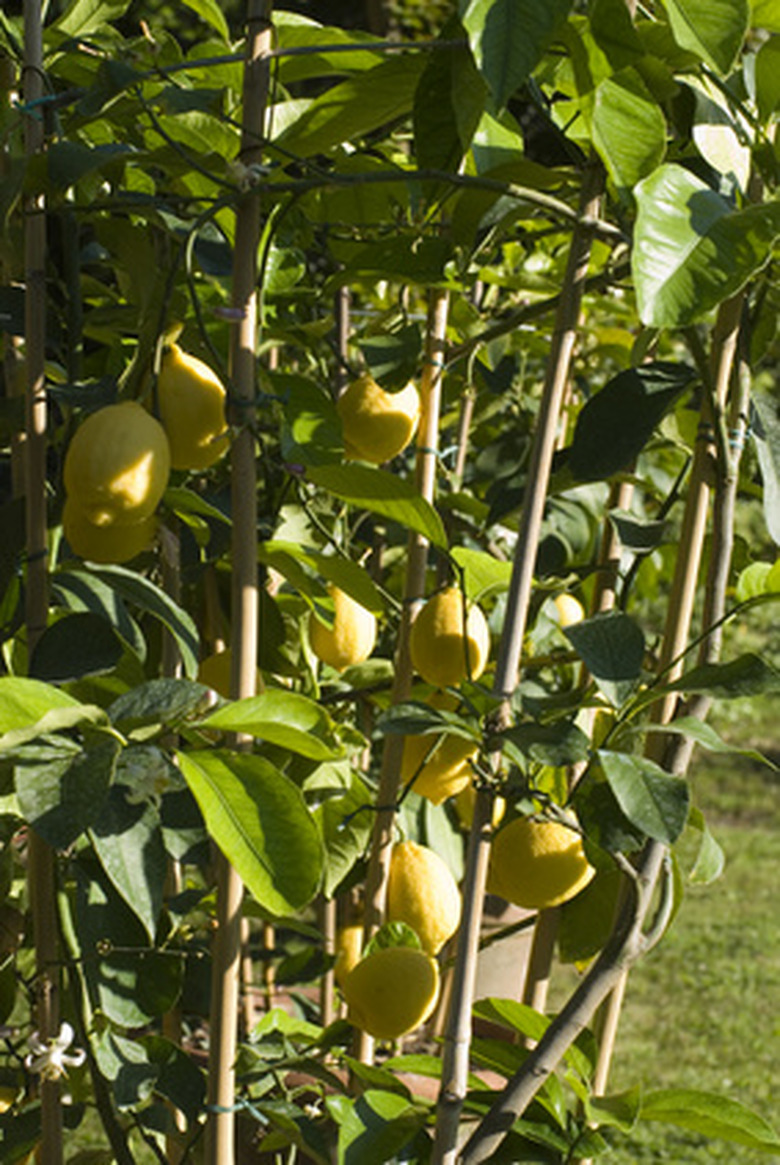
Lemons are a favorite citrus fruit, used to flavor many dishes. The tangy, fresh flavor works well in both savory and sweet recipes and the juice, zest and fruits of the lemon can be used. Lemon trees are becoming popular in many home gardens in Texas. Their green foliage and bright fruits make an attractive addition to the landscape. With proper attention, lemon trees can be grown quite successfully in many areas of Texas.
Climate
Because lemon trees stay in a continuous state of growth, they are more sensitive to cold and freezing temperatures than other types of citrus trees. A winter with one or more freezes will damage the fruits and possibly even the wood of lemon trees. A freeze may even kill a lemon tree. They thrive in coastal areas where the summers stay somewhat cool, but some types, such as the Meyer lemon, will do well in warmer areas as well.
- Lemons are a favorite citrus fruit, used to flavor many dishes.
- Because lemon trees stay in a continuous state of growth, they are more sensitive to cold and freezing temperatures than other types of citrus trees.
Geography
Lemon trees can most successfully be grown in Texas in the lower Rio Grande Valley region, but many Texas home gardeners are having success with them in areas further to the north. To grow lemon trees in areas where a freeze may occur in the winter, special measures must be taken to protect the trees from the cold.
Types
There are three main types of lemon trees grown in Texas. True lemons originated in India and later spread to the Mediterranean. These are the most common lemon types. The two main varieties of true lemon trees are 'Eureka' and 'Lisbon.' Meyer lemons came from China in 1908. Their fruit is less acidic than that of true lemons and can be used in the place of true lemons. The fruits look similar to large oranges in shape and color. These small trees are more cold hardy than true lemon trees. Ponderosa lemon trees are small and thorny with large, seedy, yellow fruits. They are also more cold tolerant than true lemon trees.
- Lemon trees can most successfully be grown in Texas in the lower Rio Grande Valley region, but many Texas home gardeners are having success with them in areas further to the north.
- Their fruit is less acidic than that of true lemons and can be used in the place of true lemons.
Care
Lemon trees need full sunlight and well-drained soil for the best growth and fruit production. Once established, lemon trees should be watered slowly and deeply every couple of weeks, except in very sandy soils when they will need more frequent watering. Mulching is not recommended, but if you mulch, keep it at least 1 foot away from the trunk of the tree. Fertilize three times a year. Lemon trees will develop a natural shape and do not need to be pruned unless there is cold damage.
Cold Protection
Cold protection measures include covering the trees with blankets and tarps during cold weather and building up soil banks around young trees. A soil bank is a mound of soil that is built up close to the lower limbs of the trees. It can be left up from late November to early March. Using Coleman heaters and incandescent heat lamps to provide supplemental heat can also be effective. Some types of lemon trees can be grown in large pots and moved inside when freezing temperatures are imminent.
- Lemon trees need full sunlight and well-drained soil for the best growth and fruit production.
- Lemon trees will develop a natural shape and do not need to be pruned unless there is cold damage.