

Examples Of Green Plants
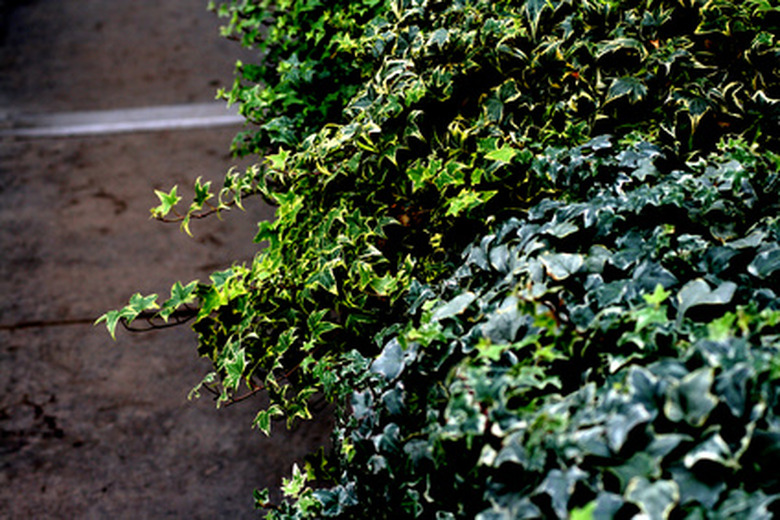
Green plants help to accent other plants and flowers in the garden, especially those with bright colors like red, orange and yellow. There is a wide range of types, including ground covers, vines and shrubs. Green plants have a wide range of shapes and sizes to fit into any size landscape. The vast array of hues run from bright chartreuse to deep emerald green, all of which help to create a lush and attractive display in the garden.
Cushion Euphorbia
Cushion euphorbia (Euphorbia polychroma) is a deciduous ground cover with a moderate growth rate. It has a mounding form and grows 10 to 18 inches tall with a spread up to 3 feet wide. The 2-inch-wide, stemless green leaves on cushion euphorbia cast a reddish tinge in fall for a vibrant garden display. The 1-inch-wide poinsettia-like flowers grow in clusters. Cushion euphorbia is a drought-tolerant ground cover that withstands periods of limited moisture without sacrificing its vibrant green color. It grows best in full sun to light shade and well-drained, loose soil that is sandy to gravelly in nature. Plant cushion euphorbia in USDA zones 4 to 8.
- Green plants help to accent other plants and flowers in the garden, especially those with bright colors like red, orange and yellow.
- Cushion euphorbia is a drought-tolerant ground cover that withstands periods of limited moisture without sacrificing its vibrant green color.
Common Boxwood
Common boxwood (Buxus sempervirens) is a slow-growing evergreen shrub that grows best in USDA zones 5 to 8. It grows 15 to 20 feet tall and has a spread of 10 to 15 feet wide. Common boxwood shrubs have a dense, rounded form with foliage that reaches the ground, and are often grown as hedges. The dark green, lustrous leaves grow up to 1 inch long and cast an orange tinge in winter. The fragrant white flowers on common boxwood emerge in spring to light up the garden with color. Common boxwood is both easy to transplant and drought tolerant, creating a hardy green plant variety. It grows best in full sun to part shade and moist, well-drained soil.
- Common boxwood (Buxus sempervirens) is a slow-growing evergreen shrub that grows best in USDA zones 5 to 8.
- The fragrant white flowers on common boxwood emerge in spring to light up the garden with color.
English Ivy
English ivy (Hedera helix) is an evergreen vine with medium to coarse texture and a moderate to rapid growth rate. As an evergreen, English ivy vines retain their foliage color year-round to add a burst of warmth to the garden. English ivy has a climbing growth habit, and grows up to 50 feet tall. The 4-inch-long, deep green, 5-lobed foliage on English ivy is drought tolerant. Ivy produces clusters of green to white umbrella-like flowers that are followed by blue to black berries in fall. English ivy grows best in part to full shade and well-drained soil. Plant English ivy in USDA zones 6 to 8.
- English ivy (Hedera helix) is an evergreen vine with medium to coarse texture and a moderate to rapid growth rate.