

Planting And Maintaining A Thyme Lawn
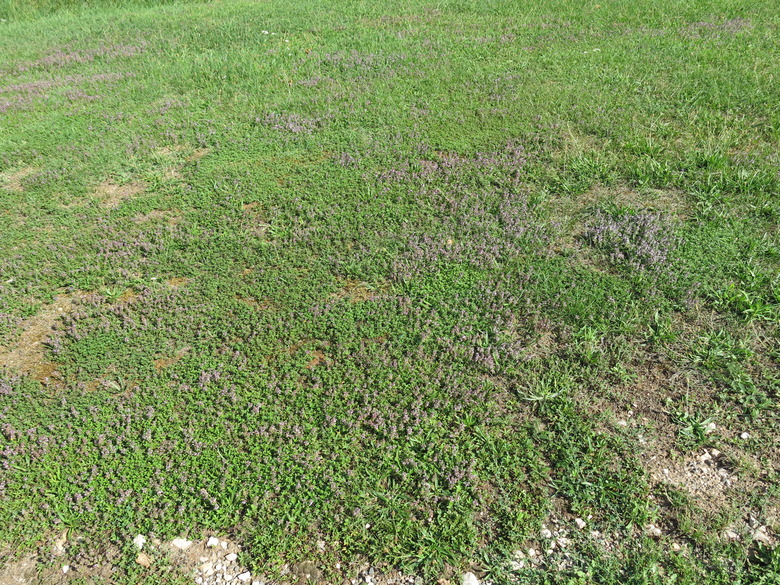
There are approximately 350 species of thyme (Thymus spp.), which is an evergreen flowering plant. Creeping thyme (Thymus serpyllum) is a low-growing, mat-forming species that can be used as a substitute for traditional turf lawns. Like other groundcover plants, it can also be used in rock gardens and to fill in spaces between stepping stones.
Creeping thyme is drought resistant and winter hardy in USDA plant hardiness zones 4 to 8.
Creeping Thyme Identification
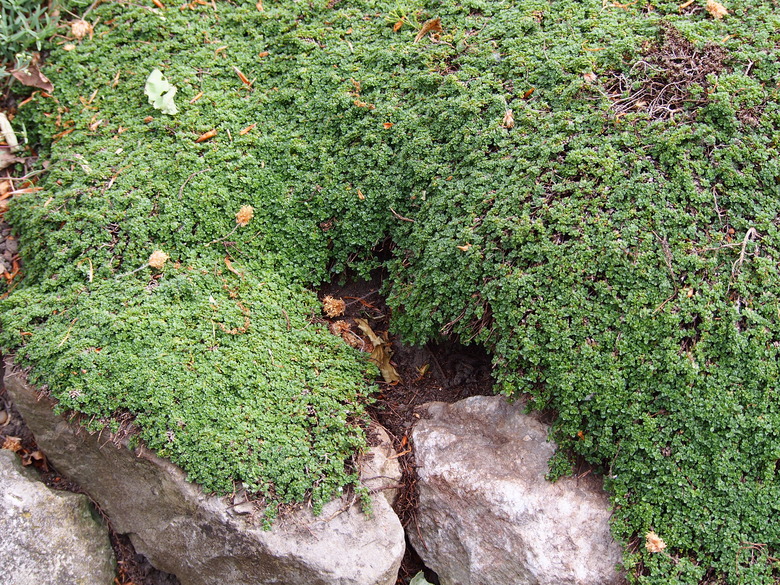
Creeping thyme plants have a height of about 3 inches with a spread of about a foot. Their leaves are tiny and hairy and blue-green in color.
This species produces small, tubular pink flowers in June and July. Because it can tolerate foot traffic, creeping thyme can be used as a lawn alternative.
Also known as mother of thyme, creeping thyme flowers contain nectar, which attracts pollinators, including bees. Therefore, a thyme lawn may not be the best alternative to a grass lawn if it will be frequented by children or pets.
Tip
Bees are drawn to creeping thyme flowers, an important consideration when using this plant as a lawn substitute.
Though related to culinary thyme, creeping thyme is rarely consumed, though it has the pleasant aroma associated with this herb.
Another low-growing thyme plant that can be used as a lawn replacement plant is red creeping thyme (Thymus praecox 'Coccineus,' zones 5 to 8), which has rosy red flowers.
Planting a Creeping Thyme Lawn
While species creeping thyme can be grown from thyme seed, doing so can be difficult, and cultivars are best propagated via cuttings. Creeping thyme plugs, which are seedlings, can be used to start the lawn, though they can be expensive and difficult to acquire.
Creeping thyme should be planted in spring or fall. This species grows best in loamy or sandy soils. It is important that these plants be grown in soil with good drainage to avoid root rot.
Allow a distance of 6 to 12 inches between plants.
 Agnieszka Kwiecień
Creeping Thyme Lawn Care
Creeping thyme grows best in full sun. It does well in rocky, sandy soils and is therefore a good alternative to turfgrass if you are dealing with poor soil.
Tip
Creeping thyme grows best when it is planted in dry soil and receives full sun.
Creeping thyme plants are very drought tolerant and grow best in dry conditions, making them low-maintenance plants that require less water than a traditional lawn. And, unlike a grass lawn, creeping thyme lawns do not need to be fertilized.
However, creeping thyme plants do need to be cut back in order to keep the plants looking neat and to reduce the amount of woody growth. These plants lose their vigor after a few years. They should be divided every three or four years to reestablish the lawn.
References
- North Carolina State Extension: Thymus serpyllum
- University of Nevada, Reno: Groundcover Plants for Southern Nevada – Viable Alternatives to Turfgrass
- University of Minnesota Extension: Planting and Maintaining a Bee Lawn
- Missouri Botanical Garden: Thymus serpyllum
- North Carolina State Extension: Thymus praecox
- Missouri Botanical Garden: Thymus (Coccineus Group)
- University of Arkansas Research and Extension: Plant of the Week: Thyme, Creeping, Mother of Thyme