† Requires Javascript
Copyright © 1997-2009 Demand Media. All rights reserved.
Looking for a multi-purpose herb? One to grow for looks in the
garden, one that can attract butterflies, beneficial insects, and
birds, one that tastes great, that contains medicinal properties
and can also help your pet? What herb is able to do all this? It's
a tall order, but the fabulous, feathery fennel can fill it. In
fact, the sweet and bronze variety may grow to six feet tall. He's
a big fellow for a tall order.
Profile
Family: Parsley/Carrot
Genus and species: Foeniculum vurlgare, F. vulgare dulce (F. officinalis)
Other names: Finocchio, Carosella, and Florence fennel
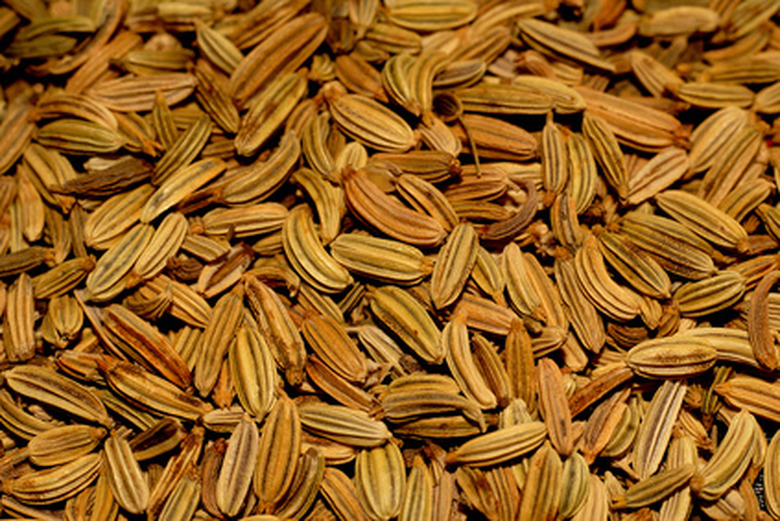
Parts used: The entire plant is edible, only the seeds and their essential oil are used medicinally. The seeds are collected in August and September when they are ripe and then dried.
Physical Profile: Fennel is tall; growing 2 to 6 feet, it's also hardy with a thick taproot and hollow stems. The feathery leaves are formed of bright green thread-like leaflets. The flower is flat umbel of tiny yellow florets.
Varieties: There are three common types:
Cultivation
Fennel will be glorious to the eye. If you want to start the
seeds yourself indoors you will be pleased at how readily they
germinate, especially the sweet and bronze. Plant the young plants
outdoors after danger of frost has gone. This herb will grow in
most soils in an open situation and self-sow freely. Do not plant
fennel next to dill, as they tend to cross-pollinate or plant next
to beans or tomatoes.
Fennel grows best in full sun with plenty of water and good
drainage. Spaces plants 1 foot apart and remove spent flowers to
reduce number of volunteer seedlings. Cut plants to ground after
frost. To grow the Florence variety, space the plants so they have
plenty of room. About mid-summer you will notice that the herb has
developed yellow to green flower clusters in which a number of
flower stalks, nearly equal in length, spread from a common center.
These mature into seed heads. Expect to enjoy the flowers from June
through October.
Butterflies & Birds
Fennel is a favorite of caterpillars from the anise swallowtail
butterfly. The female lays her eggs on all parts of the herb, and
as the eggs hatch, the plant is eaten. You will find many varieties
of butterflies visiting your fennel for its delectable nectar. This
herb is also a favorite host plant for ladybugs and other
beneficial garden insects. TIP: The dried plant is an insect
repellent.
When fennel starts to go to seed watch for tiny zesty-spirited
songbirds such as the Bushtit. These feathered friends visit for
the seeds and to gobble any insect that dare to venture onto the
plant. NOTE: If you plan to use the seeds yourself, be sure to
collect them before the birds do. Maybe you can plant extra, and
then you both are able to enjoy this fruit.
Culinary
The entire fennel plant is edible, only the seeds and their
essential
oil are used medicinally. Collect the seeds in August and September
when they are ripe and dried.
Fennel contains these nutrients: Calcium Magnesium, Phosphorus, Sodium, Folic-acid, Vitamin C, Potassium, and Phytoestrogens.
Remember that fennel has a subtle anise-like flavor and scent. Uses as a spice:
Recipes
Three Seed Tea
Three seed tea is a pleasant tasting, soothing tea that helps
alleviate constipation, upset stomach, gas, and coughs and serves
as a mild blood cleanser as well. Preparation Time: 20 Minutes.
Yield: 3 Cups.
1 tsp. Fennel seeds
1 tsp. Fenugreek seeds
1 tsp. Flaxseeds
3 cups water
First, gently simmer fennel, flaxseeds, and fenugreek in the water
for 15 minutes. Next, strain and drink.
Fennel In Casserole Casalinga
Yield: Serves 6
2 bunches fennel
6 Tbsp. Oil
2 crushed garlic cloves
Salt and pepper
Drop the fennel into a large pot of lightly salted boiling water
and cook for 10 minutes. Drain and cut into 2" pieces. Heat the oil
in a large, shallow casserole over medium heat, add the garlic, and
cook until the garlic begins to color. Add the fennel, ¼ cup
water, season with salt and pepper, cover, and braise gently for
about 40 minutes, or until it is very lightly browned and tender.
Serve in the casserole.
Medicinal Uses
Fennel is beneficial in various medicinal ways. It is anti-spasmodic, relieves intestinal cramps and stomach pain. It also seems to help during menopause, be beneficial in the aid of digesting fats, useful in weight control possibly because fennel may help take away hunger pangs, said to soothe sore eyes when bathed with fennel, buffer laxative blends, increase lactating mother's milk after child-birth, and in use as a compress when the seeds are crushed for conjunctivitis. Some say fennel has helped to reduce a stuffy nose when you have a cold. Its leaves are cleansing and gently astringent.
Medicinal Uses for Fennel Essential Oil:
Fennel as an essential oil is sweet and warm. It is extracted by steam distillation of the squashed seeds.
Pets & Fennel
Fennel will help keep fleas from dogs, but it needs to be used before the animal obtains the tiny pests. It doesn't seem to work very well afterwards.
Origination, History and Lore
Originally, fennel came from the Mediterranean. It is one of the oldest known cultivated herbs. Roman warriors took fennel to stay in good health. The Roman naturalist, Pliny included fennel in 22 remedies. The Emperor Charlemagne ordered the herb cultivated in all his imperial gardens.
The ancient Greeks called fennel marathon. It grew wild around
the village of Marathon, about 25 miles from Athens, where the
Athenians defeated the Persians in 490 B.C. A long distance runner
brought news back to Athens, and his athletic endeavor inspired the
day's marathon races. Hippocrates prescribed fennel to treat infant
colic.
Fennel was a prized vegetable in the Middle Ages and American
Colonists brought fennel to North America where it is still used
and appreciated today. It grows wild throughout the United
States.
Satisfy all five senses with fabulous fennel. Enjoy its glorious
appearance along with that of the butterflies and birds that come
to visit. Run your fingers along the feathery branches, maybe even
pick some and run it along the bottom of your foot or a special
friend's. Listen to the birds and insects attracted by the herb,
and to the gentle breeze easing its way through the leaves. Taste
the striking anise flavor from eating a couple of seeds. The flavor
is pleasant and soothing. Breathe in the aromatic licorice-like
scent.
Go ahead, request a lot from this tall herb, fennel, he won't
disappoint you.
Warnings & Precautions
Sources/Recommended Reading
A Superguide to HERBS and Medicinal Plants, By: Madge Hooper, Published by: Kingfisher Books, 39 pages, Copyright: 1989.
Complete Aromatherapy Handbook- Essential oils for Radiant Health, By: Susanne Fischer-Rizzi, Published by: Sterling Publishing Co., Inc., Illustrated by: Peter Ebenhoch and Gunter hartmann, 239 pages, Copyright: 1990.
Great Italian Cooking (La Grande Cucina Internazionale), By:Michael Sonino, Published by: Abradale Press, Inc., Copyright in Italy by Garzanti Editore, Milan 1965.
Growing Herbs and Vegetables- from seed to harvest, By: Terry & Mark Silber, Published by: Alfred A. Knopf, Inc.
Herbal Remedies For Dummies- A Reference for the Rest of Us! By: Christopher Hobbs, L.Ac., Fourth generation herbalist and teacher. Published by: IDG Books Worldwide, Inc., Copyright: 1998.
1998 Natural Healing- Remedies How to Guard Your Health, Boost Your Immunity, and Banish Fatigue, Edited by: Doug Dollemore, PREVENTION. Health Books, Published by: Rodale Press, Inc. Emmaus, Pennsylvania, Copyright: 1998.
Taylor's Guide to Growing North America's Favorite Plants-Proven Perennials, Annuals, Flowering Trees, Shrubs, & For Every Garden, By: Barbara W. Ellis, Published by: Houghton Mifflin Company, 342 pages, Copyright: 1998.
The Food Doctor- Healing foods for mind and body, By: Vicki Edgson DipION & Ian Marber KipION, Published by: Collins & Brown Ltd., 160 pages, Copyright: 1999.
The Healing Herbs- The Ultimate Guide, By: Michael Castleman, Published by: Bantam Books by arrangement w/Rodale Press, 641 pages, Copyright: 1995.
The Herbal Home Spa- Naturally Refreshing Wraps, Rubs, Lotions, Masks, Oils, and Scrubs, By: Greta Breedlove, Published by: Storey Books, 201 pages, Copyright: 1998.
The People's Pharmacy Guide to Home And Herbal Remedies,
By: Joe Graedon and Teresa Graedon, P.H.D., Published by: St.
Martin's Press, Copyright: 1999.
GardenGuides.com