

How To Thin Swiss Chard
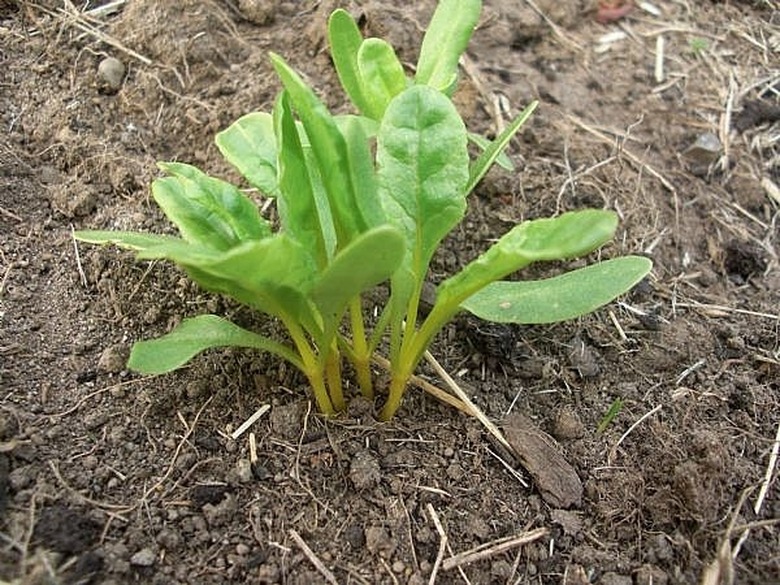
How to Thin Swiss Chard. When Swiss chard seeds germinate, a small clump of seedlings often emerge because chard "seeds" are actually a fruit that contains several seeds. Chard plants grow best spaced about 8 inches apart. To prevent stunting your plants it is important to thin out the clump of seedlings. To do so, you can either remove the unwanted seedlings or you can dig up the clump and transplant the seedlings. Here are the steps to thinning Swiss chard.
How to Selectively Remove Seedlings
Step 1
When Swiss chard germinates, it sends up two small leaves called cotyledons, which are thin and strap-like and bear no resemblance to the mature plant's leaves. Next, the seedling develops what are called "true leaves." These leaves are simply baby versions of the chard's mature leaves. Wait to thin until the seedlings have one set of true leaves and are just beginning to put out their second set.
- When Swiss chard seeds germinate, a small clump of seedlings often emerge because chard "seeds" are actually a fruit that contains several seeds.
Step 2
Hand-pulling the seedlings that you'd like to thin out can disturb the roots of the seedlings that you'd like to keep. So, instead of pulling, simply use scissors to snip off the seedlings you don't want at the soil line. I like to use needlenose kitchen scissors, because they are easier to maneuver in small spaces. For this first thinning, leave about 4 inches of space between the Swiss chard plants.
Step 3
When the plants reach 4 or 5 inches tall, go back and thin out every other plant so that there is 8 inches between them. Be sure to eat the tender young thinning in salads or drop them into stir fries.
How to Transplant Seedlings
Step 1
The best time to transplant seedlings is when you have one set of true leaves. Water the seedlings well a couple of hours before you plan to transplant.
- Hand-pulling the seedlings that you'd like to thin out can disturb the roots of the seedlings that you'd like to keep.
- So, instead of pulling, simply use scissors to snip off the seedlings you don't want at the soil line.
Step 2
Using a spade, dig up the clump of seedlings. Make sure to get as big of a root mass as possible. Set the clump of seedlings down and use your fingers to gently tease the seedlings' roots apart.
Step 3
Now you're ready to transplant the chard seedlings. Loosen up the soil at the transplant site. Make a hole that is as deep as the seedling's roots are long. Then pick up a seedling by its leaves and nestle its roots into the hole. Backfill the planting hole with soil. Space the seedlings 8 inches apart.
- Using a spade, dig up the clump of seedlings.
- Backfill the planting hole with soil.
Step 4
Water the seedlings in. Don't worry; they might look a little droopy for up to a week. Just keep the soil consistently moist and they will eventually perk up.