

How To Plant A Bachelor Button From Seed
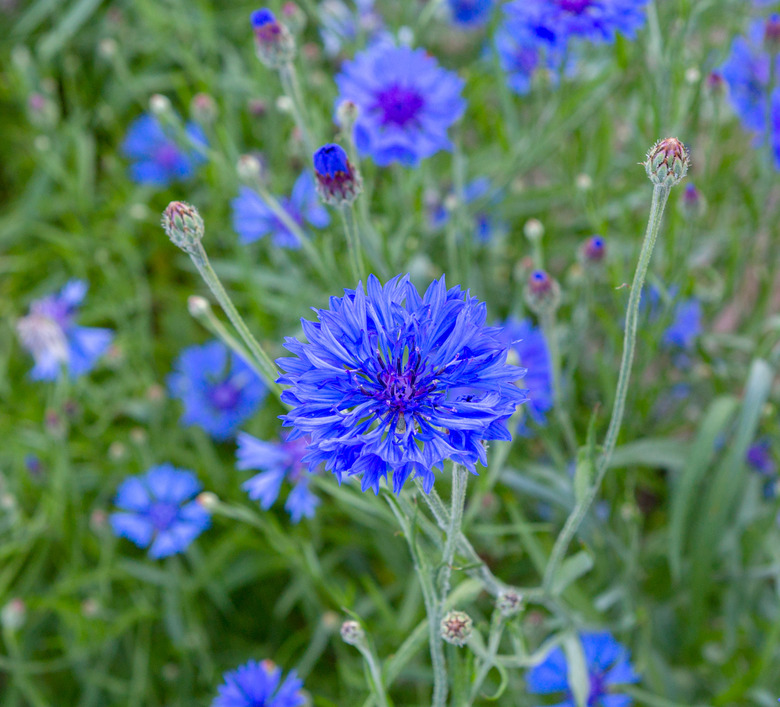
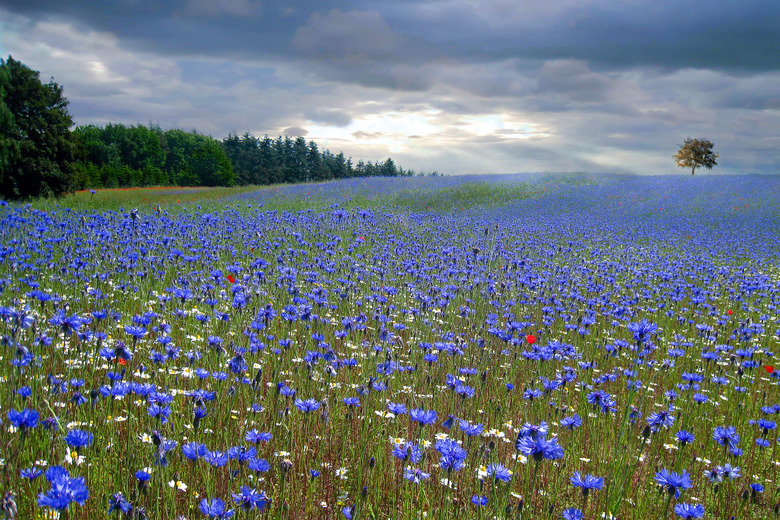
The intense violet-blue color of bachelor button flowers (Centaurea cyanus) have endeared them to generations of gardeners. Sometimes called cornflowers or bluebottles, these showy, low-maintenance flowers are annuals that die back at the end of each growing season and must be started from seed each year.
Bachelor button seeds can be started indoors before the last spring frost or directly in the garden depending on the local climate. No matter where you sow them, the seeds germinate quickly and easily as long as they are given plenty of moisture and steady warmth.
Starting Bachelor Button Seeds Indoors
Bachelor button seeds should be started indoors six to eight weeks before the last spring frost so they are ready for transplant when the soil warms. The seeds can be started in a nursery flat or in peat pots filled with moist potting soil or seed-starting compost.
- Sow bachelor button seeds under a very thin layer of soil no thicker than 1/2 inch. The seeds need to be close to the soil surface without being completely exposed to light and air.
- Set the nursery flat or peat pots in a bright, sunny location indoors near a west- or south-facing window. Drape a piece of plastic wrap over the pots to hold moisture and warmth around the seeds.
- Bachelor button seeds need temperatures between 65 and 70°F, so the containers may need to be set on a propagation mat if indoor temperatures are very chilly.
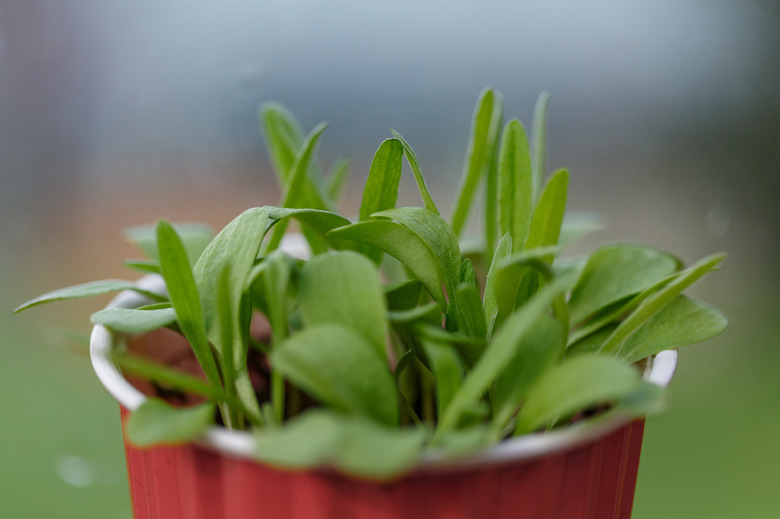
- Check the soil moisture every other day and mist the seeds when the soil feels nearly dry. The seeds will germinate in one to two weeks.
 dlinca/iStock/GettyImages
Caring for Bachelor Button Seedlings
Bachelor button seedlings that are started indoors need a little more attention than those started directly in the garden. Start by thinning out the bachelor button seedlings once they reach a height of 1/2 inch and have two sets of mature leaves. Snip off the unwanted seedlings at soil level using small scissors, leaving only the strongest seedlings to grow.
These sun-loving plants need 14 hours of sunlight each day to bloom well, so be sure to position them near a south-facing window and supplement low light levels with a grow light. Once all frost danger has passed, move the seedlings outdoors for a few hours each day to acclimatize them to outdoor conditions.
Transplant the bachelor button seedlings into a sunny bed with fast-draining soil a few weeks after the last frost. Space the seedlings 6 to 12 inches apart.
Tip
Amend the bed with a 1- to 2-inch-thick layer of compost if the soil is very poor and sandy.
 Nick Brundle Photography/Moment/GettyImages
Starting Bachelor Button Seeds Outdoors
- **Planting time:** Autumn is the best time to start bachelor button seeds in mild winter climates, although they can also be started directly outdoors in early spring.
- **Prepare the planting site:** Prepare a planting site in a sunny bed with well-draining soil a few weeks before sowing the seeds, which will give the soil time to settle and collapse any air pockets. Choose a growing site with direct sun all day and fast-draining soil. Add 1 to 2 inches of compost to the top few inches of soil.
- **How to sow:** Sow the seeds when daytime temperatures stay reliably above 60°F. Scatter the seeds across the bed and cover them with a 1/2-inch-thick layer of soil. The seeds will take 7 to 14 days to germinate, during which time the soil should be kept moist but not too wet.
- **Thinning the seedlings:** Bachelor button seedlings need to be thinned out so that there is enough space for them to spread and grow. Thin the seedlings to 6 to 12 inches apart.
Tip
Pinch back the tips of bachelor button seedlings to encourage branching.