

How To Create Your Own Wildflower Meadow
Provided by the wildflower experts at American Meadows
**Planting in Spring, Summer or Fall.** All three seasons are wildflower planting times, depending on your region, your weather, and the way you want to approach establishing your meadow. No matter when or where you plant, site preparation is roughly the same. But the first consideration is not the season; it's your climate:
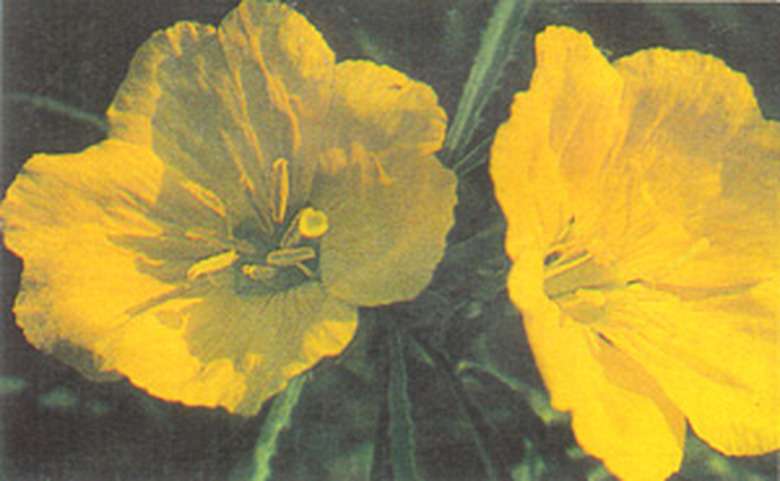
Oenothera lamarckiana (Evening Primrose) Image Courtesy of American Meadows
**For mild-winter areas:** If you're planting in a warm place such as California, Florida or southern Texas, with minimal-or no-winter frost, you can plant almost anytime, except during your hottest season. Best time is just before your rainiest season begins, and when you know the weather will not be too hot for young seedlings. In Florida, fall is best. In California, most wildflowers are planted during the winter to take advantage of California's greening in early spring.
- Provided by the wildflower experts at American Meadows **Planting in Spring, Summer or Fall.
- ** But the first consideration is not the season; it's your climate: Oenothera lamarckiana (Evening Primrose) Image Courtesy of American Meadows **For mild-winter areas:** If you're planting in a warm place such as California, Florida or southern Texas, with minimal-or no-winter frost, you can plant almost anytime, except during your hottest season.
**For all areas with killing frost:** If you have definite killing frost in winter, things are different. In these areas (most of the country) spring and fall are both fine for planting, and each has its advantages.
**Fall Planting.** Fall and spring planting can be equally successful with wildflowers, and each season has its devoted fans for several reasons.
Many people like to say "Nature plants wildflowers in the fall." and that is basically true. All season long, flowers in the wild are blooming, then "going to seed", which means dropping their seeds to propagate their individual species. For example, a very successful species such as Black-eyed Susan blooms in mid-summer, and then drops a large number of seeds from each dying flower in late summer. If weather cooperates, these seeds may sprout before winter. If it is dry and hostile for the seeds, they will simply lay there through the winter and sprout in spring.
- **For all areas with killing frost:** If you have definite killing frost in winter, things are different.
- All season long, flowers in the wild are blooming, then "going to seed", which means dropping their seeds to propagate their individual species.
**Creating a Wildflower Meadow** Regardless of the size of your property, wildflowers can enhance its beauty and add to your enjoyment. This booklet describes how to grow meadow wildflowers that can fill any size yard with a seasonal procession of colors. Learn to plan, prepare, select the proper seeds, and maintain your meadow with this informative booklet.
**Fall Planting Advantage:** Earlier bloom. One clear advantage of fall planting, particularly in cold areas, is that it gives you bloom earlier than spring-planted seed. For example, if you plant a mixture in, say October, you will see growth and bloom about 2-4 weeks earlier the following spring than if you had waited to plant your seed in May. In this respect, wildflower seed performs like grass seed; everyone knows a lawn seeded in fall is usually better established in spring than one seeded in spring.
- Creating a Wildflower Meadow Regardless of the size of your property, wildflowers can enhance its beauty and add to your enjoyment.
- One clear advantage of fall planting, particularly in cold areas, is that it gives you bloom earlier than spring-planted seed.
Your site may determine the time of year you plant. If it is a flat site, you can plant any time you like. If it's at all steeply sloped, you should probably choose spring. This is because fall-planted seed is subject to "washouts", since it has to lie there all through late fall and winter, while spring-planted seed has only to wait until it sprouts. The dangers to fall planting on a slope are obvious.
If you decide to plant in fall, wait until after killing frost. The timing is roughly the same as when tulip bulbs are planted-late enough to be sure your seeds will not sprout before winter. The point is to wait until the soil is so chilled that seed cannot sprout, but stays dormant until warming soil and moisture trigger germination in spring.
- Your site may determine the time of year you plant.
- The point is to wait until the soil is so chilled that seed cannot sprout, but stays dormant until warming soil and moisture trigger germination in spring.
A great advantage of fall planting is that the weather in fall is usually more predictable than spring. Chances are that in fall, you won't be delayed by rains, or be locked to a tight time period when your seed must go in. Simply choose your site, prepare your ground, and sow your seed (see below) before the ground freezes. There's definitely less time-pressure on the gardener in fall than in spring.
One disadvantage of fall planting is that you have no idea how much weed seed may be in the soil in your cleared area. However, with fall planting, your flower seed at least has a level playing field with any weed seed that's there. In spring, the weed seeds have some advantage, since they've been there through the winter, all ready to sprout.
- A great advantage of fall planting is that the weather in fall is usually more predictable than spring.
- Chances are that in fall, you won't be delayed by rains, or be locked to a tight time period when your seed must go in.
**Spring Planting.** Most wildflower meadows are installed in spring, simply because that is when most gardening happens. To plant in spring, timing is important. The earliest possible time is about one week before you'd put out tomato seedlings in your area. In other words, as the seed packets have always said, "when danger of frost is past." But there are other important considerations.
If you're like most meadow gardeners, once you clear your ground by tilling or any other method, you'll want to sow your seed immediately thereafter-if possible on the same day, surely the one after. You can't till the area one weekend, and seed the next. Here's the reason. The minute you open the ground, you turn up weed seeds that are in all soil. If you wait before putting in your flower seed, those weed seeds have an important "jump" on the flowers, and they may become quickly dominant over the flower seed as your meadow area grows. By putting the flower seed in quickly, you at least give your flowers a "level playing field" with the grasses and weeds that are sure to grow up with them. (Remember when you created a vegetable garden by clearing an area? Weeds popped up quickly, and you immediately pulled them. In this case, no one is going to pull the seedlings that appear after your seeding -at least for awhile. And some of those seedlings are going to be weeds you didn't plant. Don't be foolish enough to think some weeds aren't going to be there; they are.)
**Spring Planting Advantage:** A chance to remove the weeds. If you're willing to do a little more work and exercise some patience, there is a way to eradicate or at least greatly reduce your weed population before you sow your flower seed. This is one of the big advantages of spring planting over fall.
- Most wildflower meadows are installed in spring, simply because that is when most gardening happens.
- If you're like most meadow gardeners, once you clear your ground by tilling or any other method, you'll want to sow your seed immediately thereafter-if possible on the same day, surely the one after.
The idea is to clear the ground, do not sow seed, but instead begin immediately to encourage weed growth as quickly as you can. This means watering if it's dry, and watching closely. After about two weeks, you'll see green seedlings popping up, and you'll know at least the early germinating seed population of your soil. Wait as long as you can (this usually depends on weather, and how early you got started), and once you have a good idea of what you're dealing with, you're ready to kill those young weeds and spread your flower seed.
There are several ways to proceed. Many use a herbicide like Round-Up. Others have been known to lay wet newspaper on the weeds to smother them, but this is not surefire and takes longer. At this point, you must resist heavy raking or tilling again, because if you do, you'll turn up fresh weed seeds which will begin their sprouting process, starting the whole cycle over again. In other words, at this point, you must kill the weed seedlings you see, but NOT disturb the soil again.
- The idea is to clear the ground, do not sow seed, but instead begin immediately to encourage weed growth as quickly as you can.
- In other words, at this point, you must kill the weed seedlings you see, but NOT disturb the soil again.
Once your soil is clear, sow your wildflower seed, and it will grow in what is probably the most weed-free situation possible. Nothing is perfect, and of course, over time, weeds and grasses will invade. But this method gives your flower meadow the best possible start. Obviously, there are several disadvantages. First, it takes time. Second, it usually requires more watering once your flowers sprout, since you're farther along into the season, and spring moisture has subsided. Thirdly, bloom is delayed, compared to when it would have begun if you had seeded when you first cleared the ground. But if you're serious about installing the best-ever meadow, all this is worth it.
- Once your soil is clear, sow your wildflower seed, and it will grow in what is probably the most weed-free situation possible.
**Summer Planting:** It's perfectly acceptable to plant wildflower seed in most all areas during summer, except those places that experience temperatures that stay in the eighties or higher. Many flower seeds simply will not germinate at high temperatures. However, in many places, variable weather and cooler nights make early summer fine for planting. The later it is, the more watering you'll probably have to do.
**Certain flowers and certain seasons:** Another consideration is the flower seed you are planting. For example, perennials can really be planted at any time of year. They just may not germinate or bloom exactly when you'd like. Most of them have to go through a winter before they bloom, so if you plant perennial seed in spring or summer, do not expect bloom that year-only leaf and root growth. Annuals, of course, grow and bloom quickly and then die with their first frost. This means if you plant annuals in mid-summer, even if your weather cooperates, you won't have much bloom, if any, before frost gets them. If you're planting a mix of annuals and perennials (like most), fall, spring or early summer planting will bring annual bloom the first year, and then heavy perennial bloom plus some reseeded annual bloom the second and following years.
- **Summer Planting:** It's perfectly acceptable to plant wildflower seed in most all areas during summer, except those places that experience temperatures that stay in the eighties or higher.
- Most of them have to go through a winter before they bloom, so if you plant perennial seed in spring or summer, do not expect bloom that year-only leaf and root growth.
**Another consideration about annuals:** If you plant in fall in cold-winter areas, you may lose the more tender species to late spring frosts after they germinate. Cosmos is one species that is susceptible to spring-kill, but favorites like red poppy and cornflower are tough "half-hardy annuals", and aren't fazed by a few spring frosts.
**Choosing a site. How to begin.** First, you'll need to choose a place for your wildflower area. If you're planting an entire field of several acres, the decision is easy. If you're putting in a smaller area, there are several things to consider. Wildflowers look best in a semi-natural spot. Along a wood-line at the back of your lot, for example, or in a free-form area against a fence, bordered in front by lawn or the patio. Some homeowners plant wildflowers between the driveway and lot-line, giving one complete part of the former lawn over to nature.
- **Another consideration about annuals:** If you plant in fall in cold-winter areas, you may lose the more tender species to late spring frosts after they germinate.
- Some homeowners plant wildflowers between the driveway and lot-line, giving one complete part of the former lawn over to nature.
For all but our partial shade mixture, choose a sunny spot. For wildflowers-the sunnier the better. After all, think about the beautiful meadows you've seen in nature; they're always open and sunny. The only absolute requirement is good drainage. This means a place where water does not stand after a rain.
Speaking of moisture, it is good to have your wildflower area within easy reach of your garden hose. Of course, with large plantings, this may be impossible, but if you have a choice, you'll appreciate having a water source nearby when you install your meadow and later on when things get very dry.
- For all but our partial shade mixture, choose a sunny spot.
- Speaking of moisture, it is good to have your wildflower area within easy reach of your garden hose.
After wildflowers are up and growing, many people mow a charming, curving path through their meadow area, so everything can be observed "up close." Next, usually comes bird feeding stations, birdbaths, and perhaps a bench somewhere along the path at a favorite spot.
**Your soil.** Unless your soil is actually sterile, which is rare, it is recommended that you use your soil as you find it. Wildflowers, as we see on every roadside, are extremely adaptable. Of course, if yours is heavy clay, you can till in sand to loosen it. And if it is sandy, you can till in humus to make it heavier and more moisture-retentive. But the test is simple. If anything is growing in the area-even if it's just grasses or weeds-the area should support wildflowers with the soil just as you found it. If it's a problem area where nothing grows, you need a new site. Wildflowers may be adaptable, but they're not magic. They won't grow on a sterile site any better than anything else.
- After wildflowers are up and growing, many people mow a charming, curving path through their meadow area, so everything can be observed "up close."
- If anything is growing in the area-even if it's just grasses or weeds-the area should support wildflowers with the soil just as you found it.
**Soil Preparation.** Clearing the ground: This subject is all-important to your meadow's success. You must clear your area of all existing growth. For a small area, the project is the same as preparing for a new vegetable garden, and a shovel is usually all that is needed. Simply dig out everything that's growing there, turn the soil, and rake the area flat and free from rocks and roots. (By the way, here's one advantage of meadow gardening over vegetable gardening. A few rocks and some uneven spots won't bother a wildflower planting, so there's usually less to do.) But old grass roots are important-be sure to remove them or they'll grow back along with your new flower plants.
- Clearing the ground: This subject is all-important to your meadow's success.
- But old grass roots are important-be sure to remove them or they'll grow back along with your new flower plants.
For larger areas, usually a rototiller is used to bare the ground. It's important to "till" only as deep as necessary to remove old roots-don't dig deep just because you can. The deeper you till, the more dormant weed seeds you'll turn up near the surface where they can sprout along with your wildflowers. If your area has been an old field that has grown and seeded itself for years, expect plenty of weed seeds in the soil. If you're tilling a lawn that's been mowed for years, chances are your weed seed count will be low.
Careful rototilling works well for three reasons. It opens the soil and allows a "soft" space for emerging flower plants. It creates a good seedbed for germination and promotes good "seed-to-soil" contact. And, of course, it removes almost all the existing grasses and weeds which would otherwise compete with your seedlings.
- For larger areas, usually a rototiller is used to bare the ground.
- It's important to "till" only as deep as necessary to remove old roots-don't dig deep just because you can.
Unless you're trying to create a prairie environment, which includes certain grasses, it's important to understand that grasses and weeds are the enemy in establishing a wildflower meadow. Your objective is to get the flower seedlings dominant over the grasses, instead of the reverse. No matter how you work on your site, some grasses will return in time, and that's fine. After all, the "natural look" you are seeking is created by the companion growth of flowers and grasses. So success is a matter of degree: More flowers than grass plants. If you end up with the opposite, you've created a hayfield.
A good tilling of the area is all most wildflower gardeners consider necessary. But if you have particularly heavy old growth, and are willing to invest a little more time, you may want to do more, including the removal of the weed seed that is in all soils. There are several ways to eradicate old weeds and grasses completely, usually involving herbicide. (See instructions about tilling, herbicide, etc. above under "Spring Planting Advantage.")
- Unless you're trying to create a prairie environment, which includes certain grasses, it's important to understand that grasses and weeds are the enemy in establishing a wildflower meadow.
- But if you have particularly heavy old growth, and are willing to invest a little more time, you may want to do more, including the removal of the weed seed that is in all soils.
**About Fertilizer:** Wildflowers do not demand fertilizer to grow well; take a look at the healthy wildflower plants along most country roads-no one fertilizes there. But if you want to give yours a boost, you can. Be sure to use a fertilizer that is low in nitrogen. Because high nitrogen fertilizers, used for lawn care, do just what you don't want-they encourage grass growth. **Fertilizers formulated for perennial flowers** are usually fine. If you fertilize on the day you plan to seed, you must work the fertilizer into the loose soil before you spread your seed. This usually means raking it in.
**How much seed for your site?** The amount of seed you sow depends on the sort of display you want. Your seed package or sack will arrive with a coverage rate printed on if for you. However, many want to sow up to two, or even three times the minimum coverage rates to assure a heavy bloom, and that's fine. But there is a limit. Seed sown too densely can inhibit growth. Also, to determine the seed quantity you want to use, you'll have to have at least a rough idea of the square footage of your site. If you have questions about this, go to the top of this instruction section, and click on our page, "How Much Seed do I need?" There, you'll have a simple way to figure square footage, and also a clear chart of various planting rates.
- **How much seed for your site?
- ** Also, to determine the seed quantity you want to use, you'll have to have at least a rough idea of the square footage of your site.
**Sowing your seed.** Once your ground is bare and loose, here are a couple of tips many wildgardeners use that makes the whole process simple and successful.
First, choose a nearly windless day, for obvious reasons.
**The Simple Split and Sand Method.** Beyond simply sowing the seed as it comes from the package, many wildgardeners use this surefire method. Separate the seed you're planting, no matter the amount, into roughly two equal parts. Put the first half in a clean bucket (or coffee can, or anything else handy), and then add in roughly ten parts of light sand or vermiculite to your one part of seed. (Do not use beach sand.)
- Once your ground is bare and loose, here are a couple of tips many wildgardeners use that makes the whole process simple and successful.
- Beyond simply sowing the seed as it comes from the package, many wildgardeners use this surefire method.
There are two good reasons for the sand. First, it "dilutes" the seed and helps you spread it more evenly. More important, since it is lighter-colored than the soil, you'll be able to "see where you've been" as you sow.
Once you have the sand and seed evenly mixed in your bucket, walk to your site and simply sow it. You can hand-sow as most do (practice in advance with just sand if you like.), scattering the seed mix by the handful as evenly as you can. Or you can use a hand-crank "cyclone" seeder if you're working with a large area.
- There are two good reasons for the sand.
- Or you can use a hand-crank "cyclone" seeder if you're working with a large area.
Sow the first half of your seed/sand mix over the WHOLE area to be seeded, as evenly as possible. Then go back, mix the second half of your seed with sand the same as the first, and then spread that half over the whole area. This is a great way to avoid bare spots.
**After Sowing.** Once all your seed is evenly sown, do not rake or cover it with soil. (Some species require light to germinate.) Instead, simply compress the seed into the loose, bare soil. A lawn roller does a perfect job. If your site is small, walking over the whole area, being careful to leave the area solid with footprints does just as well. Some people have been known to lay down an old sheet of plywood, and then jump on it to compress the seed into the soil.
- Sow the first half of your seed/sand mix over the WHOLE area to be seeded, as evenly as possible.
This is a very important step, since compressing the seed into soil creates all-important "seed to soil contact"-a major aid in successful seed germination.
**The Birds.** If a flock of birds settles on your freshly seeded meadow area and begins to eat your seed, don't panic. It often happens. Scare them away if you can, but if you can't, relax. They don't usually eat enough to make a dent in the seed you've planted.
**What to expect.** Every wildflower gardener watches constantly after seeding, waiting for the young plants to appear. Remember that all plants-even wildflowers-require moisture and favorable temperature range to germinate. (Cold slows them down, and intense heat can do the same.) Warm days and cool nights are best.
- This is a very important step, since compressing the seed into soil creates all-important "seed to soil contact"-a major aid in successful seed germination.
- ** If a flock of birds settles on your freshly seeded meadow area and begins to eat your seed, don't panic.
While certain wildflower species germinate (or "sprout") in as little as eight days, other may not appear for months. A lot depends on the temperature and amount of rainfall or watering your seedbed receives. That's why we recommend you plant in anticipation of rainfall in your area, and if rains don't come, water to keep your seedbed moist until your seedlings are established. That means, usually about 4 to 6 weeks, or until the young plants are 6 to 8 inches tall. (Use a light mist or sprinkler to water newly seeded areas.)
**Know your annuals, perennials, and biennials.** Most flower seed mixtures contain both annual and perennial flowers. It's important to understand these two very different groups, so you'll have a clear idea of how your meadow should grow and bloom for you.
- While certain wildflower species germinate (or "sprout") in as little as eight days, other may not appear for months.
- It's important to understand these two very different groups, so you'll have a clear idea of how your meadow should grow and bloom for you.
Annuals are the flowers that normally sprout quickly, grow fast, and are the first to bloom. They bloom heavily, then drop seed from fading flowers, and are killed by the first frosts. Annuals are the plants that live only one growing season.
Common examples in seed mixes are red poppy, annual baby's breath, cornflower, and cosmos. Since annuals produce such large quantities of seed, they often reappear the following season, which leads to the term "self-sowing." However, for an annual to self-sow heavily, the seed must fall on bare ground, and you don't expect your meadow to be bare when these flowers "go to seed" near the end of the season. So many wildgardeners add annual seed to their meadow areas each spring, since they want to assure a full flush of annual bloom.
- Annuals are the flowers that normally sprout quickly, grow fast, and are the first to bloom.
- However, for an annual to self-sow heavily, the seed must fall on bare ground, and you don't expect your meadow to be bare when these flowers "go to seed" near the end of the season.
Perennials are the ones that "come back every year" from the same roots. Once established, most perennial plants last for decades, forming larger and larger blooming clumps year after year. When seeded, however, they are slower to sprout than annuals, and slower to grow. In fact, most perennials form only small leaves and roots their first season, and do not bloom until their second. For example, a daisy plant will often make only three or four inch-high plant growth its first season, then go dormant through its first winter, and then zoom up quickly to 24 inches with a beautiful clump of flowers its second spring.
Common examples of perennial flowers are purple coneflower, lance-leaf coreopsis, dame's rocket and daisy.
**Biennials.** As with everything else, there are exceptions. A few flowers are "biennials", which means they form only leaves the first year (like perennials), then bloom the second year and are killed by frost after their single blooming season (like annuals). Fortunately, biennials seed so heavily, they are usually as permanent in a meadow as perennials.
- Perennials are the ones that "come back every year" from the same roots.
- In fact, most perennials form only small leaves and roots their first season, and do not bloom until their second.
Common biennials are the roadside favorite, Queen Anne's lace, native Black-eyed Susan, and Sweet William.
**Maintenance of your meadow.** Of course, one of the great beauties of a wildflower meadow is its low maintenance. Repeat: that's low maintenance, not no maintenance.
Soon after seeding, you might want to pull some weeds that come up with your flowers. If you can't tell them from your new seedlings, leave them alone. (Most wildgardeners just let them grow.) However, one good way to spot young weeds is by "clumping". If you see a clump of a particularly fast-growing plant, which is not evenly appearing over your meadow area, that clump is probably a group of weeds. After all, you sowed your seed evenly, and if these plants are just here and there, they're intruders, so pull them while they're young.
- Common biennials are the roadside favorite, Queen Anne's lace, native Black-eyed Susan, and Sweet William.
- ** After all, you sowed your seed evenly, and if these plants are just here and there, they're intruders, so pull them while they're young.
Once a year, you'll need to mow your meadow area. Wait until late fall, until all your flowers have ripened and dropped their seeds. Then with a weed trimmer, or your mower set on a high setting, mow the whole area. This way, it will be primed to come up green and new the following spring.
More importantly, this once-a-year mowing removes tree and brush seedlings that creep into any open field, and if left un-mowed, will eventually take over your meadow.
When your second spring arrives, look for weak spots in your flower population-perhaps there's a particularly grassy spot here, or a pack of weeds there. This is when to do some spot clearing and reseeding, if you want to. Use a shovel or a tiller depending on the size of the areas you want to renew. Doing this to a flower meadow is a lot like working on bare spots in a lawn. And you can do it as often as you like. Or like most, let nature take its course.
- Once a year, you'll need to mow your meadow area.
- More importantly, this once-a-year mowing removes tree and brush seedlings that creep into any open field, and if left un-mowed, will eventually take over your meadow.
Other than once-a-year mowing in the fall and perhaps some new seed in weak spots in spring, that's about all most wildflower gardeners do. Mow your paths to favorite spots, Introduce new wildflowers, add bird feeders, benches, or maybe even a pond, and enjoy!
**Seed Storage:** If seed is not sown soon after purchase, don't worry. You can store it in any cool (not freezing) dry place that is not subject to extreme temperature variations. Viability (seed life) varies species to species, but all wildflower species in most mixtures will maintain good germination quality for at least a year or two. In fact, most are viable for 5 years or more, some for decades.