

How To Identify A Begonia
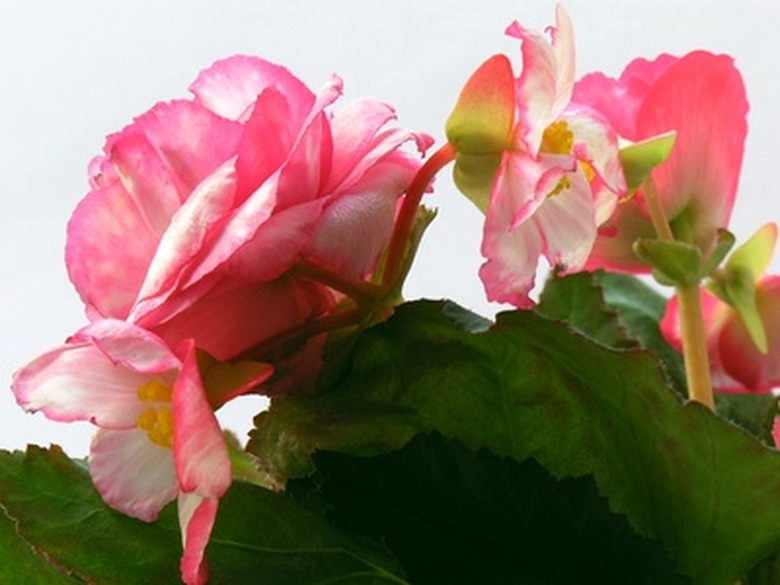
Thousands of begonia species and cultivated varieties exist, mostly because begonias are so easy to hybridize. Begonias are divided into several different groups, based on their growing habits, as well as their leaf and stem characteristics. Begonias are semitropical and tropical perennial plants that are prized for their beautiful flowers and foliage. Begonia species and cultivars display an astonishing array of flower and foliage colors, patterns and shapes. Begonias are usually grown as bedding plants in warmer climates or potted in containers in colder regions.
Step 1
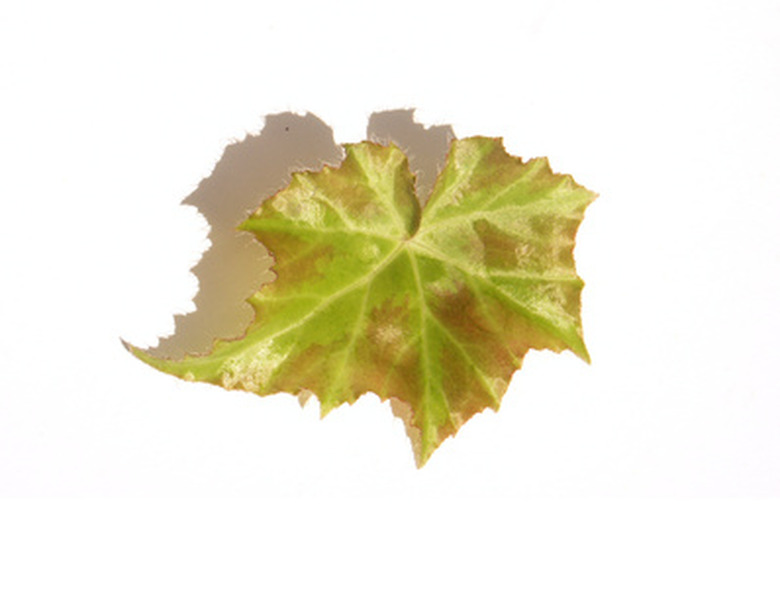
Identify shrub-type begonias by their upright growing habit and branching stems. Look for velvet-textured, hairy leaf surfaces to spot these little-known begonias. Shrub begonias grow from many shoots and are very multi-stemmed. Thurstonii, Pastel Prince, Midnight Sun, Lady Clare and Christmas Candle are all shrub begonias.
- Thousands of begonia species and cultivated varieties exist, mostly because begonias are so easy to hybridize.
Step 2
Look for multicolored, showy leaves to identify Rex begonias. Rex begonias are rhizomatous begonias crossed with Begonia rex, creating a group of begonias that are grown for their attractive leaves instead of their blooms. Common Rex begonias include the Curly Fireflush, Red Delta, Silver Cloud and Satin Jazz.
Step 3
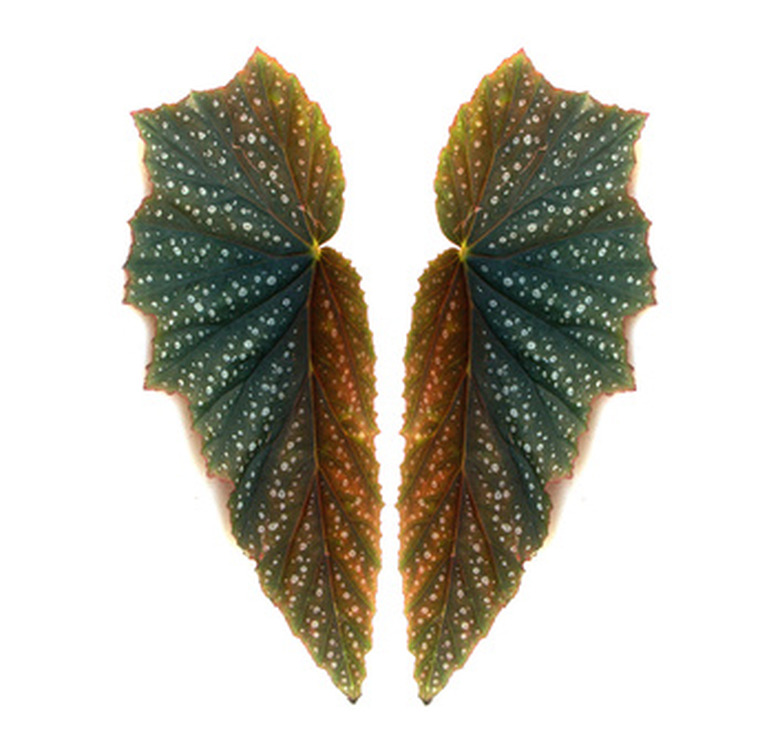
Spot cane begonias, formerly called "angel wing" begonias, by their bamboo-like, tough stems. Cane begonias have large split leaves with silver spots or splashes on them and can be up to 14 inches long. Popular cane-type begonias include the Sophie Cecile, which has pink flower clusters, and the "Lots of Dots," which has tiny white blossoms with yellow centers.
Step 4
Look for vine-like climbing begonias to spot the trailing, or "trailing-scandent," variety. Trailing begonias will grow up tree trunks or other climbing supports and usually have pink or white flowers. Trailing begonia varieties include Splotches, Fragrant Beauty and Panasoffkee.
- Look for multicolored, showy leaves to identify Rex begonias.
- Popular cane-type begonias include the Sophie Cecile, which has pink flower clusters, and the "Lots of Dots," which has tiny white blossoms with yellow centers.
Step 5
Identify tuberous begonias by their tuber "roots." These begonias, which are popular bedding plants, grow from tubers and become dormant during the fall and winter. Tuberous begonia varieties include Pink African Violet, Sugar Candy, B. sutherlandii and B. guttata.
Step 6
Study the plant's roots to identify a rhizomatous begonia. Rhizomatous begonias grow from rhizomes, which are stem-like structures that creep along the ground. These begonias have showy leaves and large flowers. The most common rhizomatous begonias are B. Erythrophylla, Freddie and Cleopatra.
Step 7
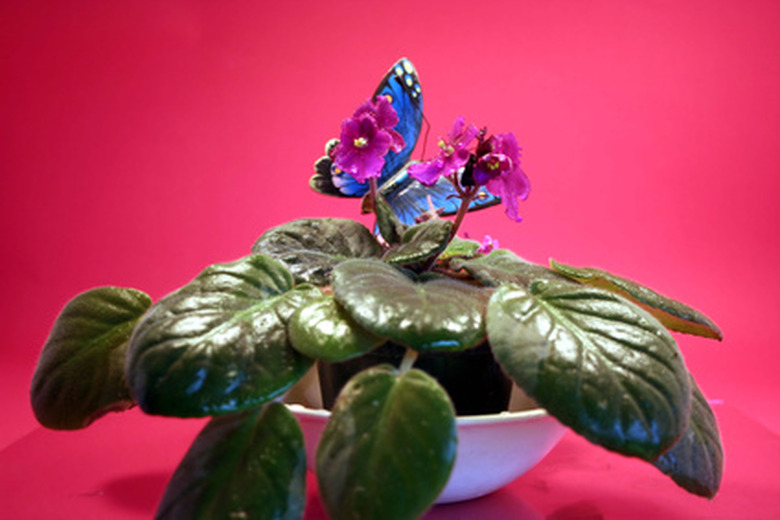
Spot the semperflorens begonias, also known as wax begonias, by their waxy leaves. You'll usually see this type of begonia growing as an annual bedding plant in colder climates or as a perennial in non-freezing regions. Although semperflorens begonias have a wide range of flower colors, all are ever-blooming. Some examples of semperflorens begonias include B. cucullata var. spatulata, Charm, Barbara Rogers, Viva and Mini Wings.
- Identify tuberous begonias by their tuber "roots." The most common rhizomatous begonias are B. Erythrophylla, Freddie and Cleopatra.
Step 8
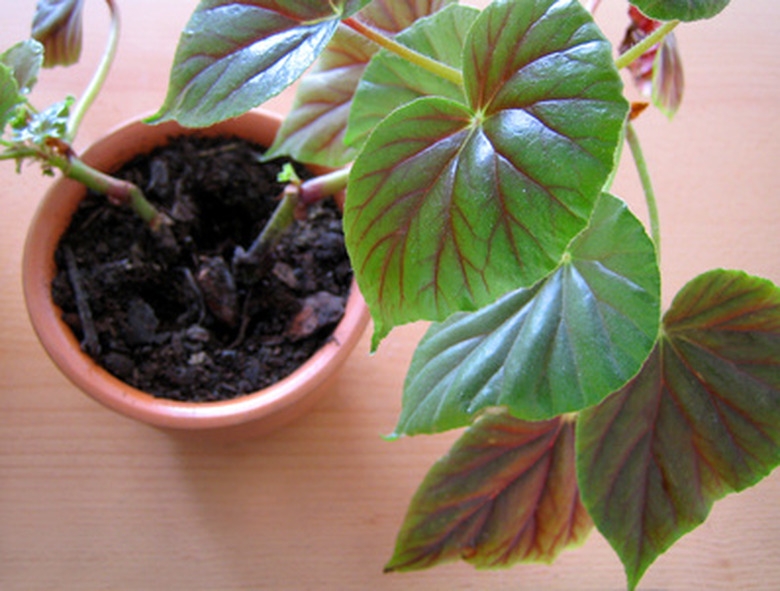
Identify thick-stemmed begonias by studying their new growth, which will tend to grow up from the plant's base instead of via branching. These begonias have extremely thick stems, with leaves only on the tips, dropping all the lower leaves. Examples of thick-stemmed begonias include B. petasitifolia, B. dipetala and B. wollnyi.
Tip
Some begonias are semi-tuberous, with a swelling at the stem base instead of a true tuber. These begonias have tiny leaves with small flowers that are usually white but sometimes pink.
Warning
Don't confuse shrub begonias with rhizomatous begonias. Although both types may appear to be multi-stemmed, the rhizomatous begonia's multiple stems will run horizontally on the soil, instead of upright like the shrub begonia's stems.