

Bugs That Kill Pine Trees
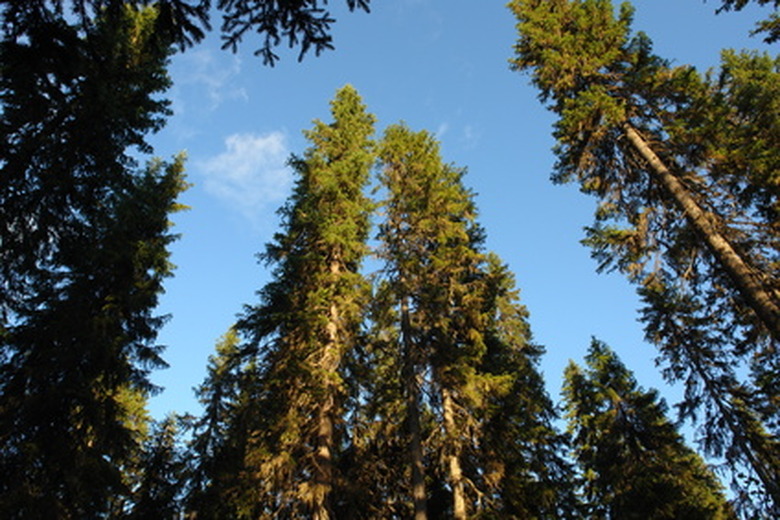
Pines are coniferous trees that are part of the Pinus genus of the Pinaceae family. There are approximately 115 different pine tree species in existence. Pine trees originate in the northern hemisphere, but are also commonly available in the southern hemisphere's temperate and subtropical regions. There are various pests that could cause destruction to pine trees, and eventually kill them.
Pine Needle Scale
Pine needle scale is an insect and major pest for ornamental pine trees. They can bring upon damage to pines in nurseries, landscapes and on plantations. Pine needle scale can be spread by mammals, birds, the wind and tree branches making contact with others. Severe pine needle scale infestations can lead to branch and twig dieback. The infestations can stunt the growth of pine trees and also disfigure them. Damage by pine needle scales can be prevented during the egg stage with the use of a dormant oil spray.
- Pines are coniferous trees that are part of the Pinus genus of the Pinaceae family.
- Pine needle scale can be spread by mammals, birds, the wind and tree branches making contact with others.
European Pine Sawfly
The European pine sawfly originates in Europe as its name indicates. It is particularly problematic for pine trees during the middle of May. The larvae of the sawfly feeds on the old growth needles of pine trees. The larvae is a greenish-gray color and has one dark stripe and two pale stripes on both sides of its body. The legs and head of the larvae are glossy and black in color. This situation can be managed by throwing out infested branches and regular pruning.
Southern Pine Beetle
The Southern pine beetle also can kill pine trees. This insect is particularly problematic in the United States' southern region, as well as Central America and Mexico. The beetle attacks all varieties of pines, especially Virginia, shortleaf, pitch and pond pines. One common sign of attack by Southern pine beetles is the appearance of a reddish dust within the crevices of the tree's bark. Bark that is affected by Southern pine beetles needs to be removed immediately.
- The European pine sawfly originates in Europe as its name indicates.
- It is particularly problematic for pine trees during the middle of May.
- The larvae of the sawfly feeds on the old growth needles of pine trees.
White Pine Weevil
The white pine weevil is an insect that could be quite damaging to pine trees. It focuses on eastern white pine trees, especially Japanese pines, foxtail pines, Scots pines and limber pines. Adult white pine weevils feed on the shoots and the branches of pine trees, which results in significant sap flowing. This occasionally kills the branches of the tree. The best way to manage this situation is by killing either the larvae or the adults before the tree leaders are entirely damaged.