

How To Finish Wood With Mineral Oil
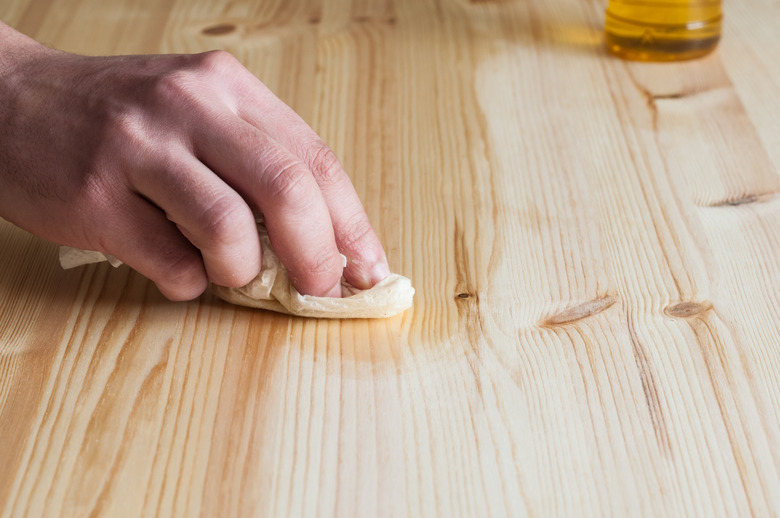
Your magnificent cutting board, which is made of several alternating types and colors of wood, is putting off an acrid smell. Yes, it's been many months since you conditioned it with oil, but can the canola oil you used be the culprit? Probably.
What Makes Mineral Oil Useful for Finishing?
Unlike mineral oil for wood, other types of oil are susceptible to oxidizing, turning rancid and becoming toxic, which is why many experts recommend mineral oil to condition wood products.
Mineral oil isn't the be-all-that-ends-all when refreshing your chopping block, wooden utensils, cheese boards or anything else that's made from wood and used frequently, then washed. Frequent washing damages the varnish applied at the factory and ultimately leaves the wood unprotected. But mineral oil can restore the wood's surface and help your kitchen items last longer.
Relatively inexpensive, mineral oil is used throughout the wood industries as a preservative. It also brings out the natural wood tones and veins after it's applied, and the application process is easy. It's also non-toxic, food-safe and doesn't go rancid.
Warning
Don't use mineral oil on outdoor decks or furniture. It doesn't provide water protection or protection from surface scratches, and it needs frequent reapplication.
Finishing Wood With Mineral Oil
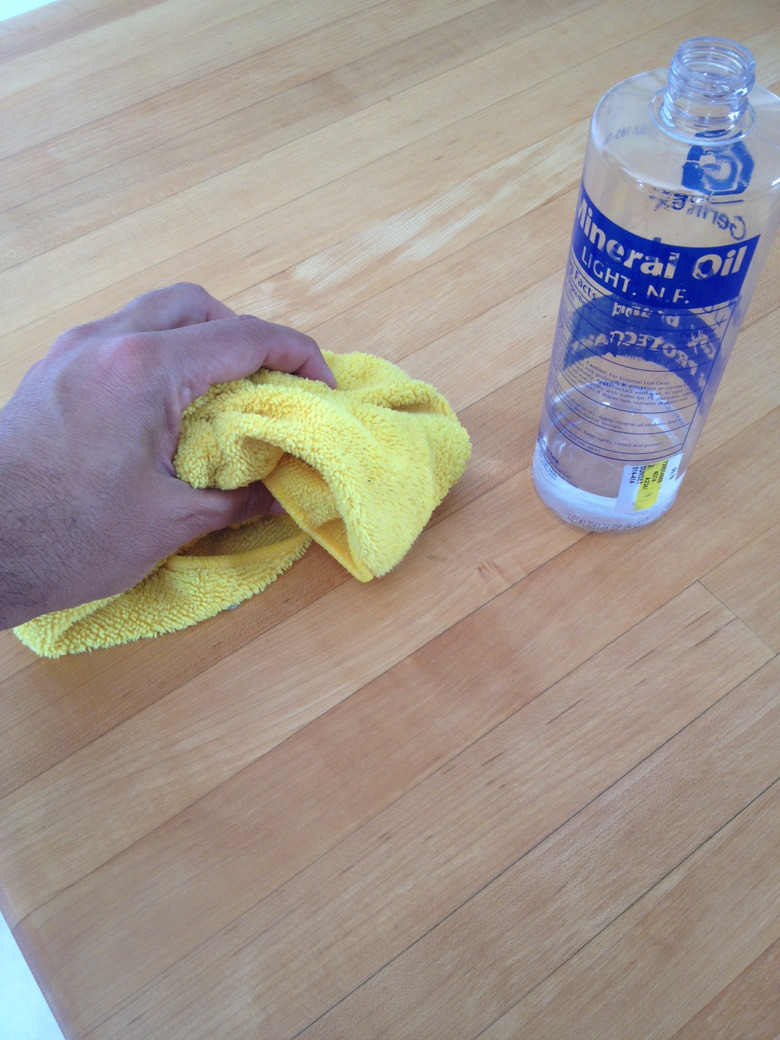
Applying mineral oil to a wooden surface isn't difficult:
- Use a clean, soft cloth and spread the oil over the surface, but don't saturate the wood.
- Let the oil soak in for a few hours and so that it has enough time to soak into the pores of the wood.
- Use a dry cloth to soak up any leftover oil and then buff the surface. The wood will feel slightly damp, so continue to buff.
- If you're industrious, apply a bit of beeswax to the surface when the oil is completely dry. It'll make your application of mineral oil last longer and gives the surface a shiny look, writes Homedit.
 Timtempleton
Different Oil Applications for Wood Protection
The purpose of the wood product determines the type of oil to use to restore the item back to its original appearance.
- **Tung oil:** Made from
pressing the seeds from a tung tree, tung oil is a natural oil. It creates a hardened surface but takes several days to dry.
- **Teak oil:** This is made of linseed oil blended with tung oil. Not completely natural, it contains a synthetic polymer that
gives the oil a hard surface. An application may take 10 hours to dry.
- **Mineral oil:** This is a logical choice due to its viscosity and ease
of use. Moreover, it's colorless, odorless and tasteless. It brings out the natural grain of the wood while at the same time conditioning it. Mineral oil's base is still petroleum, however. So if you want to be environmentally friendly, avoiding petroleum products is an important step. All natural products provide the sustainability you may be looking for and are also better for your health and the environment.
Tip
Mineral oil's base is petroleum. So if you want to be more environmentally friendly and sustainable, you may want to use a natural oil instead.
The Many Faces of Mineral Oil
In addition to refreshing wood kitchen items, mineral oil is prominent in the cosmetics industry. Because of its petroleum base, it's commonly used in baby oil, dry skin lotions, minor burns and skin irritation treatments and in factories that require lubricants. It's also used for constipation issues.
Around the house, mineral oil is used to lubricate doors to remove the squeak, protect tools, remove rust, shine appliances and even to remove paint that missed the wall and landed on your skin. It's an all-around lubricant.