

Perennial Mound Flowering Plants
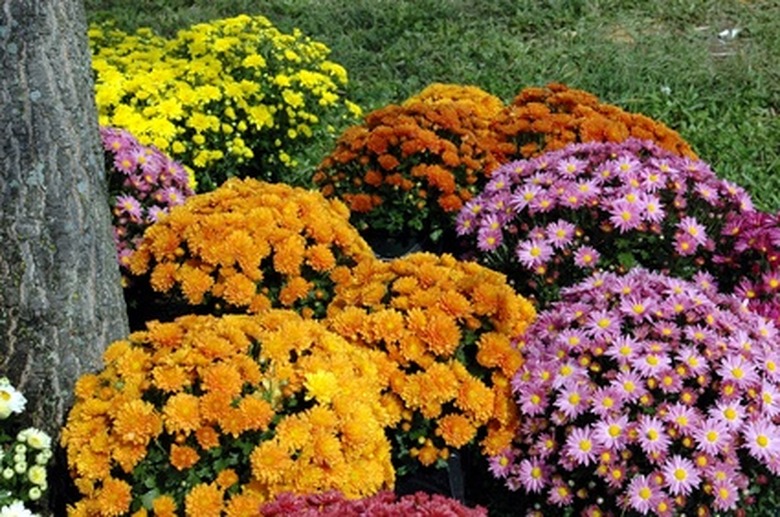
Some areas of the landscape simply beg for filling in with foliage and flowers. Mound-type plants fill in these difficult garden areas, adding a wealth of color to the garden. Perennial mound flowering plants include plants for use in rocks gardens as well as regular flower beds. The mounding tendency of these plants creates a bush-like cluster to enhance the garden. Mounds can take up considerable space, so always consider the mature width of the plant before placing it in the garden.
Gold Alyssum
Gold alyssum works beautifully as a mounding plant in rock gardens. This perennial blooms in early spring and provides tiny yellow flowers in a dense mat of foliage. Gold alyssum prefers full sun and good drainage to provide the best growing conditions for this plant's greenish-gray foliage. Gold alyssum trails nicely over retaining walls, rocks and looks beautiful as a border plant. Alyssum is hardy in zones 3 to 7 and should be spaced 12 inches apart to allow for mature growth. This plant attracts butterflies and requires little care other than a good pruning after blooming. Gold alyssum works beautifully in the xeriscape garden due to its hardy nature and drought tolerance.
- Some areas of the landscape simply beg for filling in with foliage and flowers.
- Gold alyssum trails nicely over retaining walls, rocks and looks beautiful as a border plant.
Bluebeard Caryopteris
Gardeners search for plants that provide long flowering periods. Caryopteris delivers with clusters of light blue blooms that thrive in full sun conditions. Light grayish-green foliage forms a mound with taller stalks of flowers protruding upward towards the sunlight. Bluebeard grows well in zones 5 to 9 and prefers well-drained soil. Butterflies and bees flock to this lively plant that works well as a border perennial or massed in a mound as a focal point in the later summer garden.
Crysanthemum
Potted mums usually make an appearance in mid-fall around the time pumpkins appear on front porches. Mums serve as a stalwart to the flowering perennial garden as the final plant to flower profusely at the end of the growing season. Healthy garden planted mums create a huge mound of riotous flowers in a variety of colors including red, yellow, white, lavender and orange. Chrysanthemums are hardy in zones 5 to 9 and will survive the winter with additional care. Allow the plant to die back in the fall and mound mulch over the stems. Water thoroughly until the first hard freeze. Remove the protective mulch layer in the spring and clip back dead stalks. Clip the plant again during the summer to promote a mounding growth habit.
- Gardeners search for plants that provide long flowering periods.
- Caryopteris delivers with clusters of light blue blooms that thrive in full sun conditions.