

How Do I Prevent Squirrels From Crossing Power Lines?
Things Needed
- Chainsaw
- Ladder
- Sheet metal
- Wiring, bolts or nails
- Store-brand squirrel repellent
- Steel mesh wire
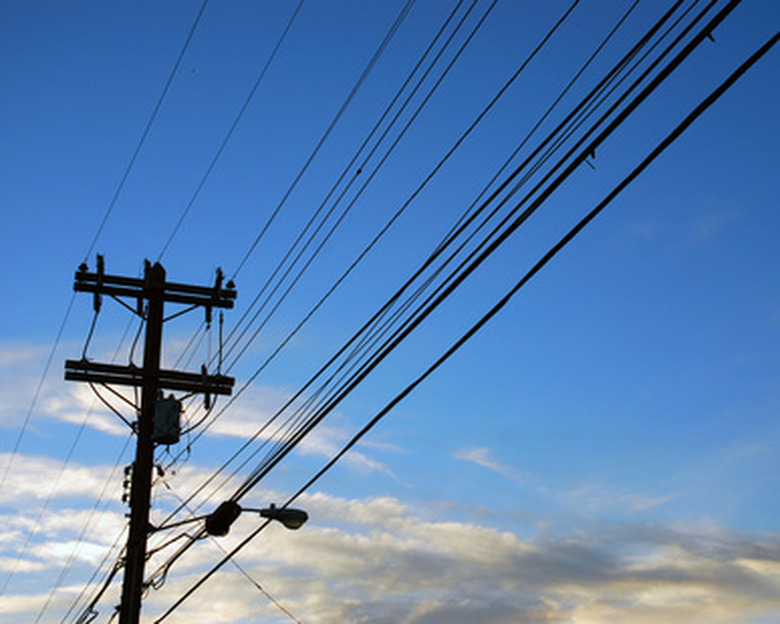
Squirrels are adept climbers and use power lines as highways. Unbeknownst to many people, squirrels can cause electrical power outages. According to the State University of New York College of Environmental Science and Forestry, wildlife is the nation's third leading identifiable cause of power problems. Blocking all access to power lines is key in preventing squirrels from crossing power lines.
Step 1
Trim all tree branches away from nearby buildings and power lines. Squirrels regularly access power lines by way of trees and buildings. Use a ladder and a chainsaw to trim away all branches hanging near buildings and power lines. Contact your utility company to come and trim away the branches if you're not physically able to do so.
- Squirrels are adept climbers and use power lines as highways.
- Use a ladder and a chainsaw to trim away all branches hanging near buildings and power lines.
Step 2
Place sheet metal around all trees located near the power lines. The slippery surface of the sheet metal will prevent squirrels from climbing the trees and gaining access to power lines. Wrap the sheet metal around the tree and secure it in place with strong wiring, bolts or nails.
Step 3
Spray a store-brand squirrel repellent, like Critter Ridder, on and around all utility poles and all trees to frighten or scare the squirrels from climbing and accessing the power lines. Purchase a squirrel repellent at hardware and pet stores.
Step 4
Close all holes and openings in buildings with sheet metal or steel mesh wire. According to the University of California Statewide Integrated Pest Management Program, screening or blocking all potential entrance sites such as small gaps under the eaves, overlapping roof sections and knotholes can prevent squirrels' access to buildings.
- Place sheet metal around all trees located near the power lines.
- Spray a store-brand squirrel repellent, like Critter Ridder, on and around all utility poles and all trees to frighten or scare the squirrels from climbing and accessing the power lines.
Tip
Since squirrels are able to jump from tree to tree, try and place sheet metal around as many trees as possible. Prevent squirrels from jumping over the sheet metal on the tree by ensuring the sheet metal is at least three to five feet in height. Reapply the squirrel repellent on a biweekly basis and after every rainy day for lasting success.
Warning
Climbing a ladder and using a chainsaw can be dangerous if not performed properly. If you don't think you'll be able to perform the task at hand, call your utility company to come out and complete the task instead.