

7 Companion Plants That Thrive Among Sunflowers
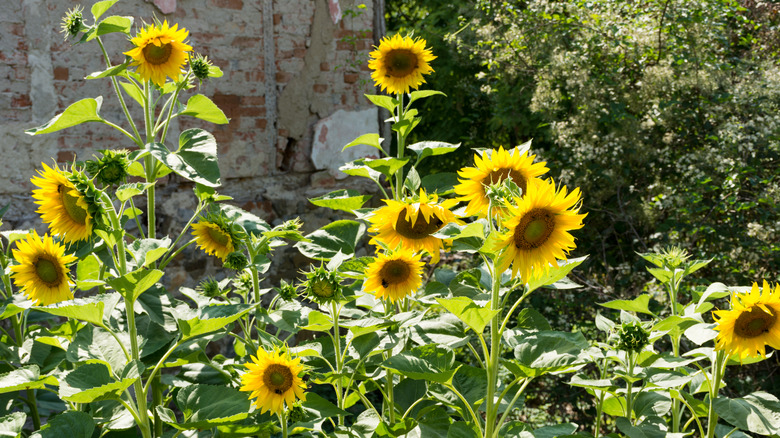
There's something about sunflowers that just seems friendly — maybe it's their cheery yellow hue or their tendency to track the sun's movement across the sky. Believe it or not, however, they can be bad neighbors. It can be surprisingly difficult to find appropriate companion plants for sunflowers (Helianthus spp.) due to their allelopathic properties — much like the notorious black walnut, through their roots and dropped plant matter, sunflowers can leach phytotoxic compounds into the soil that can inhibit the growth of other plants to minimize competition for resources. However, not all plants experience significant negative impacts from sunflowers' allelopathy, and there are plenty of plants that grow well with sunflowers, including tomatoes, cucumbers, and pumpkins.
With over 150 species — most of which are native to North America — there are numerous sunflower selections to explore, from the iconic, towering common sunflower (H. annuus) that's source of the seeds you might enjoy roasted and salted to the edible sunchoke (H. tuberosus) to dwarf sunflowers. These tall members of the aster or daisy family are beloved by more than just human gardeners; their nectar is crucial to pollinators, while their seedheads provide much-needed food for songbirds. With some thought and care, you can find companion plants that can enhance both the utility and aesthetics of your garden when situated next to sunflowers.
Tomato
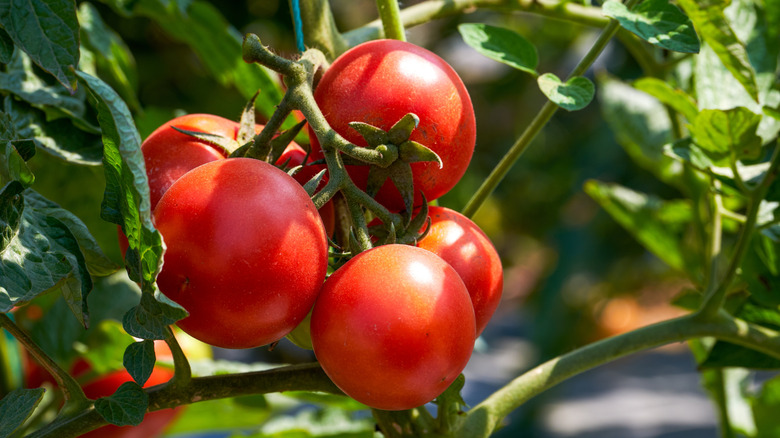
Like sunflowers, tomatoes are sun-loving summer plants. However, given too much exposure to intense sun, you might see sunscald on your fruits — pale blistered areas that could render the tomatoes inedible. Planting tomatoes near some tall sunflowers can protect the fruit from sun damage ... as long as you start the sunflowers early enough that they're large enough to provide protection by the time the tomatoes need it. Tomatoes do require more water than sunflowers — luckily, the sunflowers' shade can minimize moisture loss. Additionally, sunflowers can draw away the stink bugs that like to munch on green tomatoes.
Nasturtium
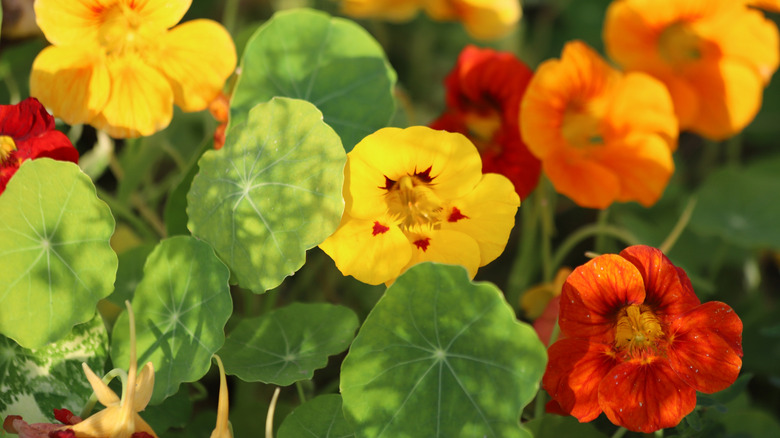
Lovely yet tough, nasturtiums (Tropaeolum majus) are hardy in zones 2 through 11 and can tolerate drought and neglect while delivering a riot of color. When planted with sunflowers, they serve as pest traps, drawing aphids and other unwelcome visitors away. They're also beneficial in that they attract insect and bird pollinators to your garden. In return, sunflowers can provide a bit of protective shade in the high afternoon, which nasturtiums appreciate in particularly hot summers. As an additional benefit, the flowers and leaves are edible — try making a salad garnished with sunflower seeds and colorful nasturtium petals!
Cucumber
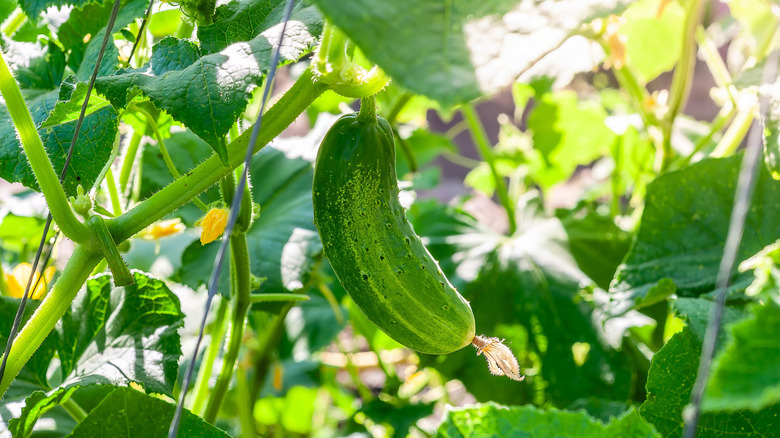
Crispy, refreshing cucumbers can be an ideal companion for sunflowers. As vining plants, cucumbers need the support of a trellis or some other structure to get adequate air circulation, which can help prevent the spread of diseases. Sunflowers can provide that much-needed support, and in turn, the cucumber vines will shore up the sunflowers' stems. Having sunflowers nearby might also ensure that your cucumbers are visited by plenty of pollinators, which can help prevent misshapen fruit. Both cucumbers and sunflowers favor full sun, as well as moist, well-drained soil. Cucumbers are best grown in zones 2 through 11.
Corn
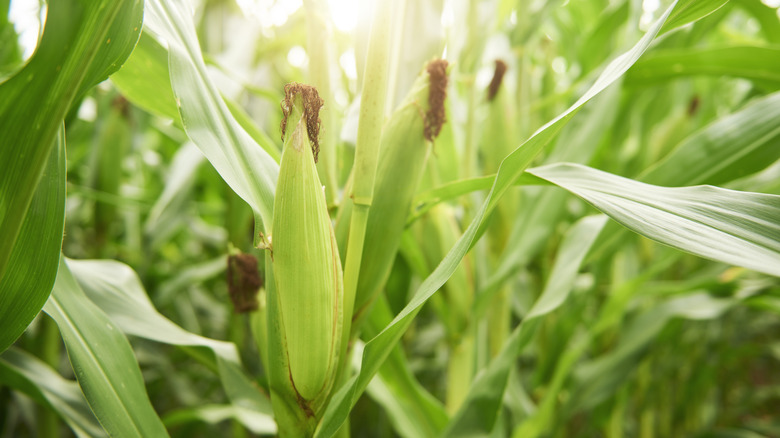
When planting corn, you'll want to array them in circles, hills, or squares of four to six plants, with a minimum of 12 plants total. Try planting sunflowers in the spaces between sections — you might just find that it will pay dividends in terms of pollinators! Additionally, sunflowers tend to attract ladybugs, which will eagerly snap up any pests that might snack on your corn. Corn and sunflowers are full-sun summertime friends that both prefer well-draining soil, and since both are quite tall, they won't compete for light. Zones 2 through 11 are best for corn.
Cantaloupe
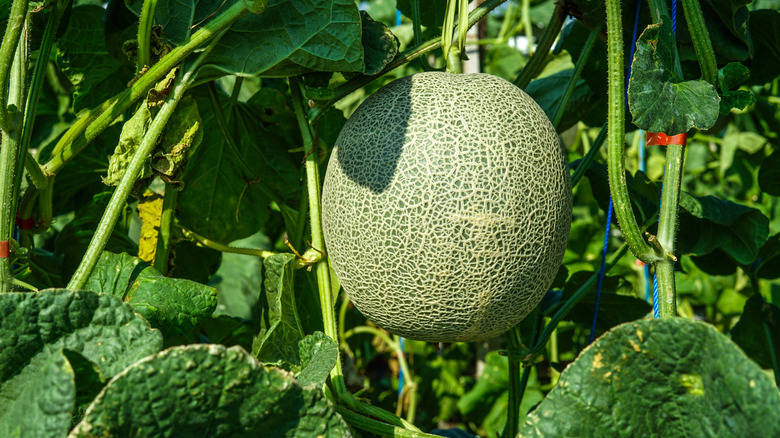
Sunflowers can be beneficial to your cantaloupe plants in a number of ways, most notably by attracting pollinators that can increase the amount of fruit you'll be able to harvest, as well as by providing much-needed shade; particularly robust sunflowers may even act as trellises for cantaloupe vines. Cantaloupe grows best in zones 2 through 11 and, like sunflowers, favors full sun and well draining soil. Remember to harvest the fruits promptly when they're young, or they might become tough and unpleasant with age.
Zinnia
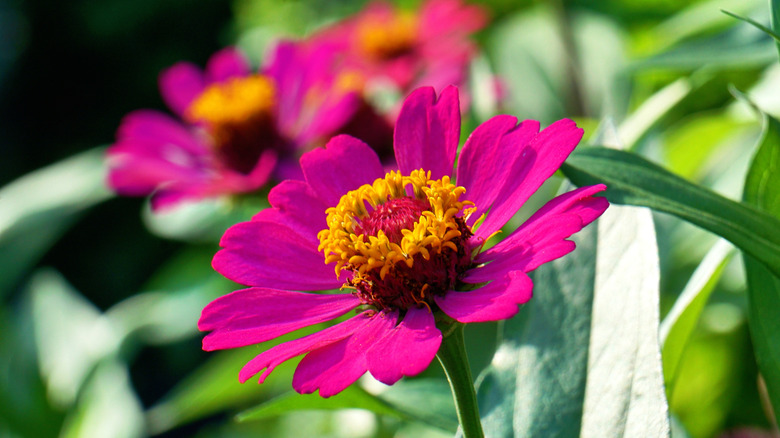
When planning an attractive flower garden, select flowers that can serve as visual accents to one another. Imagine seeing your brilliant sunflowers standing tall against a field of brilliant zinnias — with a rainbow of cultivars available in colors including pink, orange, purple, white, and red, you can easily mix and match the perfect array of blooms. Combined, zinnias and sunflowers create a visually interesting mix of heights, and the towering sunflowers can even provide a bit of structural support for weaker zinnias. Both look great cut and in bouquets, too! Grow zinnias in zones 3 through 10.
Pumpkins
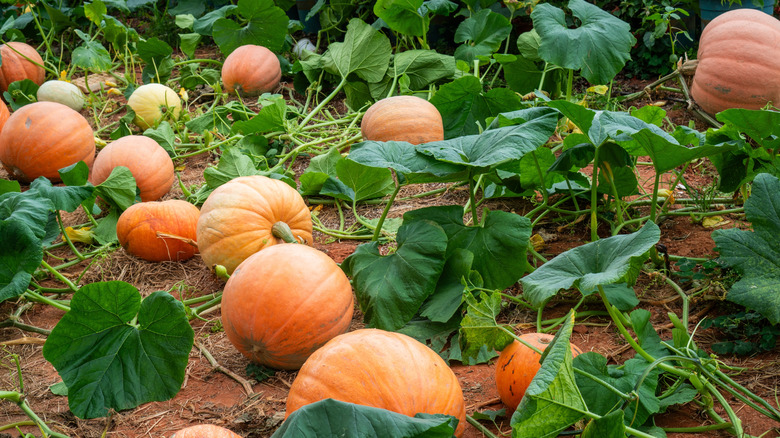
You may have heard of the Three Sisters, a Native American practice of companion planting squash, beans, and corn together, as the three crops are mutually beneficial when grown together. Some Indigenous peoples view sunflowers as the fourth sister, as it can function as both a pollinator attractor and a trap crop to lure away pests. Winter squashes like pumpkin benefit from this arrangement. Make sure to plant your sunflowers around the perimeter of your pumpkin patch so they don't become competitive with one another. Pumpkins generally grow well in zones 3 through 11 and appreciate plenty of sun.