

How To Divide Amaryllis Bulbs
Things Needed
- Newspaper
- Trimming shears
- Spade
- Garden fork
Tip
Divide bulbs when you repot your amaryllis every few years to avoid digging them up and shocking them between repottings.
Warning
Discard any damaged bulbs with soft spots, as they have rot, which may spread to other nearby bulbs.
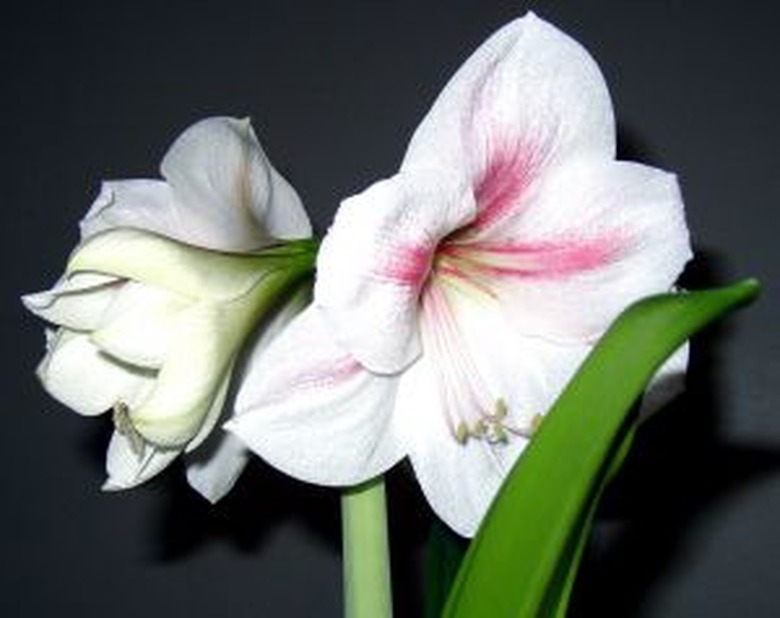
Amaryllis is a winter-flowering bulb that is often referred to as a Christmas flower, along with poinsettias. The large bulbs may reach up to 4 inches in diameter. Amaryllis has a long flower stalk that produces several flowers in shades of red, orange and white. Unlike rhizomes, bulbs aren't cut apart when divided. Instead, the plant produces secondary bulbs off the main bulb that take three to four growing seasons to mature. The secondary bulbs are then ready to be transplanted in their own pots. Amaryllis are usually grown in pots, though they do well in Southern gardens, where there are mild winters.
- Amaryllis is a winter-flowering bulb that is often referred to as a Christmas flower, along with poinsettias.
Potted Amaryllis
Step 1
Lay out sheets of newspaper over your work surface to collect the soil and cut down on mess. Plan to divide your amaryllis when the leaves die back—in the fall for unforced bulbs and early summer for forced Christmas-blooming amaryllis.
Step 2
Trim back all the dead leaves to 3 inches above the soil surface. Use sharp shears to avoid damaging the plant.
Step 3
Turn the pot on its side and gently dump the soil onto the newspaper. Use your fingers instead of a spade to dislodge the bulbs so they don't get damaged.
Step 4
Inspect the primary bulb for the joint where the smaller, secondary bulb is attached. Grasp the secondary bulb in your fingers and twist slightly while pulling. The bulb will cleanly snap off.
- Lay out sheets of newspaper over your work surface to collect the soil and cut down on mess.
- Plan to divide your amaryllis when the leaves die back—in the fall for unforced bulbs and early summer for forced Christmas-blooming amaryllis.
Step 5
Replant each bulb in its own pot. Choose pots 2 inches larger than the diameter of the bulb. Plant the bulb just under the soil surface and water well.
Garden Amaryllis
Step 1
Cut down the dead foliage to approximately 3 inches above the soil surface. Plan to divide in early fall when the leaves have died back naturally on their own.
Step 2
Dig around the bulb, approximately 6 inches from the dead leaf stalks in the center. Avoid digging too close and damaging the bulb with your spade.
- Replant each bulb in its own pot.
- Cut down the dead foliage to approximately 3 inches above the soil surface.
Step 3
Lever the bulb out of the ground with your spade or a garden fork. Work under the bulb to avoid accidentally nicking it.
Step 4
Brush the dirt from the bulbs. Rinse lightly in running water if there is a lot of dirt obscuring the joints between the primary and secondary bulbs.
Step 5
Grasp the smaller secondary bulbs in one hand and twist them off while pulling them away from the primary bulb.
Step 6
Replant the healthy bulbs in the garden. Space the bulbs 10 to 12 inches apart in clusters or rows.
- Lever the bulb out of the ground with your spade or a garden fork.
- Grasp the smaller secondary bulbs in one hand and twist them off while pulling them away from the primary bulb.