

Salt On Fruit Trees
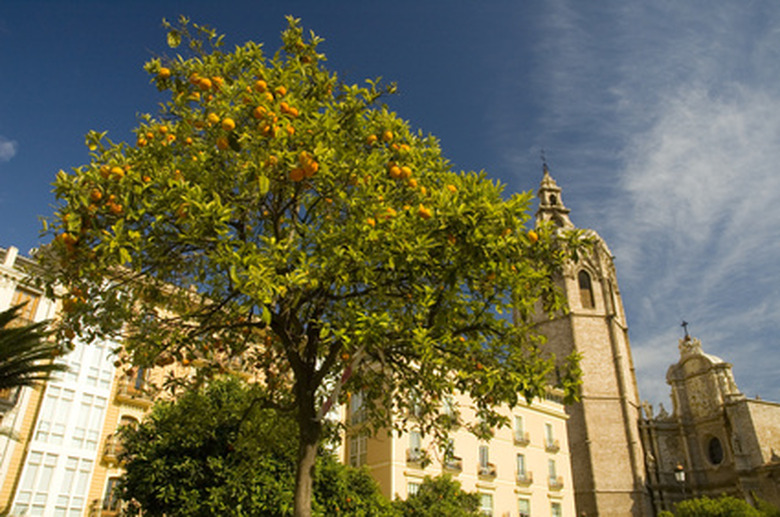
Salt on fruit trees never has a positive effect. The damage takes a while–sometimes years–to show itself, and it can take equally as long to be remedied if it is at all possible. The method by which salt reaches a plant can impact the severity of the damage. Salt sprays, for example, do not have the detrimental effects of salt that has come from the soil.
Symptoms
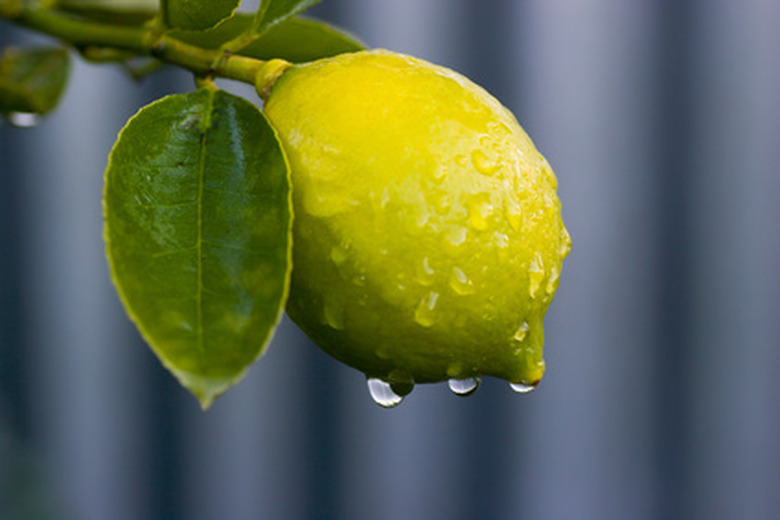
If salt is allowed to sit on the leaves of fruit trees, it will cause the tips to turn brownish-red, and it will progress toward the center. Eventually the leaf will drop. Salt spray causes buds and young twigs to die. When deciduous fruit trees are exposed to salt, the twigs regrow in a cluster referred to as "witches broom."
- Salt on fruit trees never has a positive effect.
- Salt sprays, for example, do not have the detrimental effects of salt that has come from the soil.
Salt Spray

Salt spray is a problem in coastal areas, but it is also a problem inland. Salt used to deice roads is sprayed on roadside trees for months at a time. It burns the foliage and accumulates in the soil. Large sections of trees succumb to salt in this form.
Saline Soil
Salt gets into the soil from salt-water intrusion, accumulation of salt spray over time and even from man-made products such as fertilizer. Fruit trees in soil with too much salt exhibit the typical leaf burn. Changes in growth habit resulting from saline soil are smaller leaves, flowers and fruit. Often leaves drop prematurely and cause the overall health of the tree to decline. Salt gathers around fruit tree roots in times of drought. After the slightest addition of moisture, trees then absorb the salt causing themselves damage. Fruit trees cannot take up water properly, because roots quickly become dehydrated. Slowly other tissues are affected as well.
- Salt spray is a problem in coastal areas, but it is also a problem inland.
- Fruit trees in soil with too much salt exhibit the typical leaf burn.
Origin
Salt enters coastal soil with spring tides, and often does so without standing water being visible. In cities with harsh winters salt drains from the roads. In our own yards salt accumulates over time from fertilizer applications.
Prevention
If you know your tree receives salt spray, hose with fresh water daily to keep it from accumulating. Avoid over-fertilizing with synthetic fertilizers, because they contain a lot of salt. Add organic compost to the soil around your tree. Finally, amend soil around the tree with gypsum, because it bonds with salt and helps flush it from the soil with the bountiful water that will also need to be applied.
- Salt enters coastal soil with spring tides, and often does so without standing water being visible.
- If you know your tree receives salt spray, hose with fresh water daily to keep it from accumulating.
References
- Volusia Arboretum: Loquat
- "Delta Farm Press"; Salt water problems for Louisiana citrus; Johnny Morgan; May 2003
- University of Minnesota Extension: Minimizing De-Icing Salt Injury to Trees