

Facts About Sedum
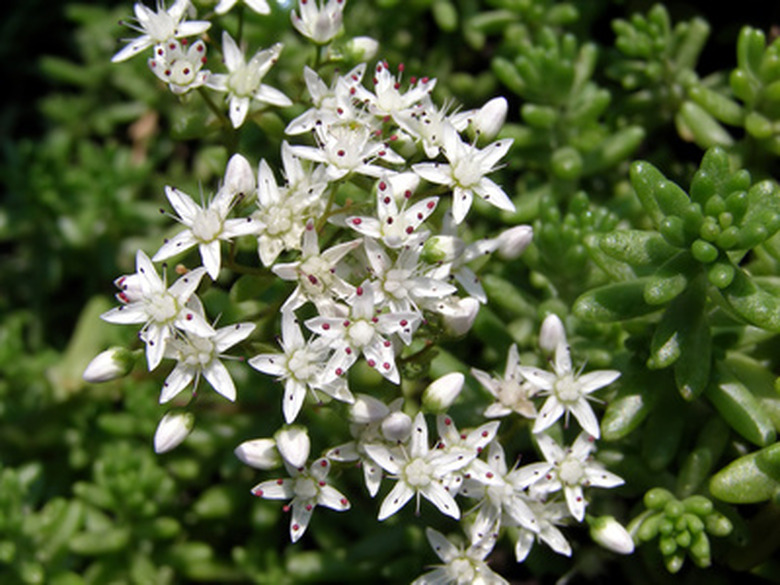
Sedum is a genus of plants that contains more than 400 different plants. A few of the species are vastly different in appearance from one another, but all of the species of sedum have several things in common. All sedums are succulent plants, and therefore have the same water, light and soil needs.
Description
Sedum plants are all succulent plants, which store water in their thick leaves. Sedum plants grow their leaves in clusters of thick leaves around stalks or stems. Some sedum species have hairy leaves, while others are shiny and waxy. Some sedums grow low and wide, and are used for ground cover; others grow tall enough to be grown as houseplants. Flowering sedums produce star-shaped flowers, in shades of white, red, orange, yellow and lavender.
- Sedum is a genus of plants that contains more than 400 different plants.
- Sedum plants are all succulent plants, which store water in their thick leaves.
Soil Needs
Sedums cannot tolerate wet soil. These plants require fast-draining soil in order to keep water away from their root systems after rains. Loamy and/or sandy soils provide optimum drainage for sedum plants. Rich, water-raining soil mixed 1 to 1 with gardening sand or perlite also provides proper drainage.
Light Needs
Sedum plants require full sunlight in order to thrive. The plants tolerate filtered light, but this results in stunted growth. For best results, plant sedums where they will receive at least eight hours of full sunlight each day. Sedums grown indoors need the bright light of an uncovered south- or western-facing window.
- Sedums cannot tolerate wet soil.
- These plants require fast-draining soil in order to keep water away from their root systems after rains.
Water Needs
Sedum plants store water in their leaves. For this reason, they require very little supplemental water. Sedums can survive and thrive on as little as two rains per month. These plants only need to be hand watered if it does not rain in your area for at least three weeks.
Pests
Like most other succulents, sedums are the natural prey of aphids. Aphids are tiny insects that measure 1/32 to 1/8 of an inch in length. These pests suck the water out of sedum leaves, and leave behind trails of a clear, sticky substance called, "honey dew." Insecticidal soap gets rid of aphids.
- Sedum plants store water in their leaves.
- Sedums can survive and thrive on as little as two rains per month.