

Fertilizer For Vinca Minor
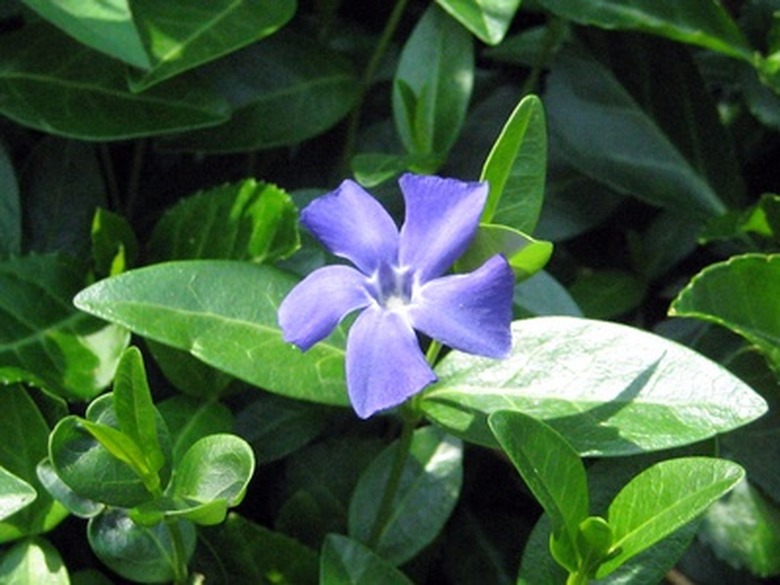
Vinca minor, also called periwinkle or creeping myrtle, offers glossy green foliage and typically produces lavender, blue or white blooms. Although this perennial ground cover may grow fine in sunny areas of the garden, it does well in partial to full shade. Like all ground covers, Vinca minor appreciates fertilizer to aid its growth.
Type of Fertilizer
Use a balanced fertilizer, as suggested by West Virginia University Extension Service. A balanced fertilizer may be either granular or a water-soluble fertilizer and will state on the package that it is 10-10-10 or 12-12-12, for example. This means the fertilizer contains equal parts nitrogen, phosphorus and potassium.
Application
West Virginia University Extension Service suggests applying granular fertilizer at a rate of 6 to 8 lbs. per 1,000 feet. You may use either slow-release granules or a liquid fertilizer. Apply liquid fertilizer at the rate indicated on the label, and fertilize during the early morning hours so it does not scorch the leaves during the heat of the day–this is especially important if the Vinca minor is in a sunny location.
- Vinca minor, also called periwinkle or creeping myrtle, offers glossy green foliage and typically produces lavender, blue or white blooms.
- Apply liquid fertilizer at the rate indicated on the label, and fertilize during the early morning hours so it does not scorch the leaves during the heat of the day–this is especially important if the Vinca minor is in a sunny location.
To apply granular fertilizer, purchase or rent a spreader from a garden center or hardware store. To apply liquid fertilizer, you will need either a garden sprayer or simply a garden hose, depending on the brand–some liquid fertilizer containers attach directly to a garden hose.
Frequency
Colorado State University Cooperative Extension suggests fertilizing Vinca minor monthly during the growing season. However, Clemson University Cooperative Extension suggests fertilizing in the spring and then only as necessary thereafter (if the plants look weak, pale and produce few blooms, for example).
Benefits
Fertilizer gives Vinca minor a boost, making its foliage a more brilliant green and may help produce more blooms. Fertilizing your Vinca minor regularly (every month) may be helpful if your soil lacks sufficiently rich organic matter.
Considerations
Plant diseases can cause wilting or dieback, according to Clemson University Cooperative Extension. If Vinca minor appears ill, weak or dying, it may be diseased instead of hungry and requiring fertilizer. Check leaves for fungal spots (usually brown) on the leaves and discard any suspect foliage.
- To apply granular fertilizer, purchase or rent a spreader from a garden center or hardware store.
- Fertilizing your Vinca minor regularly (every month) may be helpful if your soil lacks sufficiently rich organic matter.