

How Fast Does English Ivy Grow?
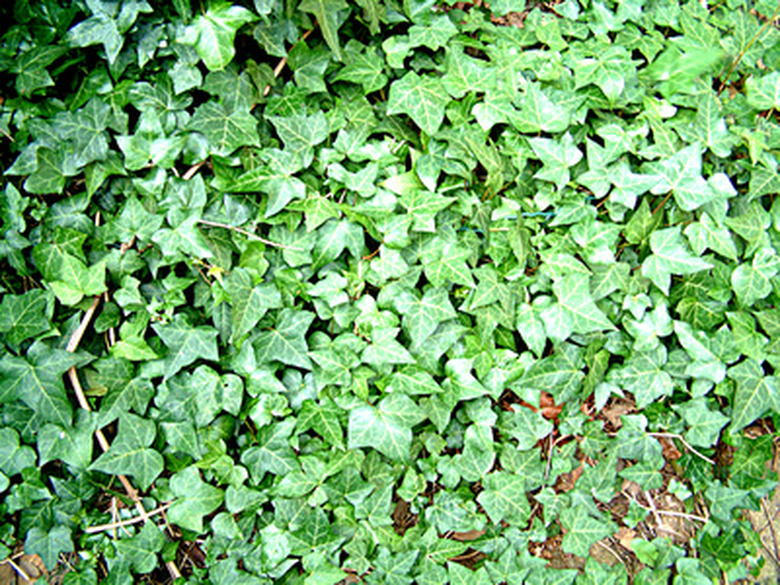
English Ivy is classified as a fast-growing vine or ground cover. According to the U.S. Environmental Protection Agency, "English ivy is an evergreen woody vine that spreads rapidly, can climb to a height of 30 meters (about 98 feet) and when mature, flowers prolifically."
Garden Problem
Gardeners and horticulturalists agree that English Ivy, or hedera helix, is an invasive plant that often becomes a problem. English Ivy is classified as invasive in the Pacific Northwest and many other areas, according to a 2009 report by the University of Maine Cooperative Extension.
Plant Characteristics
The fast-growing English Ivy is characterized by woody vines that produce small-pointed, deep-green leaves. As a ground cover, the plants grow to about 1 foot tall. Grown as a climbing vine, hedera helix can grow to 40 feet, sending out rootlets that attach themselves to walls, fences and tree trunks.
- English Ivy is classified as a fast-growing vine or ground cover.
- According to the U.S. Environmental Protection Agency, "English ivy is an evergreen woody vine that spreads rapidly, can climb to a height of 30 meters (about 98 feet) and when mature, flowers prolifically."
Growing Conditions
English Ivy keeps growing through the winter while other plants are dormant, thrives in poor or soggy soils, and is resistant to herbicides, making more aggressive measures necessary when trying to eliminate the plant.
Damage From English Ivy
Native to the Caucasus, English ivy cultivars flourish from United States Department of Agriculture plant hardiness zones 5 through 10. Leaves are a dark-to-bright green, often with silver or white variegation. Wrapped around the trunk and branches, English ivy inhibits tree leaf access to sun and moisture, killing foliage and, eventually, the undernourished tree. Rootlets seek out existing cracks and fissures, using them to enhance holding power and occasionally penetrating the interiors of buildings through them. The same strong adhesion can result in chunks of stucco being pulled away, attached to ivy vines. However, you must check with your local, regional or state environmental or conservation department for regulations governing the use of herbicides. Most common is stem-cutting. Using loppers or pruning shears, cut each vine stem to within 1 to 2 feet of the ground. Make a second cut 2 feet above the first. Deprived of sustenance, the upper vine segment will die.
- Native to the Caucasus, English ivy cultivars flourish from United States Department of Agriculture plant hardiness zones 5 through 10.
- Wrapped around the trunk and branches, English ivy inhibits tree leaf access to sun and moisture, killing foliage and, eventually, the undernourished tree.
Damage From English Ivy
Native to the Caucasus, English ivy cultivars flourish from United States Department of Agriculture plant hardiness zones 5 through 10. Leaves are a dark-to-bright green, often with silver or white variegation. Wrapped around the trunk and branches, English ivy inhibits tree leaf access to sun and moisture, killing foliage and, eventually, the undernourished tree. Rootlets seek out existing cracks and fissures, using them to enhance holding power and occasionally penetrating the interiors of buildings through them. The same strong adhesion can result in chunks of stucco being pulled away, attached to ivy vines. However, you must check with your local, regional or state environmental or conservation department for regulations governing the use of herbicides. Most common is stem-cutting. Using loppers or pruning shears, cut each vine stem to within 1 to 2 feet of the ground. Make a second cut 2 feet above the first. Deprived of sustenance, the upper vine segment will die.
- Native to the Caucasus, English ivy cultivars flourish from United States Department of Agriculture plant hardiness zones 5 through 10.
- Wrapped around the trunk and branches, English ivy inhibits tree leaf access to sun and moisture, killing foliage and, eventually, the undernourished tree.
References
- University of Maine Cooperative Extension: Invasive English Ivy Can Be Contained
- Arlington VA Parks Department: Choking Hazard
- PCA Alien Plant Working Group: English Ivy
- California Invasive Plant Council: Invasive Plants of California's Wildland: Hedera helix
- University of California, Davis: Invasive Species List and Scorecards for California
- Today's Homeowner: Ask Julie: Can Ivy Damage Wood or Brick on Your Home?
- Online Plant Guide: Hedera helix
- Arlington VA Parks Department: Choking Hazard
- PCA Alien Plant Working Group: English Ivy
- California Invasive Plant Council: Invasive Plants of California's Wildland: Hedera helix
- University of California, Davis: Invasive Species List and Scorecards for California
- Today's Homeowner: Ask Julie: Can Ivy Damage Wood or Brick on Your Home?
- Online Plant Guide: Hedera helix