

How To Identify Cactus With White Flowers
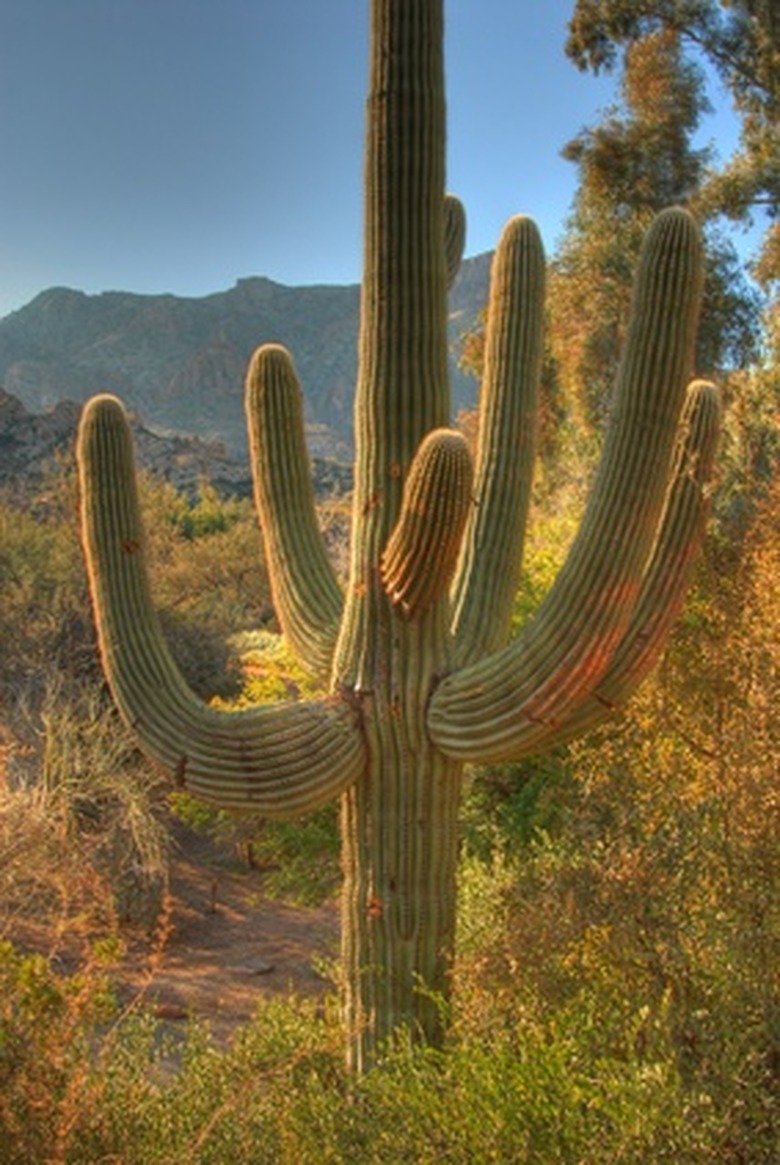
Cactus plants are native to the Americas and grow throughout the western and southwestern United States, as far north as Utah and Idaho. The plant has adapted to survive in rough, inhospitable terrain with poor soil and little water and is leafless, with swollen stems and spines. Over 2,000 species exist. All of them produce blossoms and fruit, but only two–saguaro and organ pipe cactus–produce white flowers. Cacti make attractive (if thorny) landscape plants in warm, dry climates and provide habitats and food for birds and wildlife. Grow miniature varieties as houseplants.
Step 1
Examine the cactus for the time of bloom. Saguaro and organ pipe cactus bloom at night, a few hours after sunset. The large, white blooms are pollinated by bees, bats and white-winged doves. These flowers are short-lived, wilting by the following afternoon.
- Cactus plants are native to the Americas and grow throughout the western and southwestern United States, as far north as Utah and Idaho.
- Cacti make attractive (if thorny) landscape plants in warm, dry climates and provide habitats and food for birds and wildlife.
Step 2
Determine the location of the cactus. Saguaro and organ pipe cactus grow natively only in Saguaro National Park, outside of Tucson, Arizona. They may be found in landscapes throughout southern Arizona.
Step 3
Inspect the cactus' growth pattern. Saguaro cacti have one main trunk that branches out into several arms. Saguaros grow to a height of 50 feet. Organ pipe cacti are similar to saguaros, but they may have five to 20 branches extending from the ground in a cluster, before forming the characteristic arms. Organ pipe cacti grow to a height of 25 feet.
- Determine the location of the cactus.
- Organ pipe cacti grow to a height of 25 feet.
Cactus Flowers Bloom?
Many cactus plants have a sculptural quality to them. Bloom colors range from dazzling white to everything but true blue and black. You'll often see several colors in the same flower. After resting all winter and experiencing spring rain, many cactus bloom in the spring months. Even if rains are sparse, cactus draw upon their stored water to flower, but not as abundantly. Cactus that flower in summer's heat are generally substantial specimens that have stored a significant amount of water. The saguaro (Carnegiea gigantea), which reaches 30 to 50 feet tall, flowers in mid-May to mid-June when temperatures in its native Sonoran Desert regularly surpass 100 degrees Fahrenheit. The plant features many waxy-petaled flowers that encircle branch ends. It produces yellow blooms. This cactus needs frost protection in USDA zone 9 and is hardy in zones 10 and 11. Night blooming cereus (Hylocereus undatus) displays another large moth-pollinated white flower. The familiar Christmas cactus announces its season of bloom through its common name.
- Many cactus plants have a sculptural quality to them.
- The saguaro (Carnegiea gigantea), which reaches 30 to 50 feet tall, flowers in mid-May to mid-June when temperatures in its native Sonoran Desert regularly surpass 100 degrees Fahrenheit.
Tip
Transplant cactus in Arizona between March and October for best results, according to the University of Arizona Cooperative Extension. Mark the north side of the saguaro with chalk before moving and replant it so that side is facing north. The south-facing sides of saguaros develop a tough skin in response to the hot sun. Cacti are very slow-growing. Some varieties grow as little as 1/4 inch per year.
References
- University of Arizona Cooperative Extension: Cactus, Agava, Yucca and Ocotillo
- Desert USA: Organ Pipe Cactus
- Blue Planet Biomes: Desert Plants
- Arizona-Sonora Desert Museum: Desert Wildflower Blooms
- University of Florida IFAS Extension: Opuntia spp. Prickly Pear Cactus
- The Weather Channel: Monthly Averages for Tucson, AZ
- Southern Nevada Water Authority: Saguaro Carnegiea Gigantea
- Online Plant Guide: Ferocactus Wislizenii/Fishhook Barrel Cactus
- Arizona State University: Cereus Repandus
- Online Plant Guide: Hylocereus Undatus
- Missouri Botanical Garden: Schlumbergera Truncata
- Arizona Sonora Museum: Plant Fact Sheet: Saguaro Cactus
- The American Southwest: Ferocactus Wislizeni