

How To Remove & Prevent Algae In A Pond
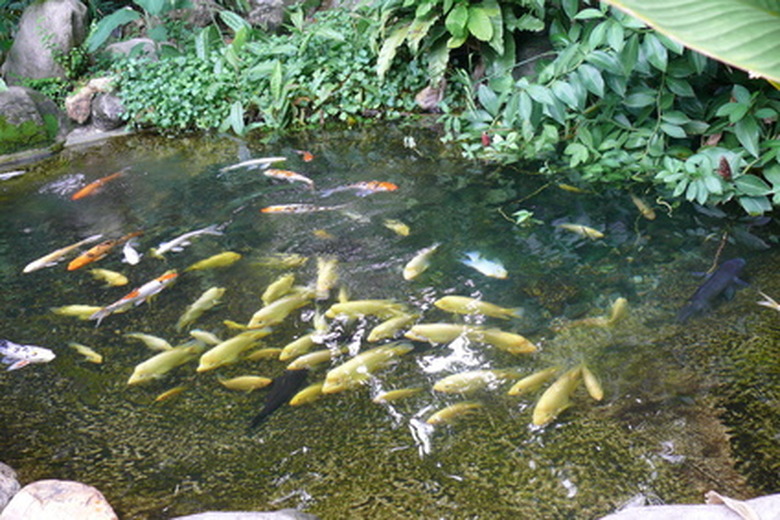
Two common types of algae grow in outdoor ponds: plankton — the type of growth that turns water thick and green, and string algae — which tends to grow on the outer edges and bottom areas of ponds. Left to grow, algae can cause a slimy film that can eventually kill fish or other aquatic creature that live in the pond. Too much sunlight exposure on the pond, stagnant water and humid weather are some causes of algae growth.
Step 1
Situate the outdoor pond in an area that only gets a small amount of sunlight. This will reduce the risk of any type of algae formation, yet still allow aquatic plants to thrive.
Step 2
Place several aquatic plants in the pond. Floating lilies provide plenty of surface coverage for a pond. Other plants that work well on the surface are duckweed and water hyacinth. Use oxygenating plants on the bottom, such as anacharis. The benefit to using oxygenating plants inside the pond is that they will consume the nutrients that algae usually utilize, leaving the algae without survival resources.
- Two common types of algae grow in outdoor ponds: plankton — the type of growth that turns water thick and green, and string algae — which tends to grow on the outer edges and bottom areas of ponds.
Step 3
Install a UV filter in the pond. The rays from the UV lights will help to keep algae growth to a minimum.
Step 4
Skim the pond of algae growth. Skimmers with nets can be used to take out algae overgrowth that is floating on the pond's surface. Use the scrub brushes to clean algae off of the sides of the pond, and off any rocks that are in the water.
Step 5
Fill the pond with algae-inhibiting chemicals. This will help to keep the pond free of any algae in the future, or to kill algae that is currently in the pond.
- Install a UV filter in the pond.
- Use the scrub brushes to clean algae off of the sides of the pond, and off any rocks that are in the water.
Remove Algae From Ponds
Algae uses up necessary oxygen in pond, and can block the view of foliage or even live fish. Removing algae from ponds is fairly easy, but care must be taken not to use poisonous toxins. Chemicals are not the only method for cleaning this slimy green invader. Use a combination of liquid products called Bio-Restoration 1 and 2. Pour Bio-Restoration 1 into the pond to stop the process of photosynthesis. Change the pond water regularly to inhibit nutrient production. If algae have nothing to feed on, they can't survive. The vibrations break down algae cells causing them to die without killing other plants or fish.
- Algae uses up necessary oxygen in pond, and can block the view of foliage or even live fish.
Things Needed
- Plants
- Scrub Brushes
- UV Pond Filter
- Pond Vacuum
- Chemical Solution