

Bat Pollinated Flowers
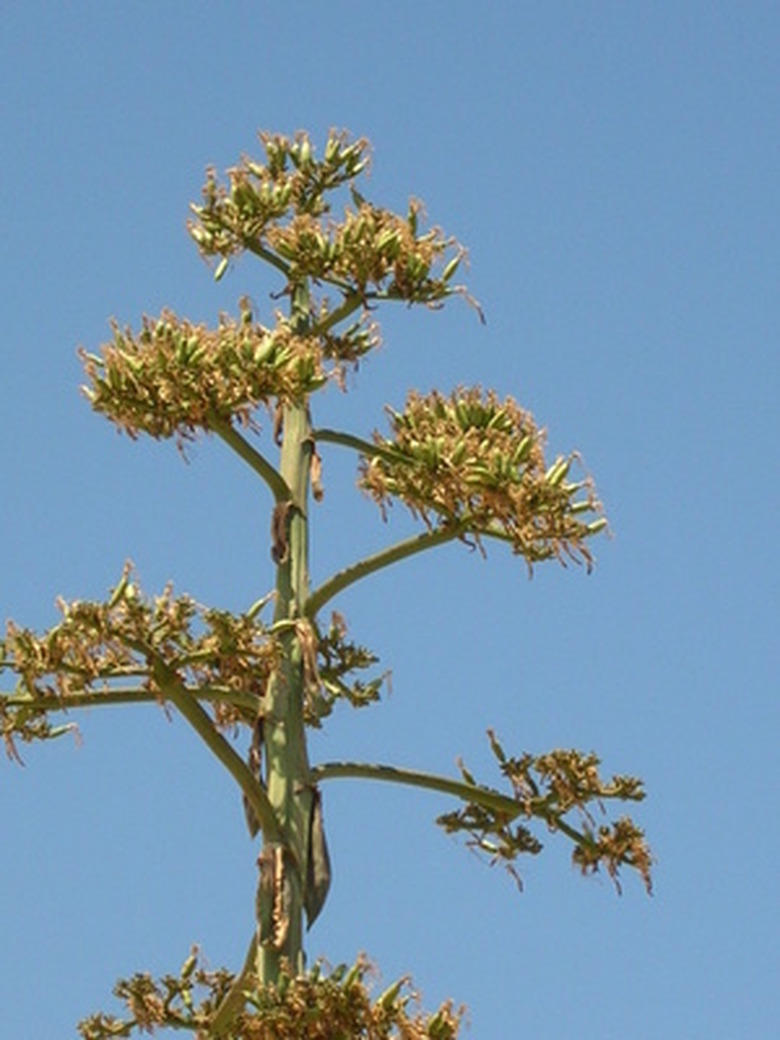
Among the most valuable animals that pollinate flowers are bats. Approximately one-third of various bat species—e.g., fruit bats, flying foxes and leaf-nosed bats—frequent flower patches at night, dine on pollen and drink the sweet nectar. Bats fly across long distances, sometimes to feast on a specific plant.
Among the most valuable animals that pollinate flowers are bats. Approximately one-third of various bat species—e.g., fruit bats, flying foxes and leaf-nosed bats—frequent flower patches at night, dine on pollen and drink the sweet nectar. Bats fly across long distances, sometimes to feast on a specific plant. Transporting pollen between flowers in different locales, these bats facilitate cross pollination.
Location of Bats
According to Arthur C. Gibson of the Mildred E. Mathias Botanical Garden, the majority of nectar-eating bats live in tropical or desert zones—Southeast Asia, Africa and the Pacific Islands—and have been discovered below the Andean puna ecoregion. With few exceptions, bat pollination does not take place in Europe, South Africa, the temperate zones of North America or the greater part of South Australia.
Bat Features
Common features among flower-pollinating bats are an elongated snout and fewer and smaller teeth. Many species exhibit tongues that can extend to great lengths and are tipped with hair-thin projections for rapid collection of nectar.
- Among the most valuable animals that pollinate flowers are bats.
- According to Arthur C. Gibson of the Mildred E. Mathias Botanical Garden, the majority of nectar-eating bats live in tropical or desert zones—Southeast Asia, Africa and the Pacific Islands—and have been discovered below the Andean puna ecoregion.
Types of Flowers
As reported by the U.S. Forest Service, the flowers that bats prefer and pollinate share the following characteristics: filled with nectar, pale color (e.g., white), large-sized (1 to 3.5 inches), fragrant or fruity aroma and open during dark hours. Many bats use their sense of smell to locate fruits and flowers. To date, bat pollination has been recorded for about 40 plant families. Typical examples include the floss-silk, kapok, baobob and sausage trees, areca palm, agave plant, calabash and saguaro (the state cactus of Arizona). Bats pollinate over 300 species of fruit as well, including bananas, mangoes and guavas.
Design of Flowers
Two types of flower designs attract nectar-eating bats, according to Gibson. Bell- or plate-shaped flowers—solid, large, broad-mouthed—not only envelop the bat but take advantage of the animal's long tongue. When the bat pushes its head into the flower, it brushes past anthers laden with pollen. The blossoms of large cacti (such as saguaro) are prime examples. The other type is known as the pincushion or shaving brush, and is characterized by multiple, if not thousands of, stamens and few petals. Examples of this design include sapotes, myrtles and certain legumes.
- As reported by the U.S. Forest Service, the flowers that bats prefer and pollinate share the following characteristics: filled with nectar, pale color (e.g., white), large-sized (1 to 3.5 inches), fragrant or fruity aroma and open during dark hours.
How Bats Find Flowers
While many species of bats use echolocation—sensing and transmitting ultrasonic frequencies—to navigate through darkness and forage, fruit bats do not have this ability. Instead, they show a heightened sensitivity to ultraviolet light. According to scientists at the Max Planck Institute for Brain Research in Frankfurt and the University of Oldenburg, two species of flower-eating bats possess eyes with UV-sensitive cones that can recognize UV-reflecting flowers.