

Plant Freezing Points
Step 1
The National Weather Service issues a freeze warning for plants when the temperature drops below 32 degrees Fahrenheit and the wind speed is above 10 miles per hour. There is a frost/freeze warning if the wind is below 10 miles per hour.
The National Weather Service issues a freeze warning for plants when the temperature drops below 32 degrees Fahrenheit and the wind speed is above 10 miles per hour. There is a frost/freeze warning if the wind is below 10 miles per hour.
After seeds have been thoroughly dried, they can be frozen. It is important to remember that if moisture is left in seed they can rupture. Taking seeds out of the freezer, they must thaw before planting.
- The National Weather Service issues a freeze warning for plants when the temperature drops below 32 degrees Fahrenheit and the wind speed is above 10 miles per hour.
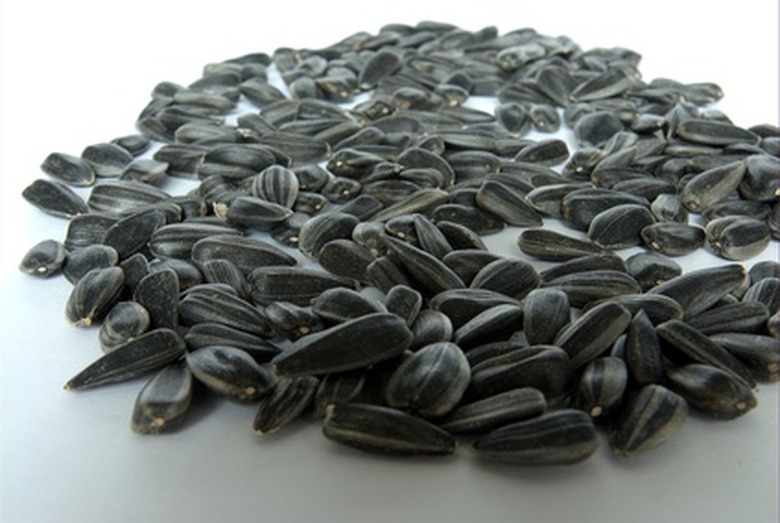
Many varieties of plant seeds will grow after freezing. The Svalbard Global Seed Vault near Longyearbyen, Norway, can freeze billions of seeds in three underground chambers. The vault temperature is minus 18 degrees Celsius. The frozen seeds safeguard against loss of plant diversity due to climate change.
Step 1
Place the flowers on a plate on top of a flat surface.
Step 2
Place your silica gel packet in the center of the plate of flowers and cover with a paper towel.
Step 3
Leave the flowers to sit for three days at room temperature without water. This will help enhance the drying process.
- Many varieties of plant seeds will grow after freezing.
Step 4
Remove the paper towel and the silica gel packet. Place the flowers in the microwave for two minutes. The microwave helps to evenly dry out the flowers so they can be frozen properly.
Step 5
Remove the flowers and place them on the counter to cool for five minutes.
Step 6
Place the flowers into an airtight storage container (plastic freezer containers or Ziploc bags work well).
Step 7
Place the flowers into the freezer.
Things Needed
- Flowers
- Freezer
- Dinner plate
- Silica gel (available at home and garden centers)
- Microwave oven
- Paper towels
- Ziploc bag
Step 1
Check the weather forecast. Two to three days before a freeze is expected, plan to water your plants.
- Remove the paper towel and the silica gel packet.
- Place the flowers into the freezer.
Step 2
Water each plant so that you cover its entire root system, which is usually as wide as the plant's foliage. Generally, about an inch of water is sufficient. Do not get the foliage wet. Water in the late morning, just as the soil warms up, and at the same time, gives the water a chance to seep in before the temperatures drop in the evening.
Step 3
Mulch over your plants. This will help your plants retain water and it will keep the soil warmer. Use about 3 inches of mulch, which can be any variety such as bark or pine needles.
- Water each plant so that you cover its entire root system, which is usually as wide as the plant's foliage.
- Use about 3 inches of mulch, which can be any variety such as bark or pine needles.
Step 4
Water once a month throughout the winter between freezes. Plants usually don't need any more than this during the cold winter months. However, if you live where the ground is frozen all season, then you will have to wait until spring to water your plants. If you live where it freezes on and off, then water your plants once a month when there is no snow or ice on the ground, but a least two to three days before another freeze.
Things Needed
- Water
- Mulch
Step 1
Water the plants during the hottest part of the day when freezing rain is predicted. This will seep into the roots, and once the cold rain hits the area around the plant's soil, the moisture will rise up to heat the plant. This will also help insulate plants that are going to be covered with blankets or tarps, as the water in the soil will produce heat under the tent, warming the plant.
- Water once a month throughout the winter between freezes.
- If you live where it freezes on and off, then water your plants once a month when there is no snow or ice on the ground, but a least two to three days before another freeze.
Step 2
Layer some shredded bark or straw around the base of the plant before expected freezing rain, which insulate the roots.
Step 3
Cover climbing vines or trellis plants with blankets, an old shower curtain or tarp, or sheets of canvas. Pin or nail the material to the wall on either side of the vines, covering them completely. Pin the top of it as well so the rain cannot seep down under the top of the material. For plants on a trellis, drape the material over the trellis and tuck it under around the bottom of the structure. Have these materials ready so you can install them as soon as a cold rain begins to fall.
Step 4
Cover young plants such as vegetable, fruit or herb gardens with an old shower curtain or tarp (just make sure it is waterproof). Tuck the material down under and around the plants.
- Layer some shredded bark or straw around the base of the plant before expected freezing rain, which insulate the roots.
- For plants on a trellis, drape the material over the trellis and tuck it under around the bottom of the structure.
Things Needed
- Shredded bark or straw
- Tarp or old shower curtain
- Canvas or blankets
- Pins or hammer and nails
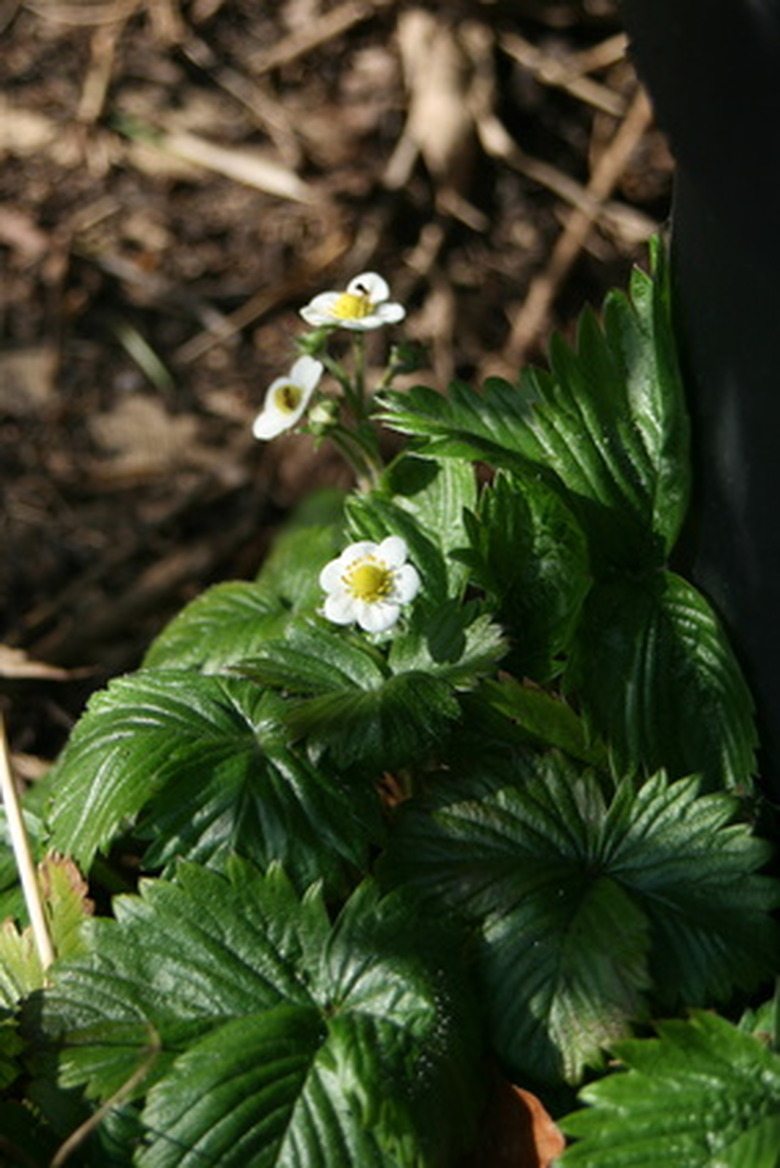
Plant strawberries in the spring, after the risk of hard freeze has passed. The window of time for planting is generally between April 15 to May 15. Fall planting is not recommended, as the subsequent freeze/thaw cycles can damage the plants.

Step 1
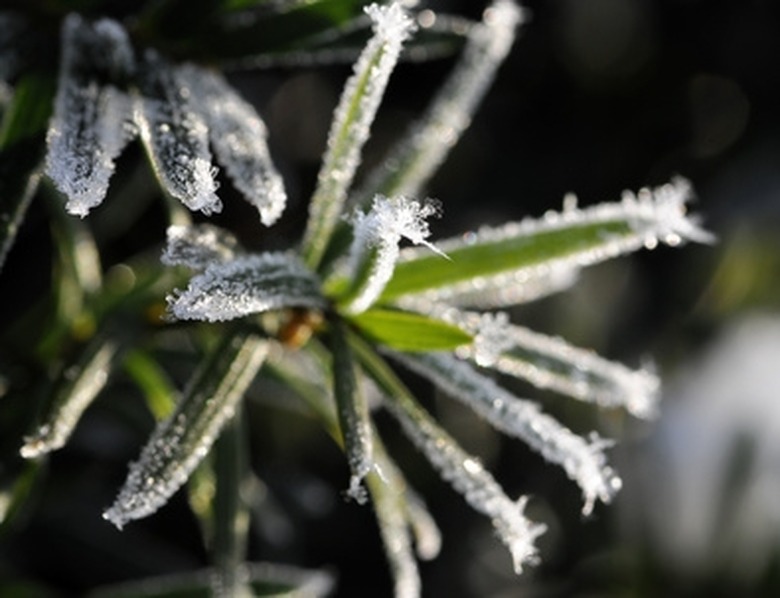
Water the soil around trees and shrubs before a hard frost. The moist soil around the roots will strengthen the plant and keep the temperature of the soil more consistent. Water plants to a depth of 12 inches for large shrubs and trees.
Step 2
Spread a 10- to 12-inch layer of mulch around the base of deciduous shrubs and trees. Use straw, rotted leaves or well seasoned manure. The mulch layer insulates the soil slowing the freezing process of the ground around the roots.
Step 3
- Plant strawberries in the spring, after the risk of hard freeze has passed.
- Water plants to a depth of 12 inches for large shrubs and trees.
Step 4
Cover perennial root systems with a 6- to 8-inch layer of mulch such as straw, manure or rotted leaves. Most perennials die back to the ground in winter. Cut off all dead stalks and foliage before covering the area with mulch.
Step 5
Wrap shrubs, dwarf trees and trees trained on a trellis or against a wall with fleece material to prevent plants from freezing. Wrap the material loosely over the canopy of the shrub or tree. This protects the leaves from freezing and bursting.