

Uses Of Water Lily Flowers
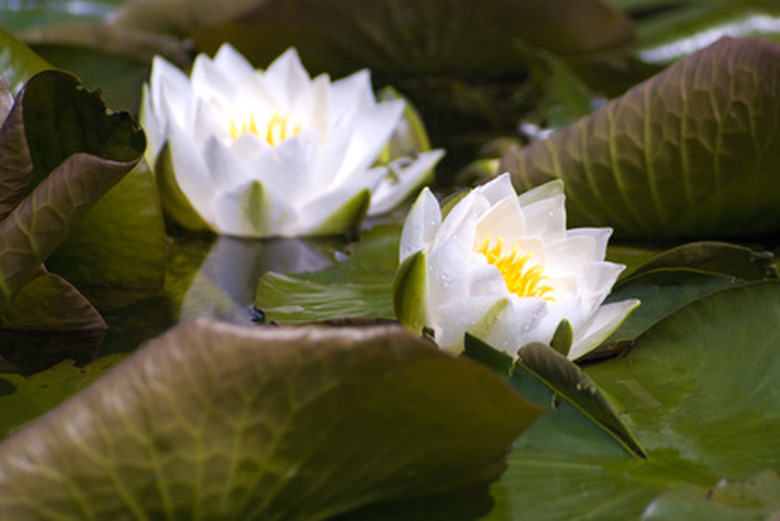
Water lilies produce beautiful flowers and large lily pads. They grow in water and can decorate backyard freshwater ponds. They survive in a variety of temperatures, since more than one variety of the plant exists. And the plants provide not only decoration but also shade for underwater creatures and a pleasant fragrance.
Pond Decoration
Water lilies produce beautiful flowers that look wonderful on ponds and lakes. The National Gardening Association even recommends making water gardens in backyard tubs and using lilies as a decoration. Water lilies come in a variety of colors, including white, pink and purple.
- Water lilies produce beautiful flowers and large lily pads.
- Water lilies produce beautiful flowers that look wonderful on ponds and lakes.
Pond Shade
Water lilies provide shade for pond creatures. Langston University recommends providing aquatic plants for koi and goldfish in ponds. Too much sun may harm underwater animals, and tadpoles and fish also like to have hiding spaces.
Indoor Decorations
Water lily flowers make nice decorations. Place a water lily flower in a small bowl of water and use it as a table decoration.
Fragrance
According to Texas A&M University, white water lily flowers have a strong fragrance. Pick them and place them around the house to make the house smell good.
- Water lilies provide shade for pond creatures.
- Langston University recommends providing aquatic plants for koi and goldfish in ponds.
Microorganism Habitats
Besides providing shade and hiding places for pond fish, Texas A&M University explains, water lily flowers and lily pads provide a habitat for microorganisms that pond fish and frogs feed on. Plant some water lilies in a pond so that fish do not require as much artificial feeding.