

The Best Tomato Varieties For Kentucky
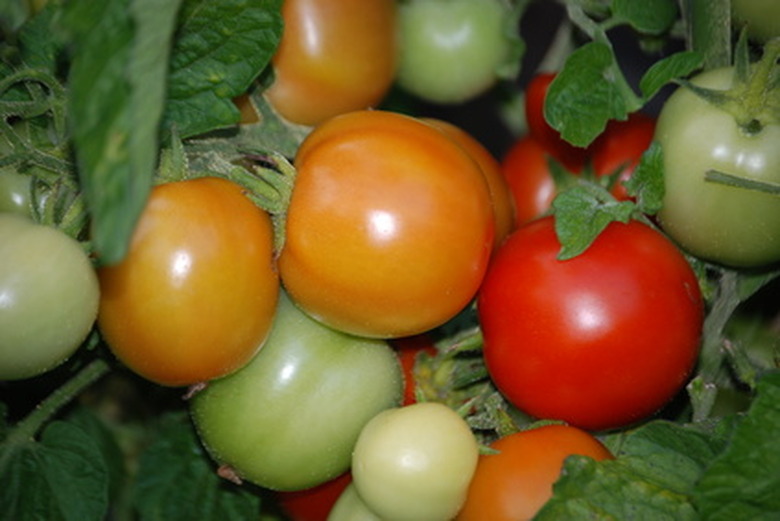
Most of Kentucky lies in USDA Hardiness Zone 6b, which means that tomatoes can be started indoors around March 25 and placed outside around April 20 in western Kentucky and May 15 in northern Kentucky, reports the University of Kentucky Cooperative Extension Service. The Bluegrass State is tailor-made for tomato success–they "grow under a wide range of conditions with minimum effort," according to "Home Vegetable Gardening in Kentucky."
Determinate
Tomatoes that reach a genetically determined height and fruit over a set period are called determinates.
The University of Kentucky's Department of Horticulture recommends Early Girl, at 58 days, as its fastest-maturing determinant, followed by Big Early at 62 days. Celebrity, one of the most popular hybrids, matures in 75 days and also makes the department's list in "Vegetable Cultivars for Kentucky Gardens 2009." Mountain Fresh, Fabulous and Carolina Gold win nods and mature in 72 to 77 days.
If you want to grow a paste tomato for sauces or canning, the best varieties for Kentucky include Plumb Dandy, Roma VP and Plum Crimson, which mature in 76 to 80 days.
Indeterminate
Other tomatoes grow until frost and continue to bear fruit. The earliest-maturity tomato in the indeterminate category recommended for Kentucky is the Sun Gold (57 days), known for its intense sweet flavor. Also well suited are Big Beef, Better Boy and Pink Girl, maturing in 70 to 72 days, and Bucks County Hybrid and Better Boy, at 74 and 75 days respectively.
- Most of Kentucky lies in USDA Hardiness Zone 6b, which means that tomatoes can be started indoors around March 25 and placed outside around April 20 in western Kentucky and May 15 in northern Kentucky, reports the University of Kentucky Cooperative Extension Service.
- If you want to grow a paste tomato for sauces or canning, the best varieties for Kentucky include Plumb Dandy, Roma VP and Plum Crimson, which mature in 76 to 80 days.
Heirloom
Soft and flavorful heirloom varieties lost favor after World War II because they don't ship well and may lack shelf appeal, but home gardeners prefer them for their taste.
One of the most famous heirloom tomatoes, Brandywine, makes the University of Kentucky's recommended list, as extension specialists note its "great flavor," large 12 oz. to 16 oz. fruits and choice of red, pink and yellow fruits. Brandywine matures in 78 days. The university also lists Kentucky Beefsteak, a large yellow heirloom that matures in 90 days.
Bill Best of Berea, Kentucky, president of the Sustainable Mountain Agriculture Center, lists the Anna Russian as his favorite heirloom, followed by Yellow German, Kentucky Beefsteak, and the Mountain Pride, Mountain Gold, and others in the "Mountain Series" developed at the Fletcher Experiment Station in Fletcher, North Carolina.
- Soft and flavorful heirloom varieties lost favor after World War II because they don't ship well and may lack shelf appeal, but home gardeners prefer them for their taste.
- Bill Best of Berea, Kentucky, president of the Sustainable Mountain Agriculture Center, lists the Anna Russian as his favorite heirloom, followed by Yellow German, Kentucky Beefsteak, and the Mountain Pride, Mountain Gold, and others in the "Mountain Series" developed at the Fletcher Experiment Station in Fletcher, North Carolina.
Cherry
Famous cherry tomato types Juliet and Supersweet 100 make the grade for Kentucky, as they do elsewhere, making many other states' recommended lists of cultivars. In addition, state horticulturalists recommend Cherry Grande, Sugary, Sungold (gold), Sweetie, Mountain Belle, Jolly (pear-shaped and pink) and the Cupid grape tomato. All mature in 60 to 71 days.
Patio
Basket King, a determinate that matures in 55 days, should produce well in Kentucky, according to the extension service's list.
Greenhouse
Trust tomatoes are a customer favorite for flavor but pose significant disease problems, according to Robert G. Anderson, horticulture specialist at the University of Kentucky Cooperative Extension Service.
References
- University of Kentucky Cooperative Extension Service: Vegetable Cultivars for Kentucky Gardens—2009
- KentuckyLiving.com: "Heirloom Heritage;" Tanya Stewart
- University of Kentucky Cooperative Extension Service: Greenhouse Tomato Production Practices
- University of Kentucky Cooperative Extension Service: Home Vegetable Gardening in Kentucky