

How To Prune Ninebark Shrubs
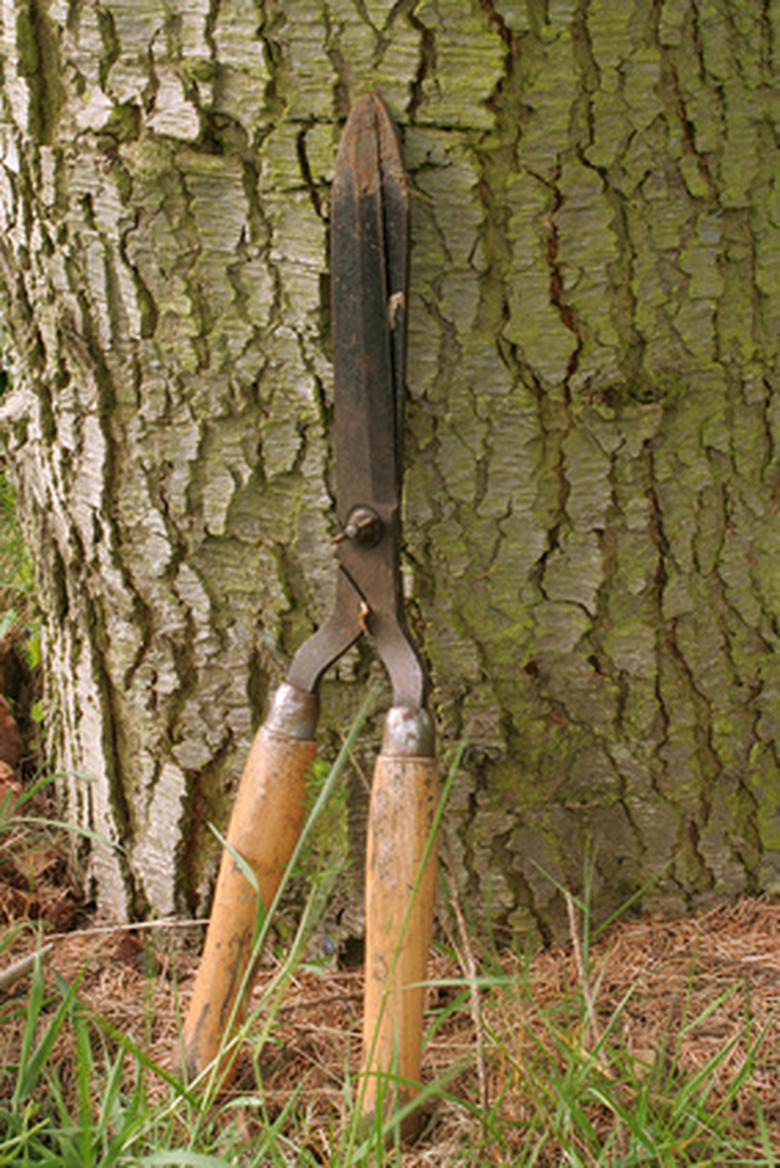
Ninebark, known botanically as Physocarpus, is a genus of flowering and fruiting perennial shrubs in the rose family of plants. Like most woody deciduous shrubs, they require no mandatory pruning for performance but do benefit from the removal of damage and dead wood. They can also be pruned to maintain their proper footprint in the surrounding landscape design should they become overgrown.
Step 1
Prune your ninebark shrubs in the early spring while the shrub is still dormant and before new growth and buds have emerged.
Step 2
Cut back any dead or diseased branches or any plant tissues that look compromised or suspect. Cut back to a point of healthy plant tissue and pull the questionable cuttings from the shrub and discard them. If an entire branch is compromised, cut it off at the crown of the plant just above the soil line.
- Ninebark, known botanically as Physocarpus, is a genus of flowering and fruiting perennial shrubs in the rose family of plants.
- Cut back to a point of healthy plant tissue and pull the questionable cuttings from the shrub and discard them.
Step 3
Reduce the size and spread of the shrub by cutting off the terminal branch tips to the desired length. Never reduce the shrub by more than one-third of its size in any single pruning session, in order to prevent shock. Place all cuts on the bias just a 1/4 inch above a leaf node or bud. Work evenly around the shrub following the natural form to ensure an attractive and natural-looking result.
Step 4
Rejuvenate a hollowed out shrub or defoliated stems by conducting renewal pruning every few years or as needed. Remove one-third of the oldest and barest branches down to the crown of the plant just above the soil level. This will spur new shoots to fill out the interior and lower perimeter of the plant.
- Reduce the size and spread of the shrub by cutting off the terminal branch tips to the desired length.
- Work evenly around the shrub following the natural form to ensure an attractive and natural-looking result.
Prune Ninebark Shrubs
Ninebark (Physocarpus spp.) is a deciduous, woody ornamental hardy in U.S. Department of Agriculture plant hardiness zones 2 to 8 and noted for its cinnamon-colored exfoliating bark, a feature prominent in winter. Loppers are adequate for branches up to 1 1/2 inches thick. To prune thicker branches or stems, use a pruning handsaw. Ninebark shrubs pruned in this way create a looser, healthier plant. Cut back to a bud on the outer side of each stem. Thin large, older outer branches if needed, cutting them back all the way to the ground. Shorten other outer branches to outer buds.
- Ninebark (Physocarpus spp.)
- Cut back to a bud on the outer side of each stem.
References
- USDA Plant Database Profile: Ninebark–Physocarpus
- Purdue University: Pruning Ornamental Trees and Shrubs
- Duke University: Eastern Ninebark
- University of Minnesota Extension: Pruning Trees and Shrubs
- Missouri Botanical Garden: Physocarpus opulifolius
- Texas A&M University Extension: Follow Proper Pruning Techniques