

How To Grow Begonias Outside
Things Needed
- Peat moss
- Organic compost
- Rototiller or pitchfork
- 10-10-10 NPK fertilizer
- Shovel
- Hose
- Paper bag
- Sawdust (optional)
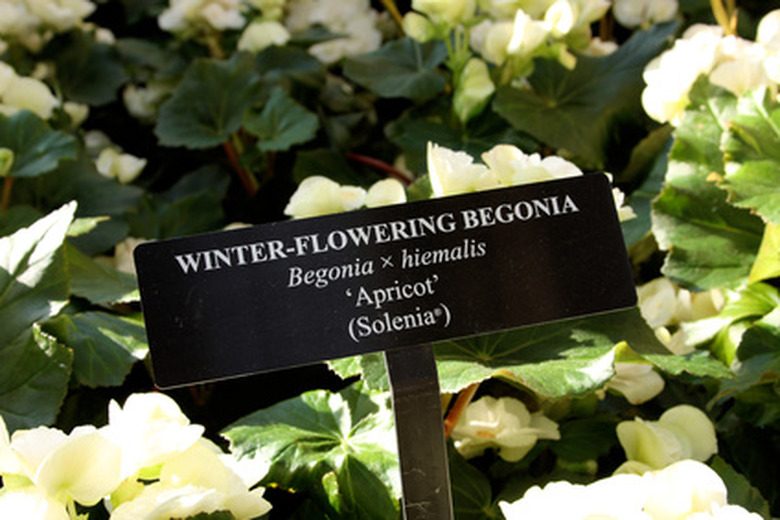
Begonias vary in color and size and are beloved for both their showy foliage and flowers. Begonias bloom in shades of white, yellow, orange, pink and red flowers. Tuberous or "wax" begonias (Begonia x semperflorens-cultorum and B. x tuberhybrida) produce large flowers that can grow up to 6 inches in diameter. Often grown in containers indoors, begonias also can be grown outdoors during the frost-free months. If you live in a region that doesn't experience freezing winter temperatures or frosts, keep the begonia tubers in the ground year-round.
Step 1
Select a planting site for your begonias in partial shade. Choose a location with soil that drains well and doesn't become waterlogged.
- Begonias vary in color and size and are beloved for both their showy foliage and flowers.
- If you live in a region that doesn't experience freezing winter temperatures or frosts, keep the begonia tubers in the ground year-round.
Step 2
Spread a 1- to 2-inch-thick layer of peat moss or organic compost onto the planting bed. Mix the organic matter down into the soil to a depth of 8 to 10 inches. Also mix into the soil an all-purpose plant fertilizer, such as a 10-10-10 NPK formula, at a rate of 1 pound per 100 square feet of planting bed.
Step 3
Dig planting holes for your begonias the same depth and width of the nursery containers, spacing the holes at least 12 to 18 inches apart. Remove the begonias from the nursery containers and plant them at the same depth as they were planted in the containers.
Step 4
Water your begonias deeply and thoroughly once or twice each week during summer when rainfall is less than 1 inch. Keep the soil evenly moistened, but allow the topmost layer of soil to become dry to the touch before watering.
- Spread a 1- to 2-inch-thick layer of peat moss or organic compost onto the planting bed.
- Also mix into the soil an all-purpose plant fertilizer, such as a 10-10-10 NPK formula, at a rate of 1 pound per 100 square feet of planting bed.
Step 5
Feed your outdoor begonias with 1 pound of a 10-10-10 NPK formula fertilizer per 100 square feet of bed once each month from spring until early autumn.
Step 6
Dig up the begonia tubers after the first frost in fall. Cut off and remove all the foliage and set the tubers in a shady spot to dry for about two or three days. Store the tubers during the winter months in a paper bag filled with dry peat moss or sawdust. Keep air temperatures at about 50 degrees F.
Tip
Purchase begonia tubers instead of nursery-raised plants and start the tubers indoors about one month prior to the last frost in spring. Plant the tubers with the depressed end facing up in a planter pot or flat filled with a mixture of equal parts perlite and moist peat moss. Keep the begonia tubers in a dark spot and the soil warmed to 70 degrees F until they sprout.
Warning
Don't plant your begonias in a spot that receives full, direct sunlight or hot sun exposure in the afternoon. Begonias need some bright light to bloom, but their leaves will burn if they're exposed to too much hot, direct sunlight.