

What Are The Benefits Of Butterfly Gardens To The Environment?
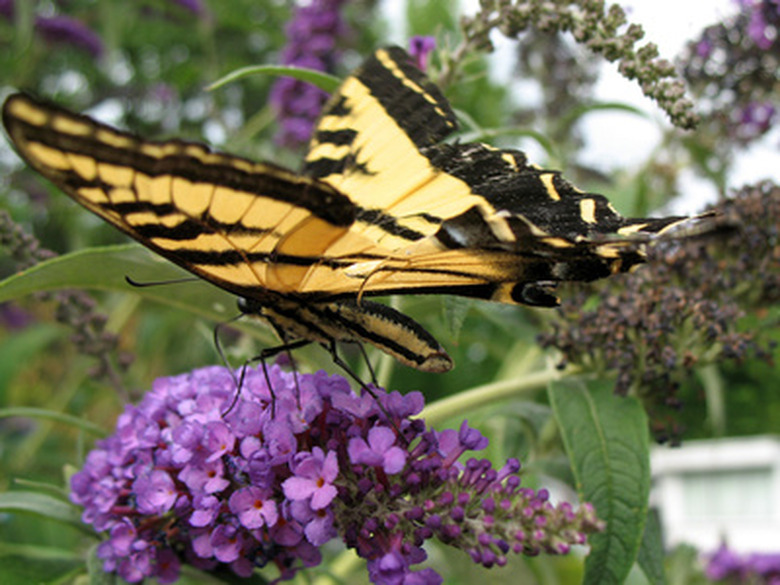
Butterflies are among the most beautiful and attractive creatures on the planet. Planting a butterfly garden draws butterflies to your yard for your family to enjoy. A butterfly garden planted with the varieties of native species that local butterflies need can also contribute significant benefits to the environment.
Butterfly Conservation
According to the Obsession with Butterflies web site, butterflies only lay their eggs on certain specific "host plants." One such plant, milkweed, is the only plant that a monarch butterfly will lay her eggs on. By planting the kinds and varieties of host plants that butterflies native to your region can lay their eggs on, you help ensure the survival of the butterflies. This is especially true in a metropolitan area where most host plants have been removed by urban sprawl.
- Butterflies are among the most beautiful and attractive creatures on the planet.
- By planting the kinds and varieties of host plants that butterflies native to your region can lay their eggs on, you help ensure the survival of the butterflies.
Other Wildlife Conservation
The Gardening Solutions section of the University of Florida's website states that a butterfly garden "provides a safe haven for butterflies and other wildlife to gather, seek shelter, acquire food and water, reproduce and build populations." Flowering plants requiring pollination, insect species that flourish in a flowering plant environment, and pollinating insects such as bees can all benefit from your garden.
Pest Control
When a butterfly garden effectively attracts and sustains a healthy population of butterflies and other beneficial insects and organisms, more complex wildlife benefits, too. Butterflies and butterfly larvae provide food for birds, mammals, lizards and other wildlife. In return, those birds, mammals, and lizards will help keep your garden clear of pests.
Scientific Study
Creating and maintaining a butterfly garden allows you to make scientific observations about butterflies and other parts of the ecosystem. Record observations about which species of butterflies you encounter, when you see them (time of day, month, season) and how numerous they are. This data can then be shared with other researchers to help increase knowledge and understanding about the ecosystem, about butterfly populations and habitats, and about conservation.
- The Gardening Solutions section of the University of Florida's website states that a butterfly garden "provides a safe haven for butterflies and other wildlife to gather, seek shelter, acquire food and water, reproduce and build populations."
- When a butterfly garden effectively attracts and sustains a healthy population of butterflies and other beneficial insects and organisms, more complex wildlife benefits, too.
Peace of Mind
One benefit of maintaining a butterfly garden is the peace of mind experienced by the humans who create it and can relax in it. Specifically, the University of Florida's website refers to butterfly gardens as having a "therapeutic" effect. Butterfly gardens "can provide a soothing retreat from everyday life."