

How To Pinch The Tops Of Tomato Plants
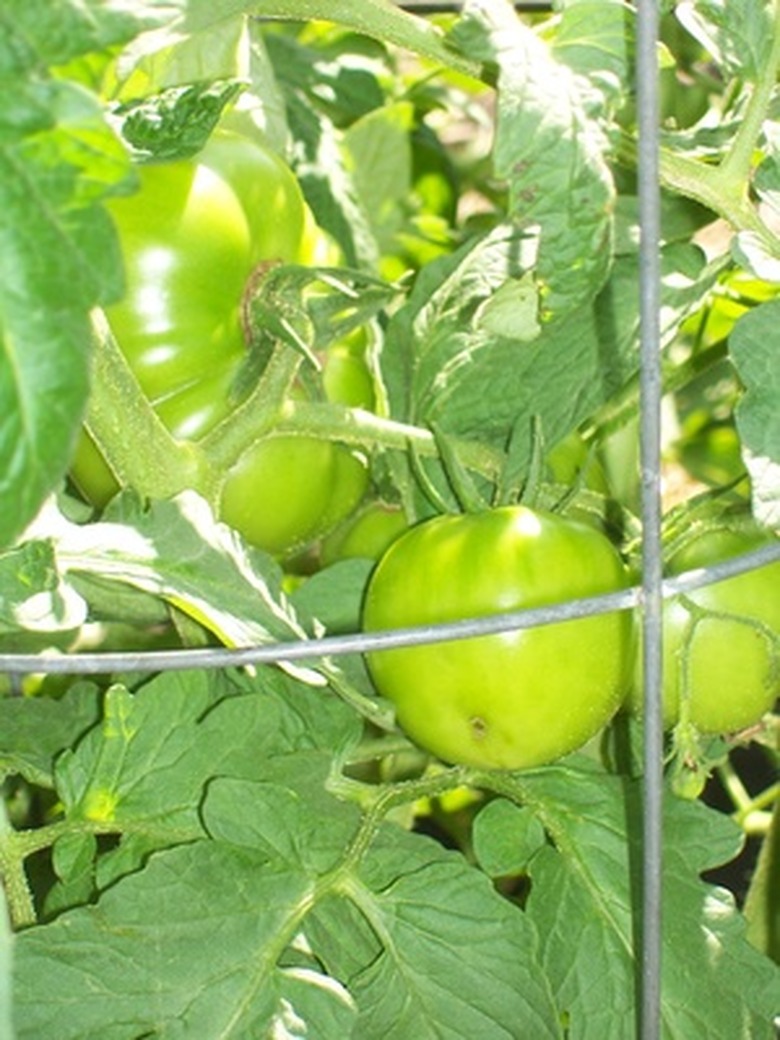
Tomato plants grow quickly when properly cared for and require pruning maintenance to increase the amount and size of tomatoes produced. Both determinate and indeterminate varieties benefit from pinching off branches and leaves during the growing season. Determinate tomato varieties produce all their fruit during a short period while indeterminate produce a smaller amount of fruit over a longer period. Begin the pruning process early in the season, continue to pinch off growth during fruit production and follow up with pinching in the fall to increase the amount of ripe fruit harvested.
Step 1
Pinch all blossoms that form on the tomato plant before it is a mature size. This will force the tomato plant to focus energy into growing strong, fruit-bearing branches instead of producing fruit.
Step 2
Pinch sucker branches that form in the branch joints below the first stem of flower clusters. Suckers are the beginning of new branches and need removing to prevent a heavily branched plant with low fruit production.
- Tomato plants grow quickly when properly cared for and require pruning maintenance to increase the amount and size of tomatoes produced.
- Suckers are the beginning of new branches and need removing to prevent a heavily branched plant with low fruit production.
Step 3
Pinch off fruiting branches that form close to the first stem of flower clusters on indeterminate tomato plants. Remove branches so there are four to five main stems left on the indeterminate plants as this increases fruit size and production.
Step 4
Pinch the leaf tip ends in late summer to early fall when the end of the growing season is near. Remove the top of the tomato plant and several inches off each branch to force the plant to stop growing in size. This will force the plant energy toward ripening fruit before the first frost.
Pinch Back Tomato Plants?
Pinching seedlings back when they are 4 to 6 inches tall to force new growth works for any tomato plant. Plants can be pinched again as soon as new growth grows 2 to 3 inches, if necessary. They may range from 12 to 24 inches tall. Indeterminate tomatoes plants continue to grow throughout the summer until they are killed by frost. New growth will soon produce new blooms. Many gardeners prefer to pinch out suckers, the shoots that appears between the branch and the main stem of tomato plants, and allow only one or two main stems to grow.
- Pinch off fruiting branches that form close to the first stem of flower clusters on indeterminate tomato plants.
- Remove branches so there are four to five main stems left on the indeterminate plants as this increases fruit size and production.