

Poison Sumac In Georgia
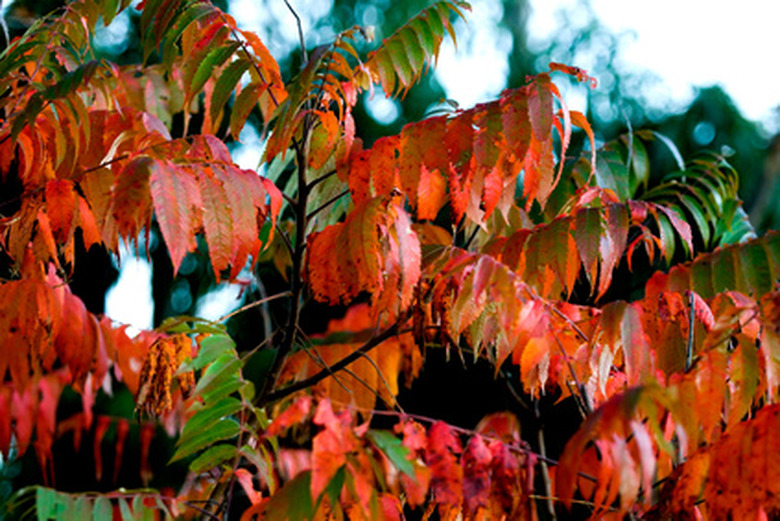
Poison Sumac (Toxicodendron vernix) is a member of the cashew family and is related to poison ivy and poison oak. Although all three of these plants are commonly seen in Georgia, the poison sumac plant is more prominently found in the Eastern part of the United States. It is also more predominate in the South.
Description
Poison sumac grows as a small tree or large shrub and has nine to 13 leaflets that grow on a red rachis (stem that connects the leaflets). It produces small, greenish-white flowers that are followed by white fruit that often last through the winter. In fall, the greenish leaves turn to brilliant shades of red, orange and even reddish-purple. All parts of poison sumac are considered poisonous.
- Poison Sumac (Toxicodendron vernix) is a member of the cashew family and is related to poison ivy and poison oak.
- Poison sumac grows as a small tree or large shrub and has nine to 13 leaflets that grow on a red rachis (stem that connects the leaflets).
Locations In Georgia
The United States Department of Agriculture's (USDA) Plant Database lists 18 counties in the state of Georgia that have confirmed observations of poison sumac. This data does not account for populations that have not been documented. Counties with confirmed observations include: Ben Hill, Bulloch, Charlton, Clarke, Cook, Grady, Gwinett, Habersham, Hall, Harris, Jackson, Lanier, Lowndes, Terrell, Tift, Wayne and Worth.
Symptoms
Allergic reactions from poison sumac are caused by the plant's oil which is called, urushiol. Possible symptoms can include, rash, itching, redness, red streaks, hives, or blisters. Symptoms typically appear eight to 48 hours after the skin has come into contact with the plant; however, in some cases it can also take up to 15 days for these symptoms to appear.
Treatment
Areas of the skin that have come into contact with poison sumac should immediately be washed. Since the oil has to be absorbed through the skin for the rash to occur, washing the skin can sometimes help keep a rash from appearing. All items of clothing that have come into contact with the plant should also be washed right away. If it is too late and a rash appears, antihistamines and calamine lotion may help to lessen the itching and help to relieve other symptoms.
- The United States Department of Agriculture's (USDA) Plant Database lists 18 counties in the state of Georgia that have confirmed observations of poison sumac.
- Since the oil has to be absorbed through the skin for the rash to occur, washing the skin can sometimes help keep a rash from appearing.
False Poison Sumac
False poison sumac (Rhus michauxii) or Michaux's sumac is a shrub that closely resembles poison sumac, however, it is not poisonous. False poison sumac is an endangered plant. There are only two known populations in the state of Georgia. A concentrated effort of reintroduction of this plant is currently under way at Fort Bragg in North Carolina, as well as historic sites in Georgia.