

How To Know When Sunflower Seeds Are Ripe
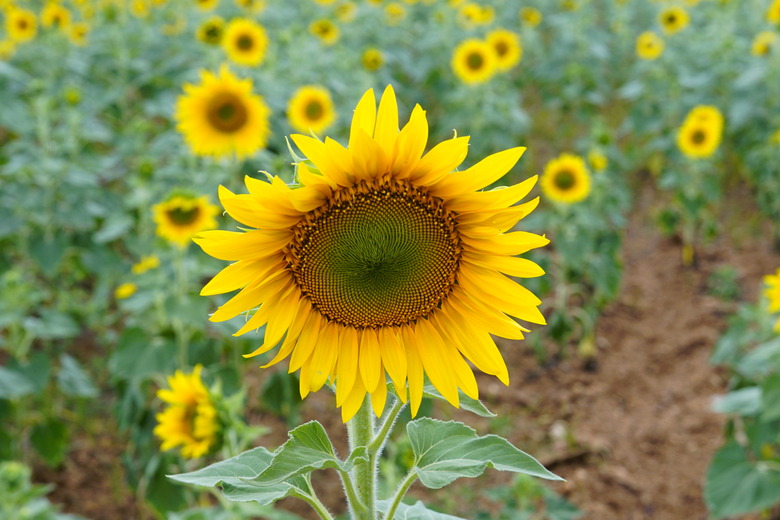
When Are Sunflower Seeds Ready to Harvest?
When to harvest sunflower seeds can be a mystery. Sunflowers (Helianthus annuus) grow fast and furiously, reaching full height and flowering in about two months.
How do you know when to harvest them? You can't tell by the birds because they begin to pick at sunflower seeds before they are ripe. Instead, **watch for a color change, shriveled flowers in the center of the seed head, and the orientation of the head.**
The Sunflower Heads
A sunflower's flower head comprises two different flowers. The yellow petals on the outside are individual ray flowers, and the face of the head consists of hundreds of disk florets—these are the flowers that produce the seeds so prevalent in every lunchbox and back pocket in the country.
When the sunflower head is young, it famously follows the sun's movement across the sky, facing east in the morning, peering up in the afternoon and then gazing west in the evening. **As sunflowers mature, they stay east-facing and then droop their heads down as if they are tired.**
**They are typically ready to harvest about 120 days after the seeds are sown,** depending on weather and other conditions—but check your seed packet to make sure, as varieties can differ.
When to Harvest Sunflower Seeds
A primary way to know when to harvest sunflower seeds is to observe the back of the flower head—**when it turns from green to yellow-brown and the bracts turn brown, the seeds are likely ready.**
The seeds themselves become somewhat brown. The flower head is facing down. You might see some shriveled flowers in the center of the flower head. You can check by pulling out a few seeds to see if they have developed those characteristic black and white stripes.
Tip
If you see birds feasting on your sunflower seeds before they ripen, attach a perforated plastic bag or paper bag over the head as protection.
How to Harvest Sunflower Seeds
Cut the sunflower plant stalk and hang the plant upside down in a warm, dry area with good airflow. As an alternative, dry sunflower seeds by cutting off the head and putting it into a brown paper bag. Allow the seeds to completely dry, at least overnight, depending on the weather. If you plan to immediately roast the sunflower seeds rather than store them, the drying time is not critical.
Remove them from the seed head by rubbing the seed head across the rim of a bucket, allowing the loose seeds to drop into the bucket.
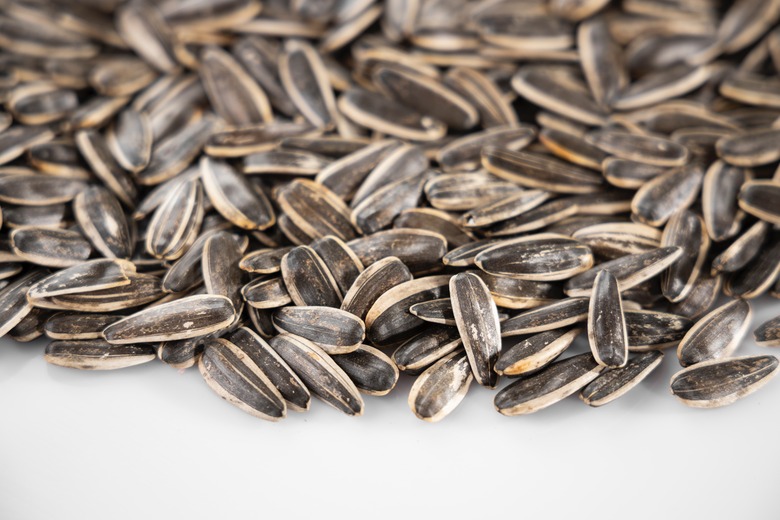 engin akyurt
Roasting Sunflower Seeds
Now get ready to enjoy the fruits of your harvest. Prepare the seeds by simmering them for two hours in a water and salt solution of 8 cups of water to 1 cup of salt. Drain them in a colander and dry them on some absorbent paper, such as paper towels.
Spread the sunflowers seeds on a cookie sheet in a single layer and bake in the oven at 300°F for about 30 to 40 minutes. Stir them periodically to ensure that they roast evenly.
Remove them from the oven and add 1 teaspoon of melted butter per 1 cup of seeds. Stir well and let cool and dry on a paper towel. You can store roasted sunflower seeds in an airtight container or a plastic bag, but if you plan to store them for more than a couple of months, keep them in the refrigerator so they won't turn rancid.
References
- Kansas State University Research and Extension: Sunflower Harvesting Season Quickly Approaches
- Colorado State University: Harvesting and Roasting Sunflower Seeds
- West Virginia University: Growing Sunflowers for Beginners
- American Meadows: How to Harvest Sunflower Seeds for Planting, Roasting & Feeding Birds