

What Soil To Use For A Crown Of Thorns Plant
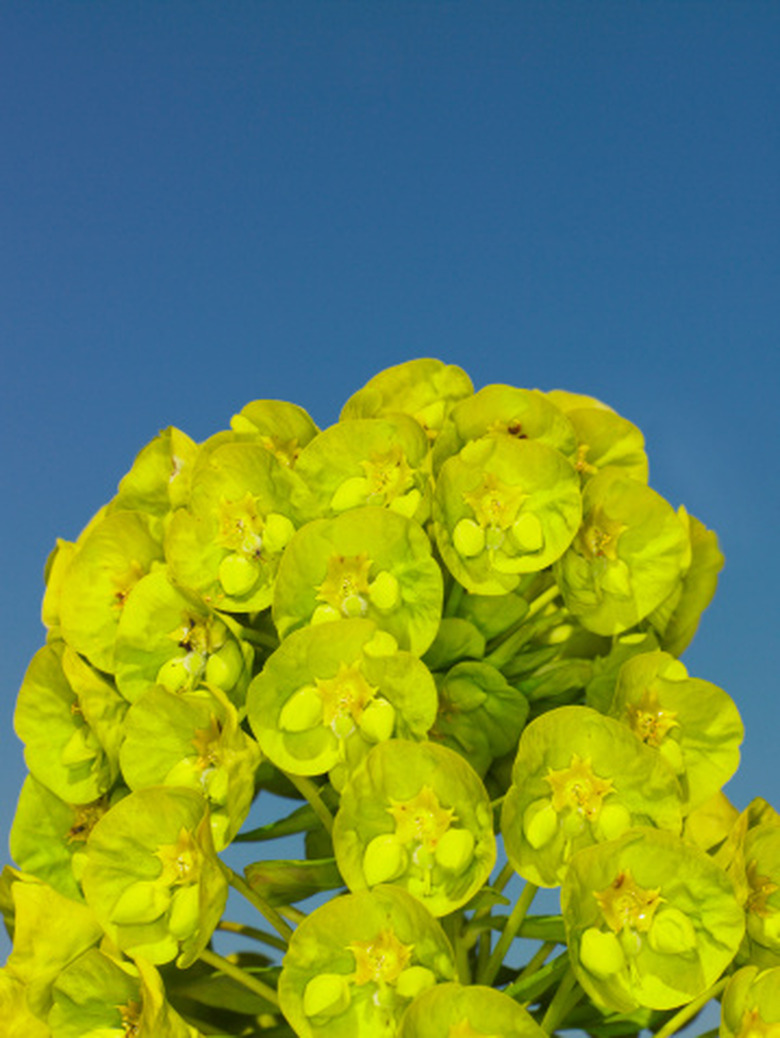
Crown of thorns plant (Euphorbia milii) is a succulent grown as a houseplant. This plant produces woody stems up to 7 feet tall covered with thorns. Crown of thorns plant require certain qualities in soil in order to grow and flower well.
Crown of thorns plant (Euphorbia milii) is a succulent grown as a houseplant. This plant produces woody stems up to 7 feet tall covered with thorns. Crown of thorns plant require certain qualities in soil in order to grow and flower well.
Warning
The soil used for a crown of thorns plant must drain quickly. If the soil holds onto too much moisture, this succulent looses its leaves during the growing season. If left in wet soil, the plant dies.
Significance
A crown of thorns plant grows well in soil that is not very fertile. A commercial cactus soil works well for this plant. Create your own soil mixture by combining equal parts of potting soil, sand and pea-sized gravel.
- Crown of thorns plant (Euphorbia milii) is a succulent grown as a houseplant.
- If the soil holds onto too much moisture, this succulent looses its leaves during the growing season.
Effects
Crown of thorns stem cuttings are propagated in a mixture of equal parts potting soil and sand. Keep the cuttings barely moist and shaded for two weeks. Roots soon form, and new growth starts.
Repot The Crown Of Thorns
Mix two parts coarse sand and one part potting soil. Amend the mixture with a little well-rotted manure or compost. Make a hole in the middle for the root ball. Wear heavy garden gloves and long sleeves to protect yourself from the the crown of thorns' spines and milky sap. Shake the plant and brush off excess soil from the roots with your fingers. Set the root ball into the hole in the new pot an inch or so lower than the previous soil level. Ensure the crown of thorns stands straight. Backfill around the roots with fresh soil mixture and pack it firmly to eliminate air pockets.
- Crown of thorns stem cuttings are propagated in a mixture of equal parts potting soil and sand.
- Set the root ball into the hole in the new pot an inch or so lower than the previous soil level.