

How To Clean Sunflower Seeds
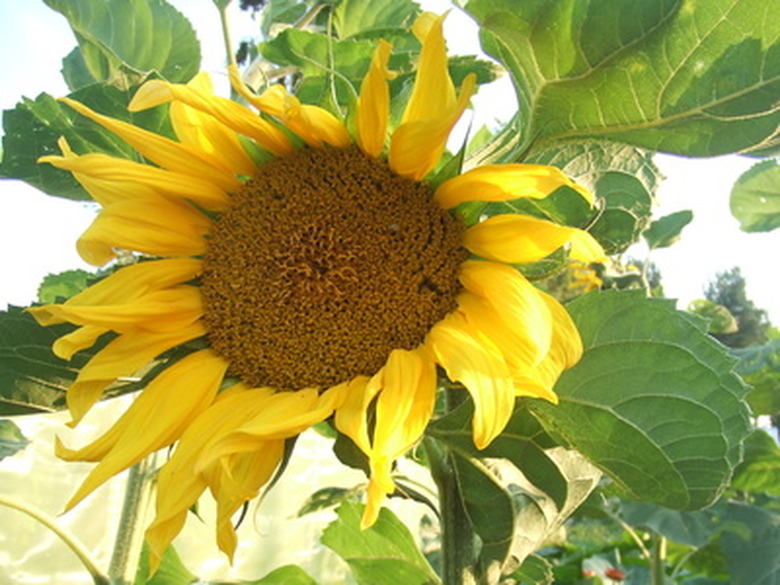
After petals start falling from the sunflower, the birds will begin feasting on the tempting seeds. To avoid losing the seeds to the wildlife prior to harvesting, cover the wilting flower head with cotton sack or clean panty hose. If you can easily dislodge the plump, black and white seeds from the flower head by brushing your hand over them, they are ready to harvest. Cut the flower head from the plant, leaving about 12-inches of stem attached to the flower. Remove the covering and rub the seeds with your hand to dislodge the remaining seeds.
Step 1
Place the sunflower seeds in a pan and cover with water. If the seeds are for the birds, skip these steps and store the seeds in a sealed container, in a dry location.
- After petals start falling from the sunflower, the birds will begin feasting on the tempting seeds.
- If the seeds are for the birds, skip these steps and store the seeds in a sealed container, in a dry location.
Step 2
Add salt to the water, using approximately ¼ cup of salt per quart of water.
Step 3
Bring the water to a boil, turn down to simmer. Simmer for two hours.
Step 4
Drain the water from the seeds and lay the seeds on a paper towel to dry. After draining, the seeds can be roasted, if desired. Do not give the seeds prepared with salt to birds.
Save Sunflower Seeds To Plant The Following Spring
Allow the sunflower plant to grow and mature for the entire season. You can tell that a plant has matured when the majority of the petals have dried up and fallen to the ground and the backside of the flower is dried and brown. Use a pair of gardening shears to cut the head of the sunflower from the stalk. Do not allow the seeds to get hotter than 100 degrees. This dries the seeds to a moisture content of around 8 percent. Remove the seeds from the tray and place them in a moisture-proof container. Place the container in a location that is below 40 degrees, such as a refrigerator or freezer.
- Add salt to the water, using approximately ¼ cup of salt per quart of water.
- After draining, the seeds can be roasted, if desired.
Things Needed
- Pan
- Water
- Salt
- Paper towel
Tip
Roast sunflower seeds in the oven at 300 degrees. Stir occasionally and bake until crisp, about 30 minutes.