

Garlic Planting Instructions
Things Needed
- Organic compost
- Garden tiller
- Fertilizer
- Mulch
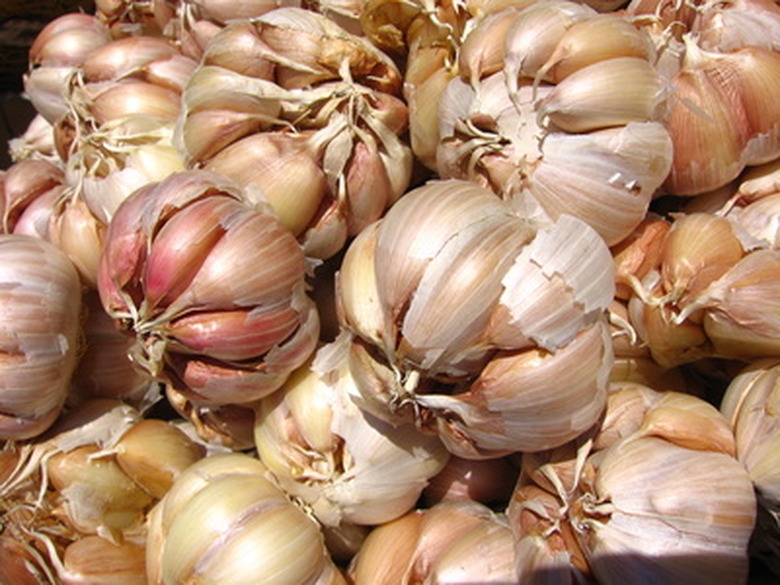
Garlic, a bulbous herb related to onions and leeks, requires only minimal care to grow once the bulbs are planted. This process, however, requires some advance site preparation for the garlic to produce abundant new cloves. A perennial bulb, garlic is best planted in the fall where it will chill in the soil throughout the winter months and begin producing new growth the following spring. Timing is the most important part of garlic planting, as the bulbs need adequate time to become established before the soil warms.
Step 1
Choose a planting location for garlic that receives six to eight hours of full sunlight each day and consists of fertile, well-drained soil with a pH level between 6.0 and 7.0. Check the pH of the soil by obtaining a soil test kit from your local county extension office.
Step 2
Apply a 3-inch layer of organic compost to the planting site and work the material into the soil using a garden tiller to increase the fertility of the site. Fertilize the soil using 10-10-10 NPK fertilizer at a rate of 3 lbs. for every 100 square feet prior to planting.
- Garlic, a bulbous herb related to onions and leeks, requires only minimal care to grow once the bulbs are planted.
Step 3
Plant garlic bulbs about six weeks before the ground freezes, as garlic requires cold weather for shoot and bulb development. Dig a hole in the soil 2 inches deep and place the garlic bulb in the hole with the pointed side facing up. Space garlic bulbs 3 to 6 inches apart in rows spaced 12 to 36 inches apart.
Step 4
Spread a 6-inch layer of straw mulch over the entire planting site to moderate soil temperatures and prevent heaving. Allow the mulch to remain during the growing season to stunt the growth of weeds and improve moisture conservation. Replenish the mulch as often as necessary to keep it between 4 and 6 inches thick.
Tip
Begin watering garlic immediately after sprouts emerge from the soil in spring. Apply once every five to seven days to prevent the soil from drying out completely.
Warning
Do not plant garlic in the same location it was previously grown as many diseases can remain in the soil and afflict newly introduced bulbs.
References
- University of Illinois Extension: Planting Garlic
- Virginia Cooperative Extension: Time to Plant Garlic
- "1001 Hints & Tips for Your Garden"; Reader's Digest Association; 1996