

What Vegetables Can You Grow Hydroponically?
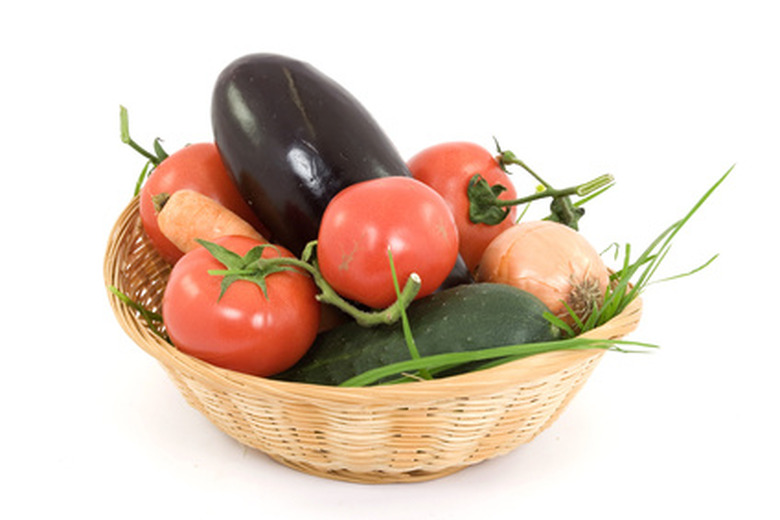
Hydroponics is the process of growing plants in water, using nutrient solutions. No soil is required. There are many kinds of vegetables that can be grown hydroponically, including leafy vegetables, fruit and flower vegetables, podded vegetables, root vegetables and tubers, stem vegetables and bulb vegetables.
Leafy Vegetables
Leafy vegetables are plants whose edible parts are the leaves. Leafy vegetables that can be grown hydroponically include lettuce (iceberg, romaine and other varieties), spinach, cabbage, Swiss chard, mustard greens, kale and bok choy. Lettuce is easy to grow hydroponically and a great confidence builder for the beginning hydroponic enthusiast.
Fruit and Flower Vegetables
Fruit and flower vegetables are the plants whose edible parts are the fruits and the flowers; they are actually fruits and edible flowers that are used as vegetables. Vegetable fruits are fleshy and contain seeds. There are several vegetable fruits that can be grown hydroponically, including tomatoes, cucumbers, peppers, eggplant and squash. Vegetable flowers that can be grown hydroponically include broccoli and cauliflower.
- Hydroponics is the process of growing plants in water, using nutrient solutions.
- There are several vegetable fruits that can be grown hydroponically, including tomatoes, cucumbers, peppers, eggplant and squash.
Podded Vegetables
Podded vegetables, also known as legumes, are vegetables whose seeds come from a pod. The pod is sometimes eaten along with the seed. Podded vegetables that can be grown hydroponically include green beans and peas.
Root Vegetables and Tubers
Root vegetables usually have a long or round shaped taproot. Root vegetables that can be grown hydroponically include carrots, radishes and beets. Tubers are vegetables that are grown underground on the root of a plant. Potatoes and yams and are tubers that can be grown hydroponically.
- Podded vegetables, also known as legumes, are vegetables whose seeds come from a pod.
- Podded vegetables that can be grown hydroponically include green beans and peas.
Stem Vegetables
Stem vegetables are the edible stalks of plants, when the stalk is the main part of the vegetable. Stem vegetables that can be grown hydroponically include asparagus and celery.
Bulb Vegetables
Bulb vegetables grow just below the surface of the ground and produce a fleshy, leafy shoot above ground. They consist of layers or clustered segments. Onions and leeks are bulb vegetables that can be grown hydroponically.