

How To Get My Orange Tree To Blossom
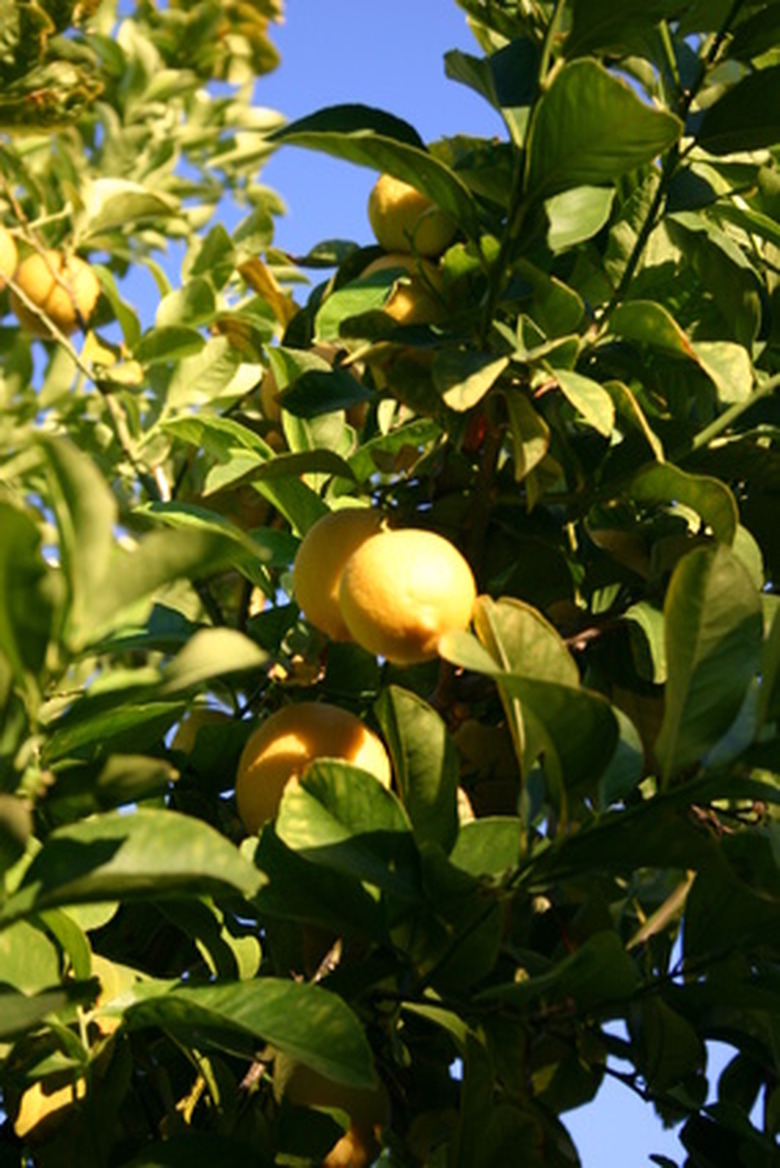
Gardeners love orange trees because of their delicious fruit. Orange trees also make attractive ornamentals with delicate, fragrant blossoms. However, these beautiful trees have very particular cultural requirements. When these are not met, orange trees can develop a host of problems. One of the most frustrating of these problems is failure to flower. Without blossoms, your orange tree will not produce fruit. To get your orange tree to blossom, you must first discover and fix the underlying problem.
- Gardeners love orange trees because of their delicious fruit.
- To get your orange tree to blossom, you must first discover and fix the underlying problem.
Step 1
Wait for the orange tree to mature. Most orange trees are mature enough to blossom and fruit when they have been in the ground for five or six years. A miniature orange tree grown from seed, rather than from a cutting, may not fruit at all.
Step 2
Feed your tree with a high-quality citrus tree fertilizer. If you are using a non-citrus specific fertilizer for you citrus tree, it may not be getting all of the nutrients it needs. General use fertilizers provide nitrogen, phosphorus and potassium, but they are often missing essential micronutrients your tree needs to flower, including boron, copper, magnesium and zinc.
Step 3
Follow the application rates recommended for your citrus tree fertilizer exactly. If you over-fertilize your orange tree, it will produce foliage at the expense of blossoms.
- Wait for the orange tree to mature.
- General use fertilizers provide nitrogen, phosphorus and potassium, but they are often missing essential micronutrients your tree needs to flower, including boron, copper, magnesium and zinc.
Step 4
Remove any grass growing around the base of your orange tree. Grass robs citrus trees of water and fertilizer, and your tree may not be producing blossoms because it is not getting enough nutrition. Remove all grass and weeds within the tree's drip line and put down a layer of bark mulch starting at least 1 foot away from the trunk of the tree.
Step 5
Check your orange tree for pests or disease. Orange trees are susceptible to a host of diseases and insect pests that could interfere with their ability to flower.
Step 6
Cover your orange tree whenever you expect a deep freeze. If winter temperatures fall below 20 degrees Fahrenheit, your orange tree's blossom buds may be killed before they can flower.
- Remove any grass growing around the base of your orange tree.
- Grass robs citrus trees of water and fertilizer, and your tree may not be producing blossoms because it is not getting enough nutrition.
Tip
If your orange tree still will not blossom, consult a tree doctor. Be aware that some hybrid orange varieties grown from seed will not produce blossoms or fruit.