

Tropical Amaryllis Care
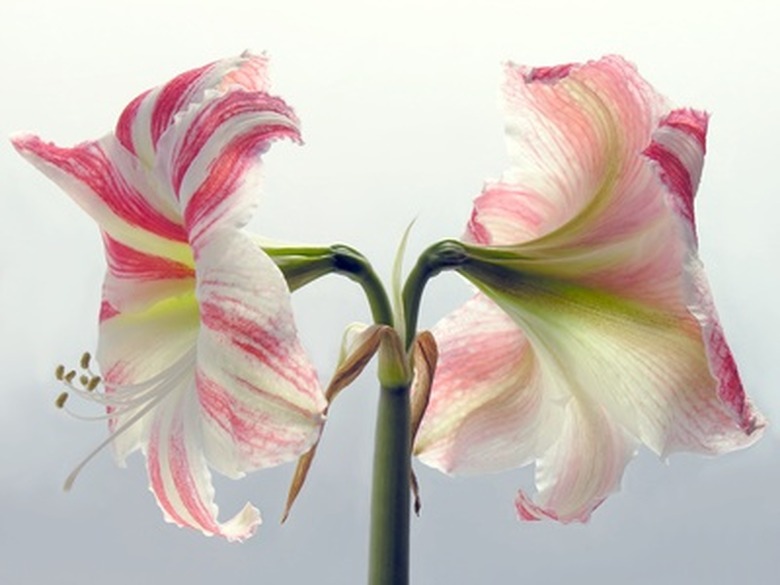
The amaryllis (Hippeastrum) originated in the tropical regions of Africa. The plant is grown from a large bulb and usually produces two or more blossoms. The bulbs can thrive outdoors in tropical regions year round and indoors in non-tropical areas of the country with care. The plant commonly flowers around Christmas or in the spring in the tropics. Flower color can be red, white, pink, orange and even multi-colored.
Outdoor Planting
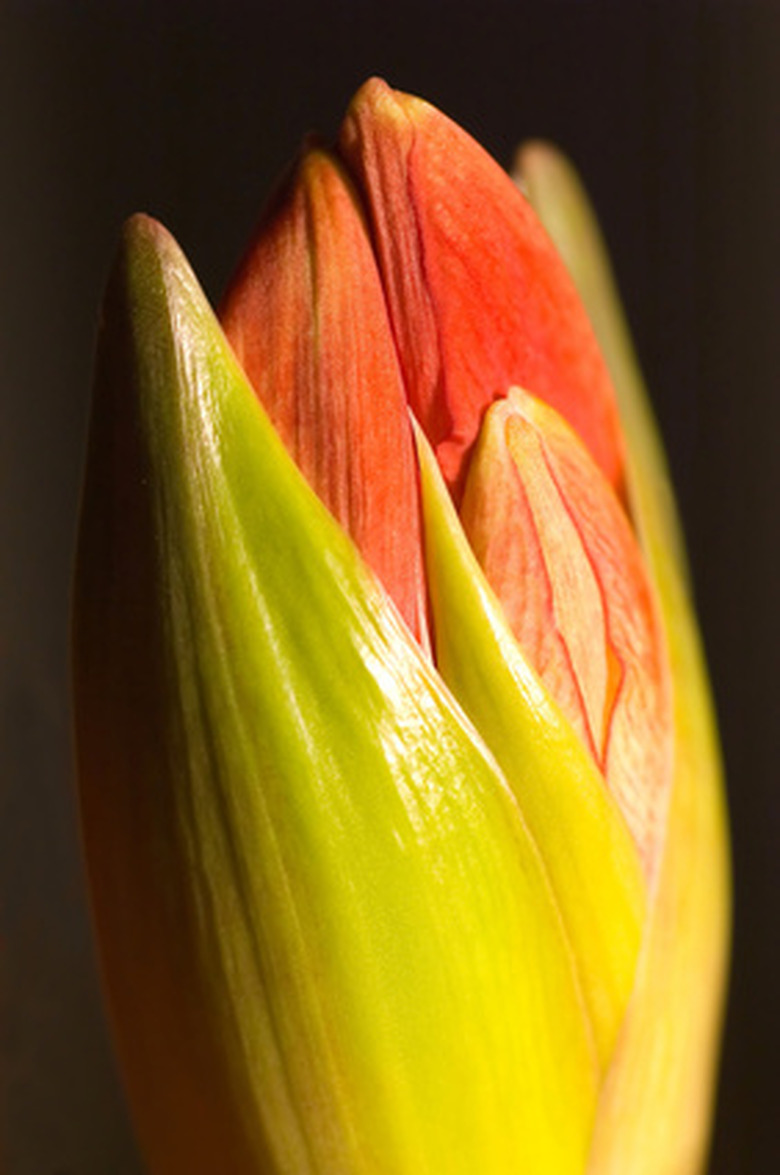
Amaryllis bulbs can be grown outside in tropical areas as foundation plantings, along walkways, by entrances or near evergreen foliage. The plants normally produce 3-foot-tall flower spikes. Plants grouped together often look the most striking. Amaryllis bulbs can be planted outside from September to January. The bulbs prefer to be planted in light to moderate shade.
- The amaryllis (Hippeastrum) originated in the tropical regions of Africa.
- The bulbs prefer to be planted in light to moderate shade.
Indoor Care
Amaryllis bulbs grown indoors are very common at Christmastime. The bulbs are normally forced to grow and bloom inside a home six to eight weeks prior to the holiday season. The size of the bulb will normally foretell the blossom abundance. The larger the bulb the more blossoms the gardener can expect. Choose a heavy container to plant an amaryllis bulb within since the plants tend to become quite heavy when in full blossom. Make sure the container has ample drainage holes. Place a thin layer of gravel on the bottom of the container to aid in drainage. Center the bulb in the middle of the container. Plant the bulb with two-thirds of the bulb above the soil line. Place potting soil around the bulb to hold firmly in place. Water thoroughly. The bulb will not need to be watered again until it begins to sprout. Place the bulb in direct sunlight and maintain an indoor temperature of about 75 degrees F. Flowers last for up to two weeks when in full bloom. Cut dead flower heads off the plant and water to maintain foliage growth until the next flowering season.
- Amaryllis bulbs grown indoors are very common at Christmastime.
- The size of the bulb will normally foretell the blossom abundance.
Outdoor Care
Amaryllis bulbs planted outside do not need to be dug up every year but many gardeners do it to check the bulbs' health and discard any that are sickly. Bulb separation can be done at the time of digging. The amaryllis can be safely dug up and divided in September or October for transplant elsewhere.
Mulching and Flower Head Removal
Apply a 2- to 3-inch layer of mulch around amaryllis plants to lessen weed growth outside. Dying flower heads should be promptly cut and disposed of before they go to seed. Allowing the flower heads to set seeds will cause the flowering to be dramatically reduced for the season. Removing the flower heads also helps to prevent disease.
- Amaryllis bulbs planted outside do not need to be dug up every year but many gardeners do it to check the bulbs' health and discard any that are sickly.
Propagation
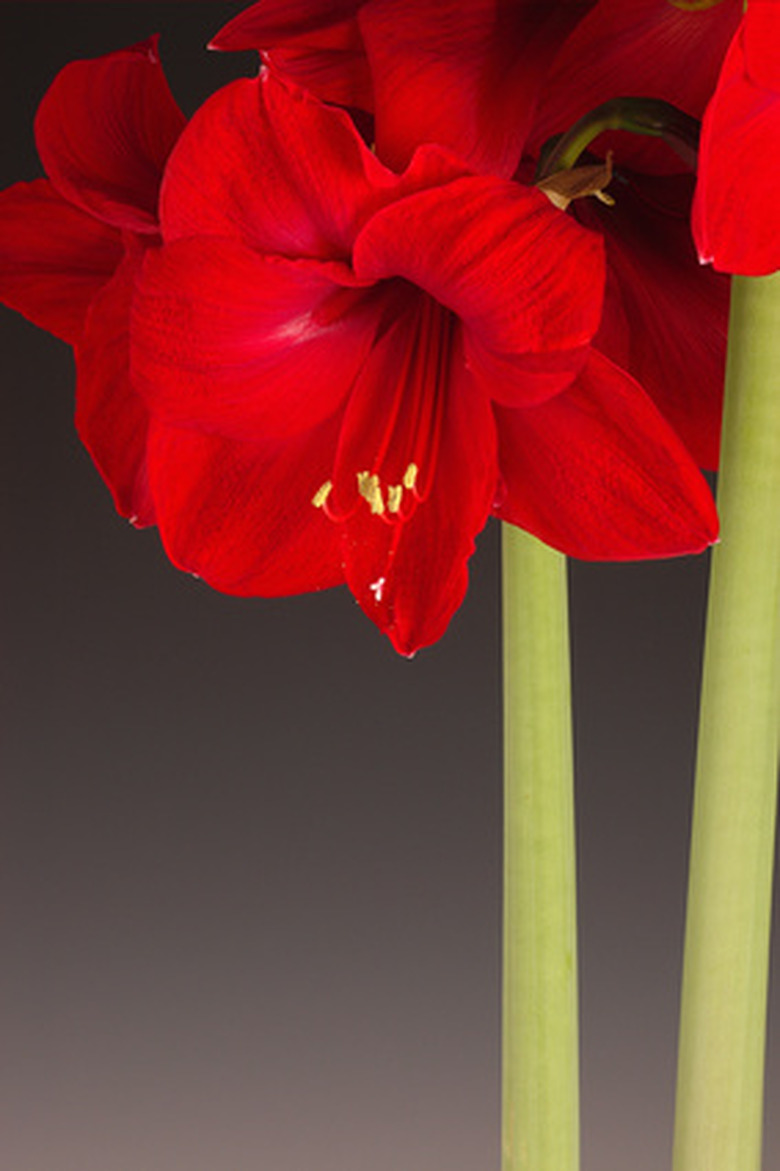
Seed pods can be removed from the amaryllis and carefully opened. Plant seed pods in a starting container with a seed start soil. Place the container in a shady location in the home until seeds germinate. Once seeds germinate the plants can be transplanted outside or into a larger container. Seed propagation often yields amaryllis plants that look nothing like the parent plant. Propagation can also be achieved by removing the small bulbs that accumulate around the large parent bulb. Bulb propagation can be done in the fall. Propagation can also be achieved by cuttage but this can often be quite difficult.
- Seed pods can be removed from the amaryllis and carefully opened.
- Propagation can also be achieved by removing the small bulbs that accumulate around the large parent bulb.