

How To Care For Neoregelia
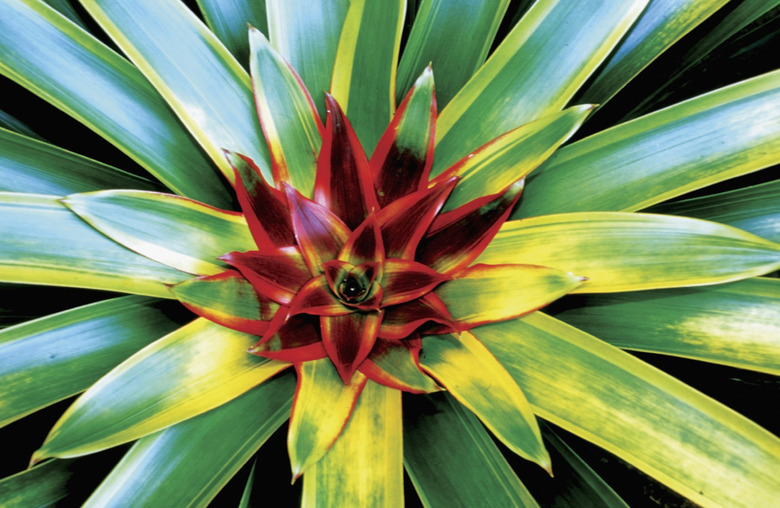
Native to the Americas, Neoregelia bromeliads are interesting outdoor plants in U.S. Department of Agriculture plant hardiness zones 10 through 11, but most gardeners grow the plants indoors. Neoregelia is an epiphyte, which means that it grows on trees and other plants but does not feed or harm their hosts. Several types of neoregelia are available to home gardeners, including blushing bromeliad, Neoregelia carolinae, which has bright maroon centers, and painted fingernail, Neoregelia spectabilis, which has red-tipped, finger-shaped leaves.
Step 1
Choose a container that complements the bromeliad's foliage shape, color and texture, and will not overwhelm the small flowers that appear in the center of the neoregelia. The container must have good drainage. In the wild, bromeliads grow in air, and the plant will rot in standing water.
Step 2
Plant the neoregelia in a light, fast-draining growing medium or in a soil-less potting mixture. Use a potting mix formulated especially for bromeliads, if possible. Fill the container to within about one inch of the rim so the growing medium does not overflow the container when you water the plant. Outdoors, plant neoregelia plant in partial to full shade in sandy or loamy, alkaline to acidic soil. Neoregelia can grow up to 1 1/2 feet tall, so space the plants 1 to 2 feet apart in the garden.
Step 3
- Choose a container that complements the bromeliad's foliage shape, color and texture, and will not overwhelm the small flowers that appear in the center of the neoregelia.
- In the wild, bromeliads grow in air, and the plant will rot in standing water.
Step 4
Place the neoregelia where it can receive indirect sunlight. A west-facing window works well for most types of neoregelia, though N. spectabilis tolerates brighter light than other species. The plant can stay outdoors as long as the temperature is above 55 degrees Fahrenheit and the container is not in direct sunlight.
Step 5
Let tap water sit for a day or two before pouring it into the cup-like reservoir in the center of the plant. This allows the chlorine and fluoride to dissipate. Rainwater is a better choice than tap water, if you can get it. The plant will draw on this stored water as needed. Overfill the cup occasionally to flush out old water and accumulated salts.
Step 6
- Place the neoregelia where it can receive indirect sunlight.
- Overfill the cup occasionally to flush out old water and accumulated salts.
Step 7
Add liquid fertilizer at half strength or less to the water used to replenish the plant's reservoir. Neoregelia's need only light, regular fertilizing. Use an acidic fertilizer and spritz the leaves and visible roots, too.