

Pepper Plants
Step 1
Some types of pepper plants have poisonous leaves, such as the chili pepper Capsicum annuum. The leaves of other pepper plants, such as Capsicum frutescens, have long histories of use amongst indigenous peoples in Taiwan. Some pepper plants may require preparation, such as boiling or cooking the leaves.
Step 2
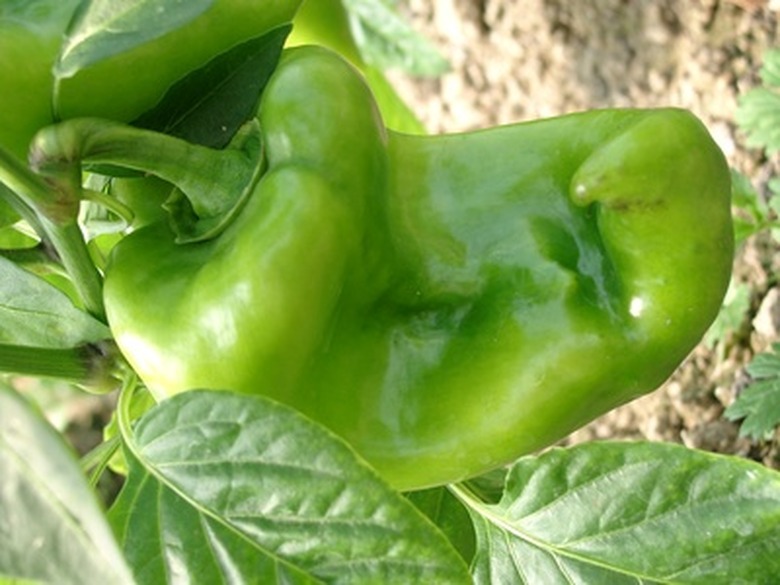
Some types of pepper plants have poisonous leaves, such as the chili pepper Capsicum annuum. The leaves of other pepper plants, such as Capsicum frutescens, have long histories of use amongst indigenous peoples in Taiwan. Some pepper plants may require preparation, such as boiling or cooking the leaves.
Step 1
Pinch off a few stems all the way around the plant every few weeks to encourage your pepper plant to become more bushy. Grasp the stem, twist and pull to remove. Shoots will appear from the old leaf joints. More shoots will lead to more blossoms.
- Some types of pepper plants have poisonous leaves, such as the chili pepper Capsicum annuum.
- The leaves of other pepper plants, such as Capsicum frutescens, have long histories of use amongst indigenous peoples in Taiwan.
Step 2
Repeat the above process every few weeks throughout the growing season.
Step 3
Pinch off the early blooms of your pepper plant. Grasp the flower at its base and pull to remove. This will encourage more numerous and larger blooms to form later in the growing season. Remove blooms that appear right after transplanting your pepper plant. Pepper plants may be shocked into blooming after transplanting, but these blooms will not lead to decent fruit.
Step 4
Remove only the early blooms, then stop pinching the plant. Blooms that form later on will produce high-quality fruit. Removing these will reduce your yield.
- Repeat the above process every few weeks throughout the growing season.
- Remove blooms that appear right after transplanting your pepper plant.
Warning
Pinching off blooms too frequently will disrupt the growing cycle of the pepper plant. This will lead to a significantly reduced crop yield.
Step 1
Lay out a paper plate with a paper towel on top of it. Set aside.
Step 2
Select a fresh pepper in the peak of its ripe stage. Cut off the top of the pepper with a sharp knife, and scoop out the seeds with your fingers or a spoon. Separate any debris from the seeds, and spread the seeds out in a single layer on the paper towel.
Step 3
Set the plate with the seeds in the sun, a sunny window or near a heater. Allow the seeds to dry for three to four days.
- Lay out a paper plate with a paper towel on top of it.
- Separate any debris from the seeds, and spread the seeds out in a single layer on the paper towel.
Step 4
Write the type of seeds you are drying, and the date, on a paper envelope. Put the seeds in the paper envelope and store them in a dry area with good air circulation. You may also store the envelopes in a sealed plastic container in the refrigerator. If you choose this method, allow the seeds to reach room temperature before opening the plastic package, otherwise moisture may gather on the cold seeds.
Tip
If you don't have paper plates, set the seeds on paper towels on newspapers.
Warning
If working with hot peppers, always use plastic gloves to prevent burns to your skin.
Things Needed
- Paper towels
- Paper plates
- Knife
- Spoon
- Paper envelopes
- Plastic container (if desired)

Step 1
Take cayenne pepper for general health. Cayenne pepper is high in vitamin C, vitamin A, iron, potassium and niacin. Paprika, a mild form of cayenne pepper, is especially high in vitamin C. Use it if you dislike hot spice.
Step 2
- Write the type of seeds you are drying, and the date, on a paper envelope.
- Put the seeds in the paper envelope and store them in a dry area with good air circulation.
Step 3
Put cayenne pepper in food to make it more digestible. Cayenne pepper contains capsaicin, which stimulates the digestive system by encouraging the output of gastric fluids.
Step 4
Use cayenne pepper externally on painful joints, pain from arthritis and to reduce swelling. Cayenne pepper increases blood flow to the area where applied. Make a lineament to apply to the skin by bringing a pint of cider vinegar to boil and adding a tablespoon of cayenne pepper.
Step 5
Gargle water mixed with cayenne pepper as a treatment for sore throats and strep throat. Dissolve cayenne pepper powder in water or boil whole cayenne peppers in water for use in gargling. Don't use too much cayenne pepper, or you'll burn your mouth. Store leftover cayenne water in the refrigerator.
Step 6
- Put cayenne pepper in food to make it more digestible.
- Make a lineament to apply to the skin by bringing a pint of cider vinegar to boil and adding a tablespoon of cayenne pepper.
Step 7
Add cayenne pepper to Mexican, Creole, or Cajun cooking or any dish that needs a dash of hot spice. Cayenne pepper can be join or replace chili powder in most recipes.
Fungal Diseases
Pepper plants are highly susceptible to anthracnose (Colletotrichum), which is also called ripe fruit disease. Phytophthora blight (Phytophthora capsici) often attacks pepper plants growing in wet, warm climates.
Effects
Anthracnose causes water-soaked lesions that turn brown and soft as the disease ages. Phytophthora blight causes general wilt as well as dark green, water-soaked lesions on the affected stems.
Bacterial Diseases
Bacterial wilt disease (Ralstonia solanacearum) and bacterial spot disease (Xanthomonas campestris) occasionally attack pepper plants in warm, wet regions.
- Add cayenne pepper to Mexican, Creole, or Cajun cooking or any dish that needs a dash of hot spice.
- Pepper plants are highly susceptible to anthracnose (Colletotrichum), which is also called ripe fruit disease.
Significance
Bacterial wilt disease causes wilted pepper plant leaves and brown discolorations in the lower stem. Bacterial spot disease turns the upper leaf surfaces brown and greasy.
Viral Diseases
Bell and hot pepper plants are prone to the pepper mild mottle virus, which causes leaf mottling and stunted plant growth. The cucumber mosaic virus causes ring spots to form on the affected leaves.
Other Problems
Blossom-end rot, the result of calcium deficiency, turns pepper plant leaves yellow or brown. Pepper plants are also vulnerable to attacks from various pests, including pepper thrips, armyworms, cutworms and aphids.
Step 1
Know some of the plants affected by pepper spot. The disease attacks a wide variety of the plants, including peanuts, alfalfa, clover and Napa cabbage.
Step 2
- Bacterial wilt disease causes wilted pepper plant leaves and brown discolorations in the lower stem.
- The cucumber mosaic virus causes ring spots to form on the affected leaves.
Step 3
Note the weather conditions that encourage the development of the disease. Pepper spot usually develops in cool temperatures with high humidity and substantial rain.
Step 4
Observe the damage caused by the fungus. Leaves will exhibit small, dark black or brown spots. These spots resemble black pepper. As the disease continues, the spots can grow and may eventually connect to one another to form larger spots on the leaves. These spots may display a yellowish border. If the disease progresses further, the leaves may dry and die.
Step 5
- Note the weather conditions that encourage the development of the disease.
- If the disease progresses further, the leaves may dry and die.
Facts
Step 1
Native to Argentina, Brazil and Paraguay, the Brazilian pepper tree was widely sold in the U.S. as an ornamental in the 1800s. Today, the tree continues to sell as a decorative plant during the holidays due to its festive red fruit and green foliage. For this reason, the tree is often labeled Christmas berry or Florida holly. Brazilian pepper tree serves as a source of timber and spice.
Features
Step 1
Brazilian pepper tree grows up to 30 feet tall as a multi-stemmed tree or shrub. The tree forms red berries, white flowers and elliptical-shaped leaves that emit a pepper or turpentine odor when crushed. The tree resembles hollyhock and belongs to the poison sumac family. The leaves produce substances that irritate skin.
Step 2
- Native to Argentina, Brazil and Paraguay, the Brazilian pepper tree was widely sold in the U.S. as an ornamental in the 1800s.
- Today, the tree continues to sell as a decorative plant during the holidays due to its festive red fruit and green foliage.
Growth
Step 1
The fruit of the tree contains seed that migrating birds eat and disperse to new areas. The seed readily sprouts in canals, ditches and swamps. Once established, the tree forms a dense thicket that crowds out native vegetation and proves difficult to remove manually. The tree also releases biochemicals that inhibit the germination of competing species.
Control
Step 1
Brazilian pepper trees respond to cut-stump and basal bark herbicide applications. The cut-stump method requires immediate application of a triclopyr or glyphosate herbicide to the exposed cambium tissue of a freshly cut stump. The basal bark method requires an injection of triclopyr ester herbicide into the bark. Saplings respond to foliar applications of herbicides.
Step 2
- The fruit of the tree contains seed that migrating birds eat and disperse to new areas.
- The cut-stump method requires immediate application of a triclopyr or glyphosate herbicide to the exposed cambium tissue of a freshly cut stump.
Green Peach Aphid
Green peach aphids are small pear shaped insects that suck sap from the pepper plant leaves. Thin, splotchy and pock-marked leaf surfaces are the result of their work. Their secretions called honeydew stick to the foliage and attract sooty mold which may be more noticeable than the aphids themselves.
Flea Beetles
Flea beetles feast on the pepper plant foliage cutting small perfectly round holes into the leaves and consuming the excised material. They are recognizable by their dark color and on some species by their yellow striped wings.
White Flies
Two types of white fly are particularly attracted to peppers and do the most damage: Silverleaf white fly and greenhouse white fly. White flies are tiny, at 1.5 millimeters in length, and the species type can only be identified under magnification. White flies colonize under the leaves of pepper plants to eat and breed. They sustain themselves by sucking significant quantities of plant sap out via tiny holes they cut into the leaves. Like aphids, they secrete honeydew where they feed, which attracts the secondary problem of sooty mold.
- Green peach aphids are small pear shaped insects that suck sap from the pepper plant leaves.
- White flies colonize under the leaves of pepper plants to eat and breed.
Step 1
Place 1/2 cup of jalapeno peppers in a blender.
Step 2
Pour two cups of water in the blender and use the puree setting on the blender to combine the two ingredients.
Step 3
Set the pepper water aside for 24 hours.
Step 4
Strain any pepper pieces out of the water using a cheesecloth.
Step 5
Pour the strained pepper water in an empty spray bottle.
Step 6
Add five drops of liquid castile soap to the pepper water. The soap helps the pepper water stick to the plants so that it can do its job.
- Place 1/2 cup of jalapeno peppers in a blender.
- Pour two cups of water in the blender and use the puree setting on the blender to combine the two ingredients.
Step 7
Spray on your plants.
Tip
You will need to reapply the pepper spray every two weeks, and after any heavy rainfalls.
Warning
Avoid spraying your plants when the temperatures is above 80 degrees F. First thing in the morning, or late at night is best.
Step 1
Measure a spot approximately 12 inches from the pepper plant seedling. This is the spot where you'll insert the stake.
Step 2
Pound the wood stake into the soil using a hammer or mallet. For the sturdiest support, pound the stake approximately 6 inches into the ground.
Step 3
Wait for the pepper plant to grow to a minimum height of approximately 1 1/2 feet. At this point, the plant will start to get lanky and will need support.
- Measure a spot approximately 12 inches from the pepper plant seedling.
- For the sturdiest support, pound the stake approximately 6 inches into the ground.
Step 4
Tie garden twine around the pepper plant's main stem approximately 15 inches off the ground, according to the University of Arkansas. Tie the other end of the twine to the stake. Provide a couple inches of slack to give the plant room to move in the wind.
Tip
If you're growing several pepper plants, up to four pepper plants can share a single stake, according to the University of Arkansas.
Step 1
Put on protective eye wear and safety gloves, as well as long clothing to prevent touching any part of the tree while cutting it down. The cambium as well as the leaves can cause skin burn as well as a rash in allergic individuals, says the University of Florida Extension.
Step 2
Cut the plant to ground level using a sharp saw.
Step 3
Apply an herbicide containing glyphosate to the pepper tree stump within five minutes of cutting the tree, says the Hernando County, Florida, website. This prevents the stump from hardening.
- Tie garden twine around the pepper plant's main stem approximately 15 inches off the ground, according to the University of Arkansas.
Step 4
Check the stump every four to six weeks for sprouts and apply herbicide to any new growth. Recut the stump if sprouts keep appearing and apply the herbicide again.
Step 5
Dispose of any branches and wood according to local requirements.
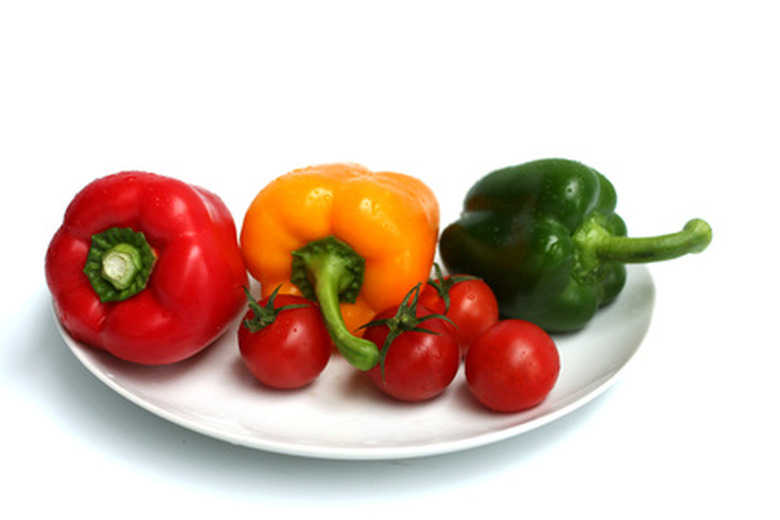
Plant peppers 3 to 4 inches deep in heavy, well-drained soil. Tomatoes thrive when planted 10 inches deep in well-drained, rich, organic soil. Tomato and pepper plants require six hours of full sun exposure each day.
Pepper-plant leaves are eaten by a number of insects, including the Colorado potato beetle, flea beetles and pepper weevils. Applying pyrethrum can take care of these pests.
- Check the stump every four to six weeks for sprouts and apply herbicide to any new growth.
Step 1
Grasp the bud with a forefinger and thumb, and gently pinch off their stems.
Step 2
Discard the buds in the trash or a compost pile far enough from the plants that there is no danger of them finding their way back to that area.
Step 3
Continue to remove buds for up to a week.
Tip
Gently pull aside the leaves so that you can make sure you have pinched off all first buds, as some may be hiding further into the plant.
Warning
If the pepper bud does not come off with a easy pinch, gently roll it in your fingers to twist it off. Do not tug or pull on the plant, as this can cause damage.
Step 1
Create a sowing trench 1/4 inch deep in the prepared garden space using the handle end of a hoe or rake.
Step 2
Plant one pepper seed every 3 to 6 inches in the row.
Step 3
Cover the seeds with 1/4 inch of soil. Water the area with a garden hose to moisten the soil slightly deeper than the seed is planted.
- Grasp the bud with a forefinger and thumb, and gently pinch off their stems.
- Create a sowing trench 1/4 inch deep in the prepared garden space using the handle end of a hoe or rake.
Step 4
Thin the seedlings to one plant every 12 inches after the seedling have developed their primary leaves. Choose the strongest, healthiest plants to keep in the row.
Tip
Six pepper plants will supply a family of four with fresh peppers all summer long. You can grow peppers in large (2-gallon or larger) containers on a patio or balcony. Start pepper seeds indoors in peat pots or other containers if your growing season is short. Start the seeds approximately 6 weeks before they can be transplanted in the garden. When harvesting peppers, use a sharp knife or scissors to cut the fruit from the stem. Peppers have a shallow root system and pulling the pepper from the plant may cause the entire plant to be uprooted.