

When Are Plumeria In Season?
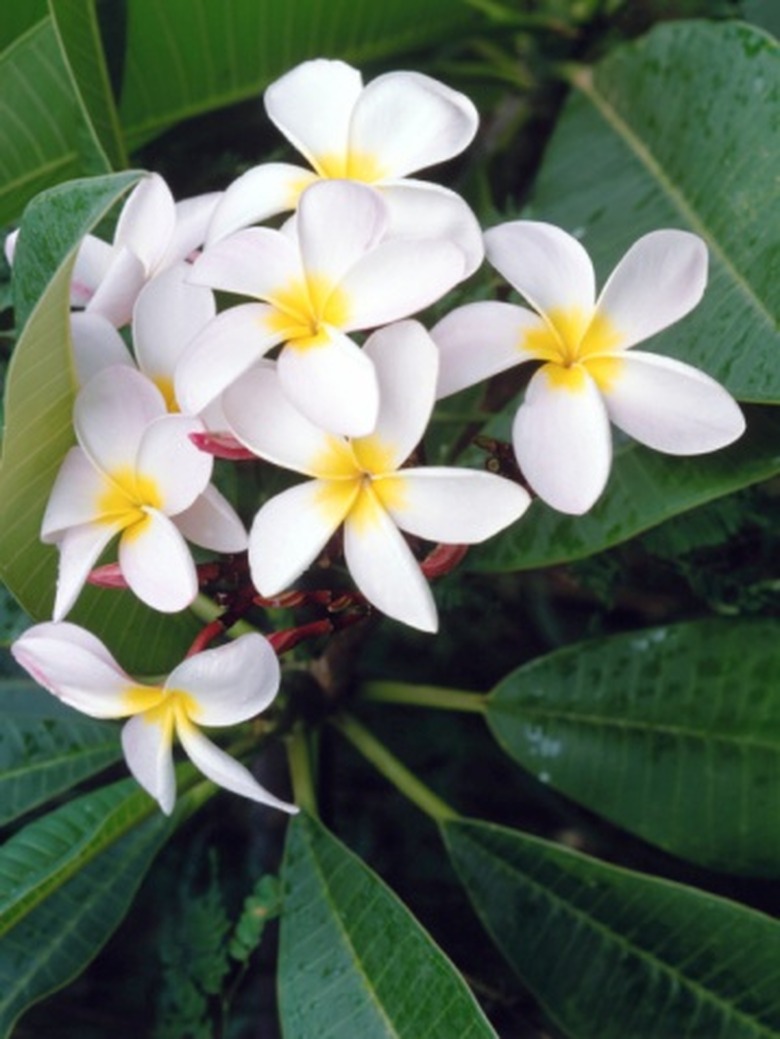
Also known as frangipani or temple tree, plumeria (Plumeria spp.) is a low growing tropical tree or shrub characterized by broad foliage and waxy, 2- to 4-inch flowers. Plumeria plants bloom during rainy, warm weather, which may be mid to late spring or summer depending on the climate.
Location
Most members of the Plumeria genus hail from the Caribbean and Central America, with species growing throughout Cuba, Puerto Rico, Panama and the Yucatan Peninsula. Plumeria is a suitable landscape plant for USDA zones 9 to 11, where it will grow in bright sun or high shade. The tree will lose its leathery green leaves if temperatures drop below 50 degrees. When grown in areas with rainy summers, such as southern Florida and the Caribbean, plumeria typically blooms in the summer.
- Also known as frangipani or temple tree, plumeria (Plumeria spp.)
- When grown in areas with rainy summers, such as southern Florida and the Caribbean, plumeria typically blooms in the summer.
Species
Several plumeria species and cultivars are available in the nursery trade. Plumeria alba grows to a height of about 40 feet, producing foot-long leaves topped with white and yellow flowers. Plumeria obtusa is a smaller, more shrublike plant that grows to be up to 25 feet tall, with white and yellow flowers. Leaves are about 8 inches long. Plumeria rubra has a more open habit, growing to be about 25 feet tall. The 20-inch leaves of the plant accent pink or red flowers.
Culture
Plumeria is tolerant of a range of soil types, though it will look its best in a slightly acidic, rich garden soil that has good drainage. The plant is tolerant of moderately salty soils, and can withstand wind. Water regularly, whenever soil is dry during the growing season. Expect the tree to reach its full size in about five years. To propagate, take cuttings in the spring and plant in moist sand.
- Several plumeria species and cultivars are available in the nursery trade.
- Plumeria obtusa is a smaller, more shrublike plant that grows to be up to 25 feet tall, with white and yellow flowers.
Features
Plumeria flowers are commonly used in Hawaiian leis, enjoyed for their fragrant, stiff blooms. Harvest flowers by tugging individual flowers gently at the base. Flowers may be stored for several days in a plastic bag. Maintain a temperature between 48 to 55 degrees to keep the flowers fresh. Use caution when breaking any part of the plumeria plant, as the plant secretes a whitish sap that can cause skin or eye irritation.