

How To Harvest Geranium Seeds

Learning how to harvest geranium seeds is the first step toward propagating these showy, low-maintenance plants at home. Two plant varieties share the common name geranium: annual or zonal geraniums (Pelargonium x hortorum) and hardy geraniums (Geranium spp.), which grow perennially outdoors in USDA plant hardiness zones 3 to 8. Both are widely grown for their showy flowers and fuss-free character.
Many hybrid geraniums will not produce seeds, and not all geranium seeds will grow a plant that resembles the original. For that reason, most geraniums are propagated using cuttings. However, it is possible to grow some geraniums from seeds if the seeds are gathered at the right time and stored under the right conditions.
Gathering Annual Geranium Seeds
Annual geranium plants bloom primarily in summer when the weather is warm, but they can bloom virtually any time of year if the conditions are right. Pollinated flowers will turn into seed pods after a few weeks. The seed pods have elongated necks that earned these plants the common name "cranesbills."
Tip
Annual geranium varieties, such as Attar of Roses (Pelargonium 'Attar of Roses,' zones 10 to 11) grow well from seeds.
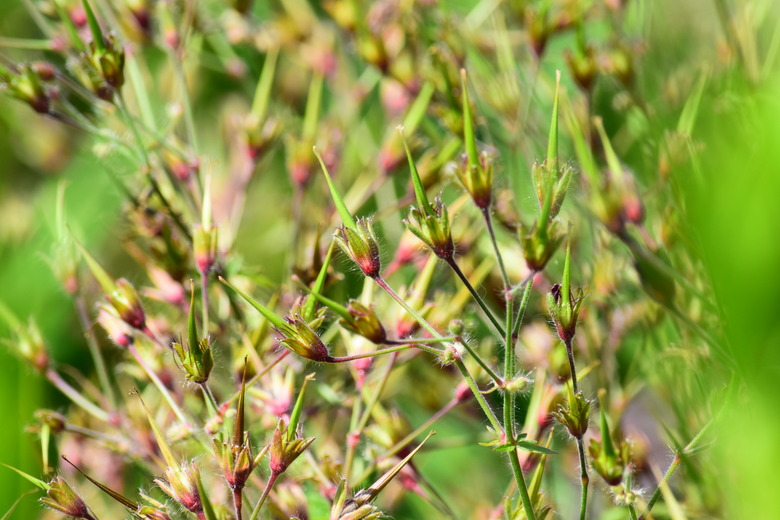
The pods start out green, but they must not be gathered until they dry out and turn brown. Fully ripened annual geranium seed pods erupt into a nest of spindly, blackish seeds in a fluffy mass of white silk.
1. Wrap your hand around the seed head and gently pull off the loose seeds. Set them in a shallow tray or bowl for cleaning and sorting. 2. Pull off the silk from the bottom of the seeds. Removing the silk is not required, but the seeds will be easier to store without it still attached. 3. Pick through the seeds and look for any with signs of damage. Throw away any damaged seeds because they may not germinate.
 jph9362/iStock/GettyImages
Gathering Hardy Geranium Seeds
Hardy geranium varieties, such as wild geranium (Geranium maculatum, zones 3 to 8), form seed pods three to four weeks after blooming. The elongated pods start out bright green and turn dark brown when ripe. The bulbous base has five cells, each containing a large black seed.
Hardy geraniums eject their flower seeds 10 to 30 feet away from the plant when fully ripe, so it can be challenging to gather them. Cover the seed heads with a sheer, mesh bag or a paper bag and secure it to the stem with a twist tie. The pods will ripen normally and eject the seeds into the bag, where they can be gathered.
Alternatively, keep a close eye on the flowerheads as they fade and ripen into seedpods. Gather the pods just after they turn brown but before they start to curl up. Snip off the pods at the base and place them inside a mesh bag. Set them in a cool, dry place for a few days to finish ripening.
Storing Geranium Seeds
Sort through your geranium seeds and throw away any with signs of damage. Place seeds from different plants into separate paper envelopes or jars. **Label the containers with the date they were gathered and the variety of the plant.**
Geranium seeds must be stored under cool, dry conditions. Place the containers inside a dark cupboard or inside the refrigerator until you are ready to use them. Use the geranium seeds next year or store them for up to three years under cool, dry conditions.
 shank_ali/iStock/GettyImages
Starting Geranium Seeds
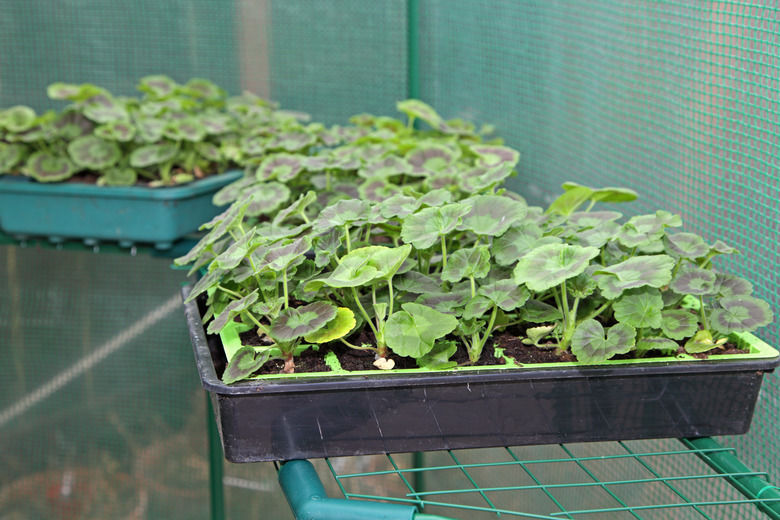
Growing geraniums from seed is fairly straightforward whether you are growing annual or hardy geraniums. Start the seeds in late winter or early spring, or sow the seeds in autumn if you live in a climate with a mild winter.
1. Fill small containers with moist potting mix, tamping it gently to collapse any air pockets. Make sure to use containers with holes at the bottom and sterile potting mix, such as seed-starting compost. 2. Sow the seeds at a depth of 1/8 inch. A thicker layer of soil can inhibit germination, so keep the soil layer shallow. 3. Set the pots indoors near a bright, sunny window. Place the pots on a propagation mat set to 70°F. Moisten the soil with a misting bottle whenever it looks dry on the surface. 4. Geranium seeds will germinate in one to three weeks under the right conditions. As with many new plants, geranium seedlings are susceptible to damping off, so it is a good idea to run an oscillating fan nearby to keep air flowing around the seedlings.
Tip
Seeds from hardy geraniums benefit from a period of chilling, which will enhance germination.
References
- University of Florida IFAS Extension: Pelargonium x hortorum Geranium
- Fine Gardening: 'Attar of Roses' Scented Geranium
- Chicago Botanical Garden: Geraniums: The Best of the Best
- University of Wisconsin-Madison Extension: Wild Geraniums, Geranium maculatum
- UC Master Gardeners of Monterey Bay: Seed Saving in the Summer Garden