

Common Lawn Weeds In South Carolina
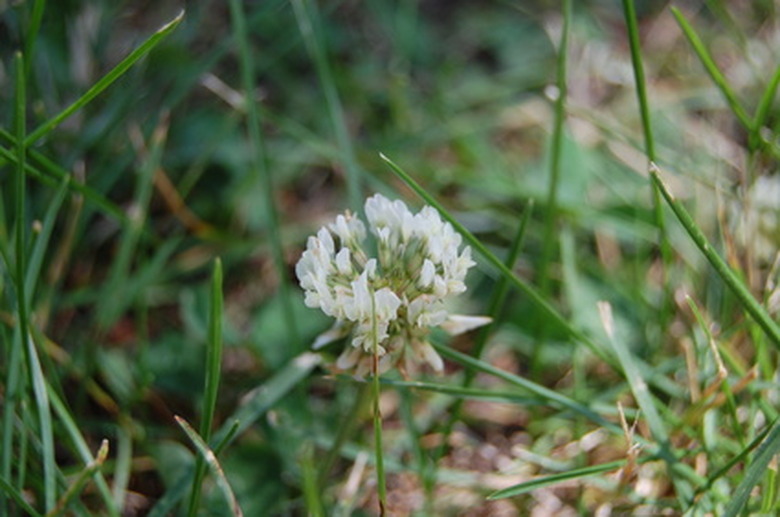
A wide variety of lawn weeds are common throughout South Carolina. Lawn weeds are generally defined as any plant growing in your lawn that doesn't belong. The best defense against lawn weeds is a good offense, which includes proper irrigation, mowing and fertilizing of the turfgrass to maintain optimum health. Unhealthy, unmaintained lawns are no match for an aggressive weed infestation. Use herbicides sparingly and only as a last resort.
Common Lespedeza
Common Lespedeza (Lespedeza striata) is an upright-growing, annual lawn weed with large, oval leaves forming on multiple branches with pink flowers. Dense, healthy, well-fertilized turfgrasses are highly resistant to Lespedeza infestation. Apply post-emergent herbicides directly on Lespedeza's foliage to kill existing weed growth.
- A wide variety of lawn weeds are common throughout South Carolina.
- The best defense against lawn weeds is a good offense, which includes proper irrigation, mowing and fertilizing of the turfgrass to maintain optimum health.
Common Mallow
Common Mallow (Malva neglecta) is a low-growing annual or perennial weed with large lobe leaves and white flowers. Commonly mistaken for ground ivy, mallow is easily preventable with good lawn care practices, including weekly mowing to a lower cut height.
Common Mullein
Common Mullein (Verbascum thapsus) is a biannual weed with a large erect central stem and large, oblong, hairy leaves. This weed will not grow on mowed turfgrass surfaces but is a common problem on unmowed, unmaintained lawn areas.
Curly Dock
Curly Dock (Rumex crispus) is a low-growing winter annual with a deep tap root and long, oblong leaves with wave-like edges. Hand-pulling from the base of the root is the recommend method for removing isolated Curly Dock weeds; however, extensive infestations will be most efficiently treated with a post-emergent herbicide.